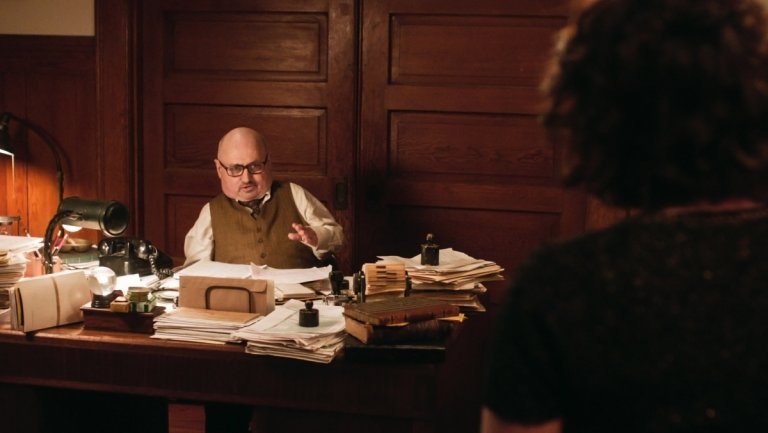
Twin Peaks: Part 12

Frustration is endemic to the television serial.  One of the great joys of the serial is the way the viewer’s interest is propelled forward by cliffhangers and unanswered questions.  We all know the feeling of “oh shit, there’s a new Breaking Bad tonight!”  There’s tremendous pleasure in the cycle of being frustrated by a cliffhanger, having thoughts of anticipation building towards the next episode, and finally sitting down for the big revelation.  Sometimes a show will tease you: postpone the awaited event or answer a question with another question.  Skillful play with audience expectations can be deployed to great effect.

Lynch has made this dynamic a theme of Twin Peaks: The Return, and in part 12 it reaches a fever pitch.  A brief perusal of the internet indicates that a lot of people couldn’t stand it.  I’m not surprised.  He takes it so far that it reminds me of Haneke’s Funny GamesFunny Games is an anti-thriller that aims to punish its audience for their blood-thirsty genre expectations.  It shows us none of the action but all of the suffering.  There’s a 7+ minute scene of someone who’s been shot bleeding out on the floor.  I deliberately went to see the English-language version of Funny Games primetime Friday night at the big multiplex with as large a crowd as possible, because the audience reaction is the whole point.  I was not disappointed.  During the above mentioned 7+ minute scene, complete strangers in the audience started fighting with each other openly.  One guy stood up and threatened a group of teenagers that he would “stick all their heads up their asses.” Well played, Haneke.

In an analogous way, part 12 was anti-television.  God, where to begin.   The episode was entitled “Let’s rock,” which is an iconic line from the original series (spoken by The Arm).  Multiple storylines have built a good head of steam and we are getting close to October 1st in the show’s timeline, when we have been led to believe that the shit will hit the fan.  I think everyone expected an eventful episode.  I’ve even heard that Lynch and Frost deliberately leaked that this would be the most remarkable episode yet (someone leaked this, but we don’t know who for sure).  What we got instead wasn’t merely an audience tease; it was an all-out assault on our expectations.   The clearest way to make this case is to consider the way Audrey was reintroduced.  Sherilyn Fenn is listed in the show’s cast; we knew she would show up sooner or later.  I had seen various online comments this last week: “We’re getting down to the wire and so many things still need to happen!  So many characters haven’t even shown up yet!”   There was a lot of hope circulating that maybe Audrey will finally appear.  The show has been brutal about withholding gratification.  Basically none of the fan favorites from the original series are seeing heavy play, and when they do show up, it’s not in the way the audience wants them to.  When we finally get to hear Coop say “damn good cherry pie,” it’s overwhelmingly sad.  Audrey’s reintroduction goes beyond withholding, and approaches open hostility.  Lynch brought her back in the most abrasive way possible.  Her hen-pecked husband Charlie sits over a pile of work and complains about being sleepy while she angrily berates him because he’s not being helpful in tracking down her missing lover, Billy.  We don’t know any of the characters mentioned.  The scene goes on FOREVER.  Charlie makes a phone call (rotary dial, of course), there’s a big info dump, and we only hear his side of it.  He says “unbelievable, what you’re telling me!”, but then refuses to explain what he was told.  Audrey has a conniption.  My favorite line is when she yells at him to look in his crystal ball and find out where Billy is, and he replies, “Come on, Audrey, you know I don’t have a crystal ball.”   She emphasizes “You have no balls!  That’s why I’m in love with Billy!  That’s why I’m FUCKING Billy!”   And then when we do finally get to the roadhouse (where Audrey intended to look for Billy), instead of some kind of exposition of what’s up with Audrey, we switch to two entirely new characters talking about other characters we haven’t met.    I was cackling at this point.  Again: my reading is that he’s taken a structural feature of television serials in general and blown it up to the point of absurdity.  We love to be teased a little by a good TV show.  Lynch takes it past the breaking point several times over.

Another great scene involves Lynch himself and French actress Berenice Marlohe (she was a Bond girl in Skyfall).  Lynch often gets accused of various forms of misogyny.  I think that these critiques are ill-founded, but I’m not interested in litigating the issue right now.  A frequent accusation is that he likes to dress women up like 50’s pin ups and ogle them.  In this scene, he literally ogles Marlohe (in a pin up getup) for two solid minutes.  As for the episode as a whole, in this scene Lynch is really aggressively leaning into his critics.  Oh, you don’t like that?  You mean you don’t like it when I do THIS?!

Negative emotions often figure positively in aesthetic experiences.  Sadness and grief for tragedy, fear and disgust for horror, etc.  I’ve argued that we should understand these negative emotions as elements imbedded within complex aesthetic experiences, and that an overall aesthetic experience can be attractive partly in virtue of one or more of its elements being painful or otherwise aversive.  I think we can understand the frustrations of Twin Peaks according to this model.  Frustration is an unpleasant emotion, but imbedded in the right context, it can be quite pleasant.   Television ordinarily plays with frustration by teasing our expectations.  I’ve been engaging with David Lynch’s art since I was like 12 years old (thanks, Dad).   Part of the pleasure of approaching the new Twin Peaks episodes for me is that I still really, truly have no idea what the fuck he’s going to do.  True aesthetic surprise is an exhilarating experience that’s all too hard to come by now that we’ve passed through the postmodern singularity.   Last night’s episode really, truly surprised me.  The frustration that the narrative engendered wasn’t ultimately unpleasant for me, because it fed into this feeling of exhilarating surprise.  Like, “THAT’S HOW YOU’RE GONNA BRING AUDREY BACK!  OMG!”    I get the sense that people with overly rigid expectations didn’t share my enjoyment, and I think that’s part of the point as well.  Much like Haneke, Lynch is showing open hostility to a certain sort of audience.   He’s punishing those looking for nostalgia.
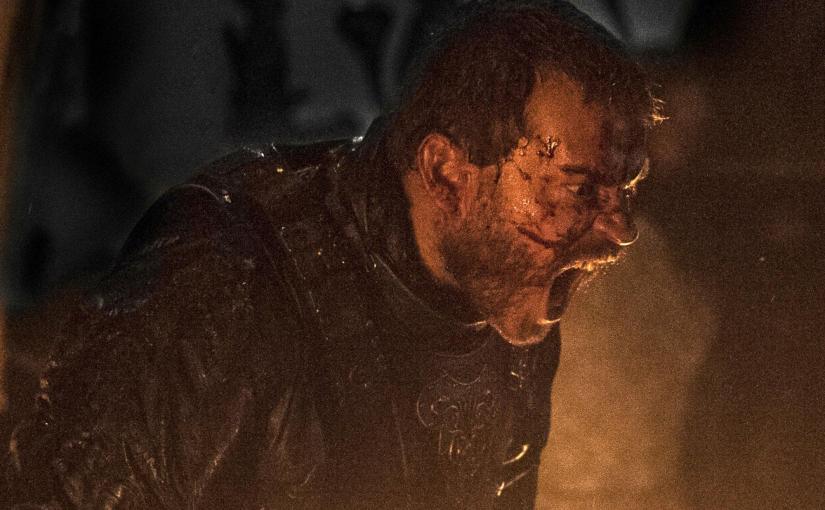
Game of Thrones thoughts (spoilers)

I’ve had mixed feelings about HBO’s takeover of creative control of Game of Thrones since the beginning of season 6.  On the one hand, Martin is in most respects a mediocre fantasy writer and the show is generally much better than the books.  He writes great characters, but he falls prey to the classic middle-books fantasy trap of burning through plot too fast and then loading up on filler (too many new, uninteresting characters, hundreds of pages of people being on the way to places).   I’m also not a big fan of ultra-gritty fantasy, with constant talk of hard cocks and so on.  I’ll take Robin Hobb and Brandon Sanderson over Martin any day of the week.

But on the other hand, the special appeal of HBO’s Game of Thrones does depend to a large extent on Martin’s influence– in particular, his constant subversion of narrative expectations.  Killing main characters, people on a revenge quest being killed before they achieve revenge, villains falling to other villains rather than to heroes, etc.  That’s what makes Game of Thrones what it Is.   The show has a unique ability to make you feel truly terrible, and that’s 90% of its appeal.

I really did not like season 6 very much.   It was too crowd pleasing, too readily satisfying.  It was like they finally were off Martin’s leash and the first thing they did was distance themselves from everything that made the show distinct.  I hated, hated, hated the way they brought back Jon Snow.  It was like “oh you thought your favorite character was dead, PSYCHE!  He’s fine!”   It didn’t even make sense.  All of a sudden Davos, whose primary character traits are an excess of caution and an abiding distrust of black magic, and who barely knows Jon Snow, is all gung ho in favor of using black magic to bring him back.    I’m not necessarily against the idea of bringing him back– indeed I’m sure Martin planned  something along those lines– but a cardinal rule of fantasy and horror fiction is that if someone is brought back from the dead via black magic they are never the same.  They carry the taint of death with them in some way.  In the HBO version, it’s like he’s immediately back to his old self, no harm done.  The only point I see of him having died in the first place is that his resurrection feeds into some kind of chosen one narrative relating to the Lord of Light.  But c’mon, TAINT OF DEATH, PLEASE.

This week, however, Game of Thrones became Game of Thrones again.  That devastating sea battle, beautifully timed to interrupt a kiss between fan favorites and disappoint the shit out of everyone chomping at the bit for some steamy action, was a true Game of Thrones turn.   And then Theon’s moment of cowardice, after all the work the show has done to rebuild respect for the character, was brilliant.  The action film-making was on par with the best battle sequences we’ve seen from the show.  I also really appreciated the body horror in the earlier Samwell/Jorah scene.  Welcome back, Thrones.

From the first book of the series (which I read well before the show was produced), it’s clear that the ultimate conflict will be between the old magics of fire and ice.  The dragons vs. the white walkers.  The series is predicated on a structural irony, where the Shakespearean machinations within Westeros are the narrative focus but we are constantly reminded that they are quite insignificant in the scope of the larger conflict that is slowly closing its jaws around the Seven Kingdoms.  The failing of the books is that Martin exhausted the interest of the machinations well before he was prepared to drop the hammer.  The series did not fall into this trap.   It elided all that boring crap.  Now there’s a question of whether it can execute the finale without Martin’s source material.   This week is the first time I’ve felt optimistic about the prospect.

Song to Song (no spoilers)

Song to Song is revelatory.  There’s something Malick has been trying to do for a while now, and I feel like he’s finally done it.

There are a number of tropes that are distinctive of his recent work: extreme angle shots, fisheye lens, aggressively subjective camerawork,  TWIRLING, bed sheets, couples chasing each other through sparsely decorated houses.  A lot of tomato critics respond with open mockery.   MORE TWIRLING FROM MALICK!  This doesn’t surprise me, really.  If you are unwilling or unable to engage with Malick’s recent work on its own terms, I can certainly see how it could come across as a parody of a pretentious art film.  Personally, I appreciate Malick’s not giving a fuck about what anyone thinks of the twirling.  He just keeps doubling down on it.

Song to Song reveals something deeper about what he’s trying to do with these tropes and also why many react to it so harshly.  He’s trying to capture private, intimate moments.  The sorts of things you only do when no one is watching.  This is very hard to do, because what makes a moment private and intimate is precisely its utter particularity and idiosyncrasy.  Romantic love is typically portrayed on film through more general representational categories.  To represent one character falling in love with another, a filmmaker might show the one surreptitiously watching the other doing something quietly remarkable, or might show the couple staring longingly into each other’s eyes , or might show the two triumphing over adversity as a team and then falling into each other’s arms.  The sorts of private, intimate moments that constitute the emotional progression of actual relationships are too peculiar, too uncomfortable, too illegible to be readily translated to the screen.  Song to Song is like 40% composed of exactly these sorts of moments, and I suspect that it makes a lot of viewers uncomfortable.   To engage with it on its own terms requires a level of vulnerability and openness from the viewer that many will be unwilling or unable to muster.  It’s just so fucking sincere.

I’m going to stay away from discussing too many details of the film.  I only just saw it yesterday.  Like all of Malick’s films, it needs to be seen more than once before one can even really begin to digest it.   I’ll say it’s clearly the best new release I’ve seen this year, and it’s better than anything I saw last year.  It bears a lot of structural similarities to To the Wonder.  I love To the Wonder, please don’t confuse me for a hater, but I would say this is much more fully realized work.  The acting is uniformly perfect, even Natalie Portman.  Michael Fassbender plays a sort of Lucifer character brilliantly.  Patti Fucking Smith is in the movie.  Iggy Pop is in the movie.  He films both moshing and twerking in full-on Malick style.

He says this is the last movie he’ll film without a script.  He’s got a war film coming out next. This I think corroborates my central evaluative thought: this movie is a culmination of this last phase of his career.  I am eagerly looking forward to watching it several more times over the next few months.