Film Diary vol. 4


I watched some very good stuff the last couple of months. Highlights included Ruiz’s Manoel’s Destinies, Rossellini’s India: Matri Bhumi, Hawks’ Ball of Fire, Johnnie To’s A Hero Never Dies, and three musicals by Jacques Demy. There has been a lot of discussion recently about the place of women in the film industry and a much-needed push to create more opportunities for female directors. One unfortunate thing about this discussion, though, is that more emphasis has not been placed on highlighting the accomplishments of the female directors of the past. I’m not surprised– it’s a manifestation of broader contemporary neglect of history– but I do find it irksome. I spent some time recently with the work of two of the 20th century’s greatest talents: Maya Deren and Shirley Clarke. I would encourage anyone unfamiliar with their work to check it out.

Maya Deren

1102.large

(Image from Ritual in Transfigured Time)

Meshes of the Afternoon, A Study in Choreography for Camera, Ritual in Transfigured Time, At Land, Meditation on Violence

The name “Maya Deren” gives me full body chills. More than anyone else in the history of cinema, she creates the feeling that one is peering into an alternate dimension. There are things she accomplished in the 1940’s that still haven’t been surpassed. I can’t really describe her work except to say that it’s like mainlining someone else’s fever dreams.

Most of Maya Deren’s films are short and easy to find. The ones that I watched are all on Fandor (the app, not the amazon channel). I would caution against casually watching these films on your laptop. They should be watched on a reasonably large screen in a silent, focused atmosphere.

Shirley Clarke

Picture 102.png

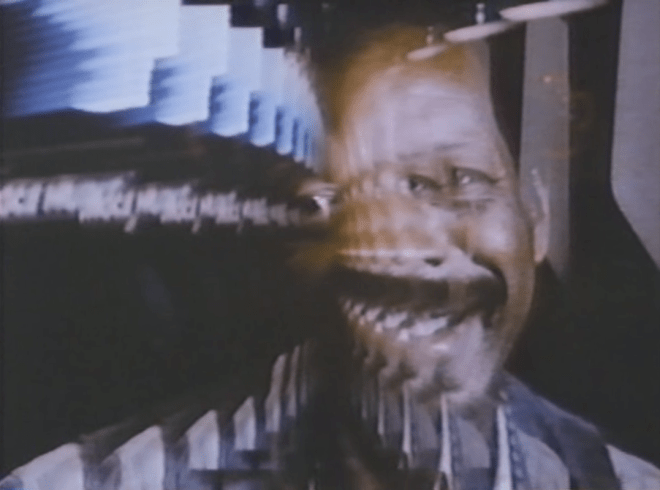
(Image from Ornette: Made in America)

Four Journeys into Mystic Time: Mysterium, One-Two-Three, Trans, Initiation; Dance in the Sun; Bridges-Go-Round parts 1&2; 24 Frames Per Second; A Moment in Love; Skyscraper; Robert Frost: A Lover’s Quarrel with the World; In Paris Parks; Portrait of Jason; Ornette: Made in America; Bullfight.

Like Maya Deren, Shirley Clarke had a background in dance. The two had a similar interest in exploring what cinema can add to the medium. It’s one thing to simply film a dance, but another to make a dance film with distinctively cinematic aesthetic features. Clarke experimented with a range of techniques, including fractured editing and superimposition, to interrelate the two media. They’re all worthwhile, but I would say my favorite of her dance films is Four Journeys into Mystic Time: Initiation.

Among her other work, the two features I watched (Portrait of Jason and Ornette: Made in America) are stand-outs. Portrait of Jason is an edited down 12-hour interview with a hustler named Jason Holliday. Holliday is the sort of person who is eager to tell their entire life story to anyone who will listen. Clarke and her collaborator basically give him a bottle of scotch and let him talk, occasionally interjecting with questions. The whole thing melts down by the end and the dynamic becomes openly hostile. Portrait of Jason is often abrasive and hard to watch, but it is remarkable in some respects. Holliday is a charismatic storyteller, and his perspective on life as an openly gay black man in the 70’s is often fascinating. There are difficult ethical questions concerning the way this interview was conducted and packaged for consumption, and Clarke and her collaborator do not cower away from these questions– they take a bold, decisive stand. I admire their courage of conviction. Ornette: Made in America is an absolute feast for anyone who likes Ornette Coleman. She employs some pretty wild “free jazz” editing techniques. If you don’t like Ornette Coleman, this probably isn’t the movie for you.

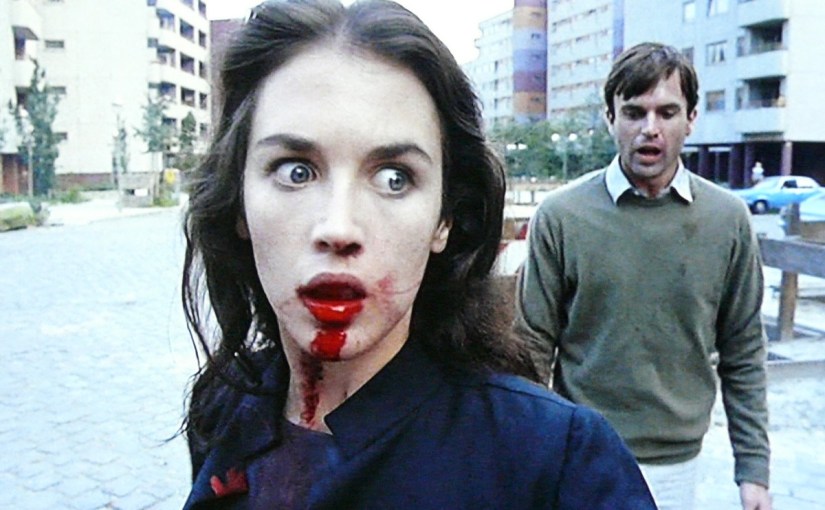
Andrzej Zulawski

Szamanka, La Femme Publique, Boris Godounov, La Note bleue, My Nights are More Beautiful Than Your Days, Pavoncello, Story of Triumphant Love

I finished Zulawski’s filmography, including his two early shorts for Polish television. This is one hell of a body of work. He definitely wasn’t afraid to take chances, and not everything he did was totally successful, but it’s all worth attending to. The top tier for me is Szamanka, Possession, and On the Silver Globe. Szamanka (which is like his take on Ken Russell’s Altered States, with a feminist twist) is for me the fullest and most exhilarating expression of his aesthetic, Possession has the best acting and the most emotional intensity, and On the Silver Globe is the most sublimely berserk. The second tier—consisting of minor masterpieces—is La Femme Publique, Diabel and That Most Important Thing: Love. La Femme Publique is a batshit Brechtian elaboration of Dostoevsky’s The Devils. Diabel is a potent early work about a Lucifer figure traveling through Poland during the 1793 Prussian invation. That Most Important Thing: Love is one of his more popular films, about a director who falls for a washed up actress stuck doing soft porn (Romy Schneider) and puts all his money into a production of Richard III for her to star in with Klaus Kinski. It’s a great place to start with Zulawski.

The third tier is La Note bleue, Third Part of the Night, My Nights are More Beautiful Than Your Days, L’Amour braque, and Boris Godounov. La Note bleue is a Chopin biopic in the tradition of Ken Russell’s Mahler and Lisztomania. It feels like a very personal work, as Chopin and Zulawski were both Poles who lived in France and there is a strong emphasis on Chopin’s feelings of alienation and longing for his homeland. It is Zulawski’s most wildly colorful movie, and the Mondo Vision blu ray looks great. Third Part of the Night is excellent political body horror. Boris Godounov is a Brechtian opera film working from Rostropovich’s version of Mussorgsky’s opera. The high points are tremendous, but it drags a little for stretches. I did some investigating and it turns out that Zulawski wanted to fill these lulls with incest but Rostropovich vetoed it. The other two star Sophie Marceau and feature bizarre rhyming dialogue.

The bottom tier is the two shorts (Pavoncello and Story of Triumphant Love) and his two newest works, Fidelity and Cosmos. The shorts are good but slight. Fidelity and Cosmos are both worthwhile but flawed. Cosmos is so untethered that it’s hard to engage with and Fidelity is too restrained.

D.W. Griffith

The Musketeers of Pig Alley, The Birth of a Nation, Intolerance, Hearts of the World, Broken Blossoms

Wow, there is a ton of D.W. Griffith readily available through amazon streaming. I intend to dig into the large catalogue of Biograph films they have available (Griffith made vast quantities of short films for the studio before making Birth of a Nation) and also some more of his later features like True Heart Susie. For now I just watched through this sequence of some of his best known works, as well as the lesser known WWI picture Hearts of the World. The Birth of a Nation is one harrowing watch, particularly against the political backdrop of 2018. Intolerance and Broken Blossoms are both great, but I think I prefer Intolerance for its breathless editing. Hearts of the World rehashes Birth of a Nation with the Germans as the bad guys. Much of it is lame melodrama, but once the war gets going it breaks from its narrative form and becomes remarkable.

Jacques Demy

Donkey-Skin-4

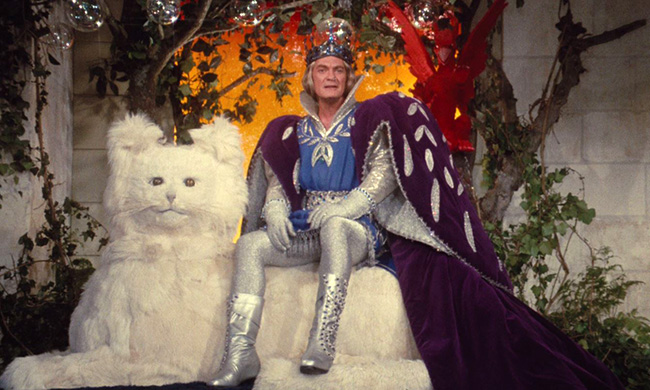
(Image from Donkey Skin)

Bay of Angels, The Young Girls of Rochefort, Donkey Skin, Une Chambre en Ville

I had watched Lulu and Umbrellas of Cherbourg recently and I decided to keep going with Demy. Bay of Angels is not a musical. It’s a gambling addiction story/dramatic romance that threatens to become didactic but is rescued by Jeanne Moreau’s wild-eyed performance. The other three are musicals and I consider them all unqualified masterpieces. The Young Girls of Rochefort is pure cinematic bliss; it would be hard to overstate how delightful it is to see Gene Kelly in this context. Donkey Skin just might be my favorite. It’s a dark, lurid, aggressively weird fairy tale. Une Chambre en Ville  bears some resemblance to La bohème, except it has a more political workers’ strike backdrop. It’s sad, dark, lovely and perfect.

Val Lewton

Jacques Tourneur: Cat People, I Walked with a Zombie, The Leopard Man

Robert Wise: The Curse of the Cat People, The Body Snatcher

Mark Robson: Bedlam, The Ghost Ship

I watched Robson’s The Seventh Victim recently but other than that it’s been a while since I’ve spent any time with Val Lewton. I watched through a bunch of titles over the course of two days last week. Along with The Seventh Victim, my two favorites are easily I Walked with a Zombie and Cat People. Tourneur’s use of shadow is singular. I Walked with a Zombie is one of the most abstract films of its era. Cat People isn’t quite at the same level of formal accomplishment but its influence and importance are staggering and it contains some moments of pure genius. The Leopard Man isn’t quite as good, but it’s very good nonetheless. The others are good but not great. Bedlam is my favorite of the bunch.

Paul Morrissey

Flesh, Trash, Heat

I had seen some of Morrissey’s later stuff but this was the first time I have seen this trilogy. These movies all feature Joe Dallesandro as a hustler who is mostly indifferent to sex but uses his allure to score money, drugs, or a place to stay. Flesh is pretty rough. The editing is amateurish in a bad way. I found it to have little cinematic value but to be interesting as a cultural artifact. Trash is vastly better. It feels like a movie that someone made a certain way on purpose. If you like John Waters, you’ll like Trash. Heat is not as good as Trash but much better than Flesh and you should watch it if you like Trash.

Walerian Borowczyk

The Beast, Immoral Tales, Behind Convent Walls, The Strange Case of Dr. Jekyll and Miss Osborne

Not for moralists. This stuff is all about the joys of perversion and evil. Some of it is X-rated, and it is messed the hell up, so approach with caution. It’s in the tradition of Buñuel, but it goes a lot further. If one were going to watch both The Beast and Immoral Tales, I would advise watching The Beast first. A key sequence is reproduced from a vignette in Immoral Tales, and it has far more impact in the fuller context that The Beast provides. Like Renoir’s Testament of Dr. Cordelier, Borowczyk’s version of Jekyll and Hyde emphasizes that Hyde isn’t an alternate version of Jekyll, but rather Jekyll’s true self unleashed. He gives the story a feminist twist that I appreciated.

Jean-Marie Straub and Daniele Huillet

From the Clouds to the Resistance; Chronicles of Anna Magdelena Bach; Le streghe, femmes entre elles

This is advanced stuff. Straub and Huillet are among the most demanding filmmakers in the canon, and someone jumping into the middle of their oeuvre without context would almost certainly be put off. Their films are all adaptations, often of incomplete texts. They typically feature minimalist compositions. For instance, two characters might be situated in the woods, static but in embellished poses, reciting the text of a dialogue as the camera alternates between them for 15 minutes. Their work is aggressively theory-forward, in the sense that what they are doing is often hard to make sense of without theoretical context. I strongly suggest starting with Chronicles of Anna Magdelena Bach, which is relatively accessible. It features 20+ musical performances, staged with meticulous period accuracy in the actual locations where Bach’s music was performed. I was very curious going in how they were going to give Bach’s life a political spin. The narration of the film consists in the letters of Bach’s wife, which are often concerned with the financial struggles and practical necessities they faced. Bach describes music as “the recreation of the soul.” Juxtaposing his transcendent compositions with dull practicalities suggests (brilliantly) the way such recreation can function as a response to alienation (in the Marxist sense).

I’ll refrain from commenting on the other two for now. They are extremely difficult, beautiful films. I’m going to do a deep dive into Straub-Huillet in coming months and revisit both of these along the way with more context.

Fernando Di Leo

Caliber 9, The Italian Connection, The Boss

Awesome poliziotteschi trilogy from Di Leo, who is best known in the US for his collaborations with Sergio Leone. These are tough, no nonsense crime movies. Caliber 9 is probably the best of the three. The Italian Connection is not far behind, with an awesome performance by Mario Adorf as hard-to-kill pimp Luca Canali. As the title might lead one to expect, it has an awesome chase scene. The Boss is also worthwhile if you like the other two.

Howard Hawks

Twentieth Century, Ball of Fire

I hadn’t seen Ball of Fire before! I don’t know how that happened, but I’m glad it did, because what a delight it was to watch this for the first time. It’s one of the best comedies I’ve ever seen. Gary Cooper as a dweeby intellectual and Barbara Stanwyck as a sexpot nightclub singer: you can’t beat it. Twentieth Century is an early (pre-code) screwball comedy with John Barrymore and Carole Lombard. There is *a lot* of yelling. It’s delightful.

Jean Renoir

The Rules of the Game, The Diary of a Chambermaid, Charleston Parade, The Testament of Dr. Cordelier, On purge bébé, Swamp Water, The Little Match Girl, Picnic on the Grass, The Elusive Corporal, Madame Bovary

I made significant progress on Renoir and revisited The Rules of the Game. All I have left are a few silents, a couple obscure early talkies, and Le Petit Théâtre de Jean Renoir, which I am saving for last. I will also revisit Grand Illusion and La Bête Humaine. With the obvious exception of Rules of the Game, most of the films I watched during this period are really for completists only (there are a lot of Renoir movies you should watch before these), but I would highly recommend Charleston Parade and Picnic on the Grass. Charleston Parade is a very potent 20 min short from 1927 about race. There is blackface, but the actor is actually black, so we can infer that the blackface is a deliberate provocation. Make sure you see it with a decent soundtrack. I found a version on YouTube under the French title (Sur un Air de Charleston) with some pretty awesome jazz. Picnic on the Grass is a Hawksian romp about indomitable forces breaking free of constraints. Renoir always likes to set things up in a relatively controlled and precise way and then let all hell break lose. This is arguably the Renoir work where the entropic arc is most directly related to the film’s themes. The Testament of Dr. Cordelier is his Dr. Jekyll and Mr. Hyde, and it’s great (and shockingly dark), but probably mostly of interest to people deep into Renoir. Madame Bovary is my least favorite Renoir so far. Valentine Tessier is godawful as Emma Bovary.

Shohei Imamura

The Pornographers, Profound Desires of the Gods

I think I saw The Pornographers a long time ago, but I didn’t have much memory of it. It’s okay. The direction is on point, but I found the lurid theatrics wearisome by the end. It would have played better for me trimmed down to 90 minutes. The three-hour magnum opus Profound Desires of the Gods, on the other hand, I completely loved. It’s about the relationship between superstitious island folk and a mainland engineer who lives among them. It’s ambitious, bizarre, and captivating.

G.W. Pabst

Secrets of a Soul, Pandora’s Box

Secrets of a Soul is basically a psychoanalysis infomercial about a guy with a compulsion to stab his wife. There are brilliant passages but the whole thing is weighed down by the framing. Pandora’s Box is an essential classic. It picks up a few elements directly from Secrets of a Soul but it’s a far more accomplished work. The direction and acting are exceptional but the narrative goes on an act or two too long. This was the inspiration for The Blue Angel.

Carl Theodor Dreyer

Ordet, Gertrud

Ordet displays perhaps the most stunning mise-en-scène in the history of film. Gertrud is comparably masterful though not quite as transcendent.

Luis Buñuel

Diary of a Chambermaid, The Milky Way

I rewatched Diary of a Chambermaid to compare to Renoir’s version, and there’s really no contest. Buñuel’s is by far the better film. The Milky Way is a fun heretical romp.

Hong Kong

I spent a good deal of time with Hong Kong cinema, and it was a blast. It’s really important to watch these movies with the original audio and NOT the dubbed English versions. Lots of these are on Amazon Prime dubbed so it’s tempting, but don’t do it! These movies are not nearly as goofy as they come across dubbed. They are too good to watch in such a shamelessly mangled presentation.

Chang Cheh: The One-Armed Swordsman, Five Elements Ninjas

These are both immense delights. The One-Armed Swordsman is absolutely essential. Five Elements Ninjas is a late work and totally batshit.

Liu Chia-Liang: Executioners From Shaolin, Eight Diagram Pole Fighter, The 36th Chamber of Shaolin

These films are all centerpieces of the genre. The 36th Chamber is perhaps the thematic high point, while Eight Diagram is the most visually electric, and Executioners from Shaolin the weirdest. Dirty Ho is also a key work—going to watch it tonight.

Johnnie To (in some cases with Wai Kai-Fai): The Mission, Lifeline, Police Tactical Unit, Loving You, Fulltime Killer, Too Many Ways to be No. 1, A Hero Never Dies

There are so many Johnnie To movies! I’ve seen a ton of them and I’ve been watching them at a pretty steady clip lately, but there are still so many more. These are all awesome. A Hero Never Dies completely blew my mind. It’s one of my favorite To movies. It’s about two absurdly unkillable assassins from rival gangs who form a friendship and seek revenge after being double crossed by their bosses on a trip to see a fortune teller in Thailand. I love it, I love it, I love it.

Police Tactical Unit is not the sweeping procedural I expected, but rather a taught thriller set in a single night about a cop who loses his gun and must recover it before the next day. It’s so good. Loving You is more of a drama, featuring an incredible Lau Ching-Wan performance. Lifeline is To’s answer to Backdraft. There’s just enough story to make you care whether the firefighters live or die and then it’s all action. Too Many Ways to be No. 1 has Wai Kai-Fai in the lead director position and it’s hyper-stylized and really fun. The Mission is classic heroic bloodshed and a great place to start with To. Fulltime Killer was my least favorite of this batch, but it’s worthwhile.

Dangerous Encounters of the First Kind (Hark)

This is one of the greatest entries in the nihilistic youth self-destruction genre.

City on Fire (Lam)

Heroic bloodshed classic. Chow Yun Fat is a cop who’s been undercover so long that he’s developed loyalties towards his criminal associates.

Come Drink With Me (Hu)

Every King Hu movie I’ve seen is fantastic, though I don’t like this one quite as much as Touch of Zen or Dragon Inn. I pre-ordered the Legend of the Mountain blu-ray.

Fritz Lang

Secret Beyond the Door, Moonfleet

These are both frickin’ great. Secret Beyond the Door is a labyrinth of lurid secrets (and yes, some of them are behind a door). Moonfleet is a Cinemascope pirate-smuggler adventure story. Lang’s use of the widescreen format is stunning.

Fred Astaire

Top Hat (Sandrich),The Gay Divorcee (Sandrich), Swing Time (Stevens), The Band Wagon (Minnelli)

I was needing some Fred Astaire. Always such a delight to revisit this stuff. The first three are 30’s classics with Ginger Rogers; The Band Wagon is a 50’s kaleidoscopic extravaganza. I hadn’t seen the Gay Divorcee before. It has a similar story and much of the same cast as Top Hat, but it’s not as good overall (though its big musical numbers are amazing). Astaire’s stalker behavior in Gay Divorcee doesn’t play very well in 2018. Swing Time is a classic, but I had forgotten there’s a jarring blackface interlude.

Erich Von Stroheim

maxresdefault (1)

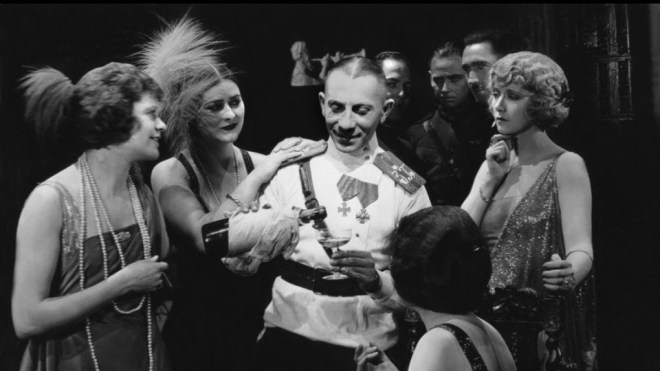
(Image from Foolish Wives)

Foolish Wives, Blind Husbands, The Great Gabbo

Foolish Wives is comparable to Greed in its visionary grandeur, though not as well known. Blind Husbands is a slighter work but it’s a nice companion piece and there are some brilliant moments. The Great Gabbo is a very strange early talkie and Von Stroheim didn’t direct very much of it, but one scene is unmistakably his work. Von Stroheim plays a ventriloquist who talks to his dummy when no one is around. The movie is weighed down with excessive generic musical numbers but the madness of Von Stoheim’s performance is worth the price of admission.

Raoul Ruiz

DEmenBdXsAAvR7Q

(Image from Manoel’s Destinies)

Comedy of Innocence, Manoel’s Destinies

Ruiz made a ton of movies and not all of them are great. Comedy of Innocence is not great. Manoel’s Destinies, on the other hand, is perhaps his greatest work. It’s sadly unrestored, but a reasonable version of it is on youtube with the titles “Manoel part 1,” “Manoel part 2,” and “Manoel part 3.” It translates some of the ideas from Three Crowns of a Sailor and City of Pirates into a children’s fantasy. The mise-en-scène is transcendent. If I could choose one extant movie to be restored, this would be it. I love it.

Jean-Daniel Pollet

Méditerranée, Le Horla

A couple short films from Pollet. Méditerranée was co-directed with Volker Schlöndorff. It’s an experimental film that examines the ways that memory and historical meaning overlay the landscape of the Mediterranean. It’s a powerful film that juxtaposes violent, disturbing images with ostensibly serene seascapes. It strongly influenced Godard. Le Horla is a psychological horror film based on Guy de Maupassant’s short story. It’s excellent.

Godard

british-sounds

Film Socialisme, For Ever Mozart, British Sounds, Wind from the East

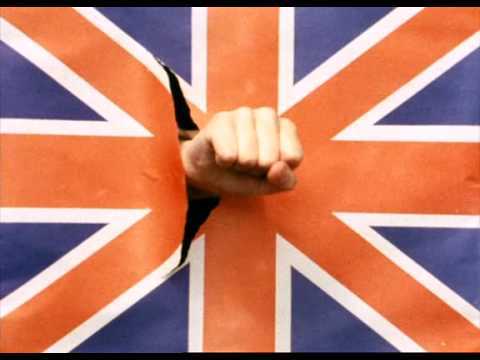
Godard gets exceptionally challenging after 1967. These films are not supposed to be enjoyable. They range from hyper-didactic to inscrutable. British Sounds and Wind from the East are collaborations with the Vertov Group. Godard et al. set out to develop a militant, revolutionary cinema that rejected bourgeois representational norms. British Sounds is mercifully short. It starts out with footage of auto-factory workers and sounds of screeching metal, with Godard reading the Communist Manifesto as narration.  It eventually gets into a critical look at student resistance. Wind from the East is a tough one to get through but it’s very interesting. Images that suggest a Western are accompanied with Maoist narration and stuff about a workers’ strike. The narrator explains throughout how the film is trying (and failing) to escape bourgeois cinematic idiom. It’s a distinctively French breed of nonsense that I found worthwhile, even if relentlessly excruciating. For Ever Mozart is a 90’s film about a theatre group that goes to war-torn Sarajevo to stage a play. It’s Godard’s treatise on the artist’s responsibilities with respect to atrocity. Film Socialisme is perhaps the most difficult of the lot, with its “Navajo subtitles” (Godard went through the subtitles and crossed off all the words that didn’t interest him, which was most of them) and experimental form. It contains a number of direct references to and even clips from Méditerranée, which one should certainly see beforehand. It is a predecessor to Goodbye to Language, which is a little easier to engage with. Most people will hate Film Socialisme.

Kinji Fukasaku

Yakuza Papers series: Battles Without Honor and Humanity, Hiroshima Death Match, Proxy War, Police Tactics, Final Episode

Finally watched the entire original Yakuza Papers series. It’s singular and totally exhausting. The entire thing is at a breakneck pace, with a legion of characters to keep track of and constantly shifting conflicts and alliances. Battles Without Honor and Humanity is an origin story for series protagonist Shozo Hirono (played by the great Bunta Sugawara). Hiroshima Death Match is somewhat disconnected. It’s a cautionary tale, charting the rise and fall of a Hiroshima gangster. The last three films form a connected sequence. Proxy War is something else. Most of the action is elided through the news-report narration and the focus is on the various yakuza factions reacting to elided events and plotting their reprisals. When the violence boils over at the end we get some of Fukasaku’s boldest, most abstract compositions. As the title suggests, Police Tactics focuses on law enforcement strategies. Whereas the previous films build up tension and then boil over, here we begin and end in all out warfare. The Final Episode is my personal favorite. The series started with a group of young upstarts who had fought in WWII overthrowing the old guard. The primary theme—typical for Japanese films about the post-war period—is the degradation of codes of honor due to the necessities of self-preservation. By the last film, the survivors of this original gang have become the grizzled old guard. Gang warfare has reached a new level of senselessness and savagery and they are faced with the crushing irony that they have finally learned the value of human life through two generations of slaughter.

Apichatpong Weerasethakul

Tropical Malady, Syndromes and a Century

I saw Tropical Malady when it came out and had trouble getting into it. I haven’t followed Weerasethakul since, though I’ve always been curious to give him another shot. I still found this stuff pretty dull. There are great moments in the first half of Tropical Malady, and the second half is quite good, but I  give the film overall an unenthusiastic, marginally positive review. Syndromes and a Century does something interesting with its narrative, but I just found it to be insurmountably boring.

New Releases

Phantom Thread (Anderson)

I didn’t like it as much as Josh did. P.T. Anderson has finally developed some restraint, and the film is at its best in its elegant passages, particularly the ones that focus on the dresses. It needs a bit more restraint, though: flourishes like the camera on the back of the car distract from the film’s ethereal aesthetic. I am also totally over Daniel Day Lewis. Looking back over his career, I wish he had stopped after Gangs of New York. My tolerance for this breed of method acting is getting very low. I found him distracting.

Brawl in Cell Block 99 (Zahler)

Who knew Vince Vaughn would turn out to be the closest thing we have to Lee Marvin?

Star Wars: The Last Jedi (Johnson)

Second viewing. I understood better why people don’t like the Finn and Rose subplot but I still really love the movie overall. I’ve heard people complain about the fact that Holdo doesn’t just tell everyone her plan up front, but it was totally clear to me why: she’s sick of having her authority constantly questioned and undermined and refuses to entertain what she takes to be condescension. This time through the sexual tension between Rey and Kylo stood out to me more. I’m interested to see if they follow through on that in a way that lives up to its promise.

Looking Glass (Hunter)

Tim Hunter’s first movie in a while. A sleazy hotel voyeur thriller with a really fun Nic Cage performance.

Faces Places (Varda and JR)

Eh, it was okay. Josh liked it a lot better than I did.

Three Billboards Outside Ebbing, Missouri (McDonagh)

This is the worst movie I’ve seen in a while. Woody Harrelson is good, but that just made me hate it more for wasting his performance. The writing, the score and most of the acting are wretchedly awful. Frances McDormand is doing “Fargo, but bad.”

The Lure (Smoczynska)

Polish horror movie about mermaid strippers. Not as good as it sounds.

Logan Lucky (Soderbergh)

The master of the heist returns to the genre, with a John Denver twist and Channing Tatum. I thought it was awesome.

XxX: The Return of Xander Cage (Caruso)

Thank you for this. I’m so sick of overserious, shitty Jason Bourne action movies. This is the good stuff. Look at the cast. It’s a shameless global marketing ploy, where we get stars from all sorts of major world markets (Donnie Yen! ), but wow is it fun.

In an early scene, Vin Diesel skies down a snowless jungle mountain. Nina Dobrev (from my beloved Vampire Diaries) is cast as the equivalent of Q from James Bond. She plays it as a lascivious nerd and she is soooooo funny. I give up on describing it, but suffice to say that you probably won’t like this if you dislike Vin Diesel, but anyone with a healthy appreciation for his work is in for a treat.

Ready Player One (Spielberg)

It’s certainly not as bad as some of the backslash suggests. The referentiality is often tiresome, but this is a blast as spectacle. Spielberg schools the contemporary action genre on how to use 3d as an aesthetic resource.

Justice League (Snyder)

Not good, not terrible. It does have Jason Momoa and does not have Robert Downy Jr, so on that basis alone I liked it better than most Marvel studios movies. But I’m not really the guy to comment on this stuff, as I don’t like any of it very much.

The Killing of a Sacred Deer (Lanthimos)

I enjoyed this quite a bit. The soundtrack is tremendous. The film is perhaps the blackest comedy of all time. It’s so dark that one feels like one isn’t permitted to laugh.

The Florida Project (Baker)

Hated it. I’m not someone with a high tolerance for the ambient sounds of misbehaving neighbor kids, and this is basically wall-to-wall misbehaving neighbor kids. It’s too annoying for me to appreciate the cinematography. The ending is godawful.

Lady Bird (Gerwig)

I wish people hadn’t hyped this quite so much. My expectations were too high. It’s a nice movie.

Wonder Wheel (Allen)

Wonder Wheel is pretty good. He finally directly examines the beginning of his relationship with Soon Yi (albeit with some transpositions that present the situation more favorably than others might present it). The photography is gorgeous.

Miscellaneous

Je t’aime moi non plus (Gainsbourg)

This is a classic of queer cinema, directed by the crooner Serge Gainsbourg and starring his then lover Jane Birkin as a gender non-conforming bartender who falls for gay garbage truck driver Joe Dallesandro. The sexuality in the film is frank and the direction is surprisingly adept.

India: Matri Bhumi (Rossellini)

This is a masterpiece. I was initially resistant because of all the stuff early on about Indian people living in harmony with nature and religious tolerance. The film goes in surprising directions, however. It becomes a fractured examination of modernity spreading through the landscape. After pondering for some time, the reading I landed on is that the initial idyllic characterization of India is not endorsed by the film but rather is a starting point to critique and dismantle. Interestingly, this film seems like it may have been the primary influence for Malick’s The Thin Red Line.

Orpheus (Cocteau)

I don’t love Orpheus quite as much as Beauty and the Beast, but it’s a treasure. It sets the story of Orpheus and Eurydice in contemporary Paris. The transitions between Hades and the world of the living are pure magic.

Punishment Park (Watkins)

Angry Nixon-era indictment of government fascism that plays damn relevant today.

The Sorrow and the Pity (Marcel Ophüls)

I finally watched this! It’s great! At the time when it was made, the occupied period was a taboo subject in France, and Ophüls pulls all the skeletons out of the closet. He finds three basic stances that his fellow citizens adopted towards the occupation: resistance (often motivated by indignation more than international solidarity), avoidance (people who tried to just look after their own interests and stay out of it), and collaboration(people who tried to maximize their own advantage by working with the Nazis). He filmed some remarkable interviews. The Sorrow and the Pity is horrifying in 2018.

Wrong Cops (Dupieux)

Forgettable cop comedy in the vein of Super Troopers

Lola Montès (Ophüls)

A gorgeous color masterpiece that interweaves the biography of a famous courtesan with a circus performance.

Song to Song (Malick)

Third viewing. I’ve heard people reference Adam and Eve, but I realized this is wrong. It is definitely correct that Fassbender’s character is Lucifer (the film explicitly refers to him as the devil), but the story isn’t the Garden of Eden, it’s Faust. One of the things that slightly bothered me on the second viewing was the romantic idealism, but once I realized it was Faust I liked that part much better.

Trash Humpers (Korine)

Aesthetic nihilism. I certainly didn’t enjoy it. It played for me like a reductio ad absurdum of post-modern theories of art.

Castle Freak (Gordon)

Nasty little gem for Stuart Gordon fans. It’s not his best work, but it’s enjoyable.

Paddington (King)

The sequel is getting so much attention that I peeped this on Netflix. I hated it. There’s a CGI talking bear and it’s a shameless Wes Anderson rip off.

Aventurera (Gout)

If you want to see a lurid, uptempo 50’s Mexican melodrama that alternates tropical fruit hat musical numbers and menacing Fritz Lang riffs, this is your movie.

Streaming Recommendations, vol. 3

I hope these recommendations are helpful: I really want to encourage my friends to watch more movies, because TV is trash right now. Netflix original content is ESPECIALLY trash. I would almost cancel my Netflix subscription if not for Jessica Jones and the damn BBC nature documentaries. The only current TV shows I’m watching are Ink Master and Crazy Ex Girlfriend. I’m excited for Homeland season 7. Whatever, though, I’m glad to be free of the ball and chain of keeping up with TV shows.  More time for movies.

Josh collaborated on this list with me. We worked most of it out together. Blurbs written only by him are labeled with his initials, ‘JS’, while ones written only by me are labeled ‘MS’.

Amazon

Amazon is by far the best of these three streaming services at the moment. It’s the only one that has an appreciable number of quality films made before 1980. We are sticking with titles that are available on prime, but we highly recommend the MUBI and Fandor channels for tons of incredible content, much of it previously hard to find.

Brawl in Cell Block 99

Exploitation heaven. One of the best genre movies of recent years. In a revelatory performance, Vince Vaughn kills a lot of people with his bare hands. Don Johnson is perfect as the ruthless warden and Udo Kier himself shows up as a creepy henchman. Warning: this movie is *violent*.

Cosmopolis 

Cronenberg’s oddball DeLillo adaptation. Robert Pattinson is great. For Cronenberg fans only.

Battles without Honor and Humanity (MS)

Aggressively paced, frenetic 70’s yakuza flick. The central theme is fairly typical for Japanese films about the post-war era: moral degradation brought on by the necessities of self-preservation. The old yakuza bosses are protected only by a rapidly deteriorating code of honor. This is the first installment of Kinji Fukasaku’s Yakuza Papers series. The other installments are also on Amazon. If you like this, you’ll like those as well.

XXX: The Return of Xander Cage (MS)

I hate going to the movies in Missoula (because I hate listening to other people eat and crinkle bags while I’m trying to watch a movie), but you better damn well believe I went to see this. And then I watched it 10 times when it came out on video. This is Vin Diesel to the Vin Diesel power, complete with a crew of misfits and an utterly hilarious Nina Dobrev performance. One of my favorite action movies from recent years.

Gone in 60 Seconds (1974)

If you haven’t seen the original Gone in 60 Seconds, you should go for it. H. B. Halicki’s DIY passion project is one the best car movies ever.

Rio Lobo (MS)

Howard Hawks’ last film, a western starring John Wayne. If you like Westerns and haven’t seen it, definitely go for it.

A Quiet Passion (JS)

A bold and haunting Emily Dickinson biopic. Terence Davies’ second masterpiece in two years is hard to summarize because it is so full of complex emotions and transcendent moments. It’s a staggering and beautiful film. Cynthia Nixon’s performance is one of the best of the year.

Netflix

The Paperboy

We love Lee Daniels’ The Paperboy with our whole hearts. This is a Strohl brothers movie if there ever was one. Ultra-sleazy Florida noir. The sweatiest Florida noir since Body Heat. Exceptionally memorable performances from Nicole Kidman, John Cusack and Zac Efron.

Bullet to the Head (MS)

One of the most under-appreciated movies from recent years, this is Walter Hill and Sylvester Stallone in fine form. I’ve watched it a dozen times and I don’t plan on stopping. It’s an odd couple hitman-and-cop buddy movie.

Lessons of Darkness

Our favorite Herzog documentary. He filmed burning oil fields during the Gulf War and added sci fi narration. It’s a companion piece to Fata Morgana and The Wild Blue Yonder (which are also great). It’s less than an hour long.

Battle Royale (MS)

The last complete film by Kinji Fukasaku, who directed the Yakuza Papers series (see Battles Without Honor and Humanity above). Ripped off by the Hunger Games, this movie– also about children in an island death match–is vastly superior and is as disturbing as the concept warrants.

Piranha

Alexandre Aja’s remake of the Joe Dante horror classic pretty much nails it.

Oculus  (MS)

This is one of my favorite recent horror films. It’s inventive and terrifying. It centers on a creepy mirror that distorts reality.

Zombeavers

‘Nuff said.

Next (MS)

I think I may have already recommended this, but it’s worth repeating. This is top shelf “Nicolas Cage can see two minutes into the future” kind of shit.

High Rise

Ben Wheatley’s adaptation of the J.G. Ballard novel. It’s pretty fucking out there.

Dog Eat Dog (JS)

Paul Schrader’s savage 2016 experimental film stars Nicolas Cage AND Willem Dafoe. It is completely batshit crazy and unhinged. Its audacity is truly something to behold.

Nocturama

Bertrand Bonello’s film was one of the best of 2017. A group of young French terrorists hide out in a mall and avail themselves of various consumer comforts. We appreciated the level of abstraction that the movie maintains. This would have been an easy premise to mess up. Memorable usage of Willow Smith’s Whip My Hair.

Hulu

Person to Person (JS)

The kind of small indie film that gives small indie films a good name. Person to Person follows a variety of characters around NYC in several unrelated stories. This is a gentle, lovable film that reminded me of early Jarmusch.

Lucky (JS)

This movie is really all about Harry Dean Stanton. It’s crafted as a farewell to the legendary actor, and he pours his heart and soul into the role. Lucky is a 90 year old man who smokes all day and wanders around a small town getting into misadventures and random conversations (including one with David Lynch about the wisdom of tortoises).

Like Someone in Love 

The great Abbas Kiarostami’s second to last movie. Not for everyone. The digital photography is remarkable. It’s a French-Japanese production about a non-sexual connection between a young call girl and an elderly professor. It’s a slow burn with an ending that we found profoundly devastating.

Hobo with a Shotgun

Retro grindhouse splatter flick with an air of authenticity. Starring national treasure Rutger Hauer in the titular role as the Hobo with a Shotgun. This should be an easy decision: either you’re the kind of person who wants to see Hobo with a Shotgun or you’re not.

Black Rain (JS)

Awesome Ridley Scott thriller. It’s about a New York cop who plays by his own rules (Michael Douglas) transporting a prisoner to Japan. The prisoner escapes and Douglas has to track him down, leading to a conflict with the yakuza. Motorcycle races and decapitations ensue. Stellar art direction and cinematography. Scott makes Japan look like Blade Runner.

You Kill Me

We want more John Dahl movies. He was king in the 90’s, but now he mostly does TV (does TV really well). Alcoholic hitman in AA played brilliantly by Ben Kingsley. The portrayal of alcoholism (something we have experience with) resonates for us. Luke Wilson and Téa Leoni are great as well.

Film Diary, vol. 3

I’ve gotten way behind on this, since I spent two weeks earlier this month in Mexico and was very busy with work in the weeks leading up to that. I’m going to streamline this installment: films are grouped together and discussed in batches where appropriate, and miscellaneous films get very brief comments.

Andrzej Żuławski and related

Cosmos, Fidelity, Possession, That Most Important Thing: Love, L’Amour Braque, The Third Part of the Night, Diabel, On the Silver Globe, Hard to Be a God (German)

I’m more than halfway through a full Żuławski survey. I will hopefully finish it for the next diary installment. The only one of his films I was familiar with was Possession, which is one of the best horror films ever made. I give it my highest recommendation, but gird your loins, it is definitely some shit. The first full Żuławski retrospective in the US was held at BAMCinématek in 2012, and they called it “Hysterical Excess.” Żuławski was so insulted by this title that he cancelled his plan to appear. I will therefore avoid using these words to describe his films. Żuławski is singular in his total disregard for the experience of the audience. Żuławski gives the least fucks of any major filmmaker. I wasn’t crazy about Fidelity (which is like a melodrama from hell) or Cosmos (which is about the human urge to assign meaning and is so untethered that it’s hard to engage with), but they are worth watching if you’re interested in Żuławski. The Third Part of the Night and Diabel are very strong early works from when was still in Poland. They are both challenging but relatively accessible (emphasis on ‘relatively’). Diabel is the better film of the two. That Most Important Thing: Love is even more accessible and was a hit in France, where it was made. It features Romy Schneider as a washed up actress working in soft porn. An admirer puts everything he has into financing a production of Richard III for her to star in (along with Kinski). It’s great. L’Amour Braque is awesome, but I need to see it again. The dialogue is experimental and hard to translate, and the subtitles on the version I watched were pretty bad. I know French well enough to follow it, but there’s a Mondo disc out there with better subs. On the Silver Globe is the single most aggressively abrasive movie I’ve ever seen. It’s nearly three hours long, and it was supposed to be longer. Polish authorities forced him to shut down production and destroyed his sets. He deals with this in the film by drawing attention to it. He includes sections of voiceover narration and dislocated footage where he summarizes scenes that are missing. The narrative is mostly incomprehensible except in outline, and these scenes where he narrates what’s missing are almost comical because he talks SO FAST and much of what he says is more confusing than clarifying and it adds to the breathlessly fucking insane feeling of the movie. The story is about a group of astronauts who are stranded on a distant planet and initiate a new civilization that progresses into the dark ages, a messiah arrives, etc. The whole movie is at a screaming, howling fever pitch. It takes endurance. I loved it. I followed it up with an obvious companion piece of medieval futurism: Aleksei German’s Hard to Be a God. German’s last film is about a group of Russian scientists who live on a planet that is just like earth except the Renaissance never happened because of a violent movement to suppress intellectual progress. The film is from 2013, but it certainly feels apt for the age of Trump. It’s about the aggressive stubbornness with which human beings cling to stupidity and ugliness. The movie is caked in mud, blood, and feces. The narrative is pushed to the background (I would advise reading a plot summary to help with following it) and the focus is on abjection. It’s a brutal three hours long, but I recommend it to anyone who’s into this kind of thing.

Jean Renoir

The Golden Coach, French Cancan, Elena and Her Men, The River, A Day in the Country, La Chienne, Night at the Crossroads, Toni, The Southerner, Woman on the Beach, This Land is Mine, The Lower Depths

The more Renoir I watch, the more I like him. I had watched several of his movies that I hadn’t seen before over the last few months and finally decided to just go for it and watch everything extant. I haven’t gotten into the silents yet but I only have a few talkies left. Once I finish all the stuff I had never seen before I will revisit the ones I was more familiar with (Rules of the Game, Grand Illusion, La Bête Humaine)

I went back and watched The Golden Coach again because I felt like the first time I watched it I was in a foul mood and didn’t fully appreciate it. I’m so glad I did, because The Golden Coach is an unqualified masterpiece and one of Renoir’s best films. I liked it vastly better the second time around. Anna Magnani is profoundly funny. La Chienne, The Lower Depths, Night at the Crossroads, and Toni are proto-noirs that I totally loved. His version of The Lower Depths is very, very different from Kurosawa’s. Renoir has Jean Gabin doing a sort of Pépé le Moko reprise and the whole thing is light on its feet and comical, whereas Kurosawa’s is all doom and gloom. I like this one better. The River is easy to appreciate on the surface for its striking use of color, but it’s also perhaps Renoir’s most difficult and complex film. A Day in the Country, Woman on the Beach, and Night at the Crossroads are fragmentary, but there’s enough there to judge them by, and they are all great. Woman on the Beach is his best American film. It does feel sadly incomplete. The other two, however, feel oddly perfect in their fragmentary form. The ending of Day in the Country gains impact from its tacked on quality. Night at the Crossroads is already so elusive that the patchy narrative fits just fine. I can’t think of a movie from this time period that’s anywhere near so dark (literally: sequences are filmed outdoors at night without added lighting). It clearly had a huge influence on Bela Tarr, and is a key point of reference for The Man from London.

Last note on Renoir: while it’s not as great a film as The Golden Coach, French Cancan is extremely fun and I recommend it without reservation. It’s Renoir’s 42nd Street, with Jean Gabin as the founder of the Moulin Rouge.

Miklós Jancsó 

The Round-Up; The Red and the White; Silence and Cry; The Confrontation; Red Psalm, Elektra, My Love; The Pacifist

I had been wanting to reappraise Béla Tarr and I decided while I’m in a Hungarian frame of mind I should do Jancsó as well. Jancsó’s stuff from the mid-60’s through the early 70’s is extraordinary. The Round-Up is my favorite. It has more of a narrative than the other films but a very unconventional one. I would describe it as a Kafka-esque political horror movie in the visual idiom of the American western. I’m not sure if Leone saw this or not, but either he was influenced by Jancsó or they had a lot of similar ideas around the same time. The Red and the White is a stark, formally innovative anti-heroic war movie. It’s my second favorite. These two are among the best films ever made. Silence and Cry is a minor work, and The Confrontation is transitional (both are worthwhile). Red Psalm and Elektra, My Love are among his most important works. They both feature extremely long takes, constant motion, and tons of folk dancing. They are quite different from The Round-Up and The Red and the White, but they have related anti-authoritarian themes and are characterized by comparably brilliant large-scale outdoor cinematography. I also tried watching The Pacifist, one of Jancsó’s Italian films, but I did not enjoy it and gave up after a half hour. The sound design was just too terrible for me to cope with, especialy because, unlike his other work, this film is heavily dialogue driven.

Béla Tarr 

Damnation, Sátántangó, Werckmeister Harmonies, The Man From London, The Turin Horse

I like Tarr a lot, but I’ve never been quite as ardent a fan as many others. I wanted to reappraise his most important works (I still haven’t seen the earlier ones, but I intend to). My esteem for him definitely grew on this watch-through. For me, the ranking is very clear and there are big gaps between each movie and the one ranked below it. I like Sátántangó the best by far, followed by The Turin Horse, followed by Werckmeister Harmonies, then The Man From London (which I think is somewhat underappreciated), and then Damnation. Sátántangó is a masterpiece of the highest order and one of the best movies of the 90’s. I watched it through in one sitting and was totally enraptured. It’s a 7 hour non-linear, ultra-slow burn, nightmare noir and every image is stunning. The Turin Horse is like an apocalyptic Jeanne Dielman for horses. Werckmeister for me has a bit of an identity crisis. I haven’t read the novel, but from what I’ve been told, the film strips away a lot of the more overtly political content. At the same time, though, it makes very explicit visual references to 20th century totalitarianism. I think it might have worked better to go further one way or the other: either be more direct about the politics, or go further in the direction of abstraction (which is what I would have preferred). I must say, though, that Werckmeister contains one of the most striking images in the history of film. If you’ve seen it, I hope you know which one I’m referring to. It nearly knocked me over in my chair. The Man From London makes the noir currents that run through Tarr’s work explicit. I think it’s necessary to see Renoir’s Night at the Crossroads (also based on a Georges Simenon novel) to fully appreciate what Tarr is doing in this film. Damnation for me feels immature. It contains the seeds for a lot of the ideas that reached fruition in Sátántangó, but he didn’t quite have the chops yet and the material is nowhere near as compelling. It’s worthwhile, though, for anyone interested in Tarr.

Otto Preminger

Daisy Kenyon, Fallen Angel, A Royal Scandal, Whirlpool, Forever Amber, Bonjour Tristesse

A bunch of Preminger blind spots. I thoroughly enjoyed every single one of them. Forever Amber is particularly underappreciated. It’s Preminger’s equivalent to Polanski’s Tess or Kubrick’s Barry Lyndon. Bonjour Tristesse was my biggest Preminger blind spot and it did not disappoint. It’s possibly his best film.

Johnnie To:

Life Without Principle, Blind Detective, Breaking News, Running Out of Time

I hadn’t seen any of these, and it was a real treat to watch them. Breaking News is the most important work of the bunch. It’s about the police managing their public image through the media, and full of incredible action sequences. Running Out of Time is a lesser work, but it has its pleasures. Life Without Principle is exceptional. It does for the bank what Three does for the hospital, combining a Triad thriller with a financial thriller. It is the best film I’ve seen about the financial collapse. Blind Detective is the same formula as Mad Detective, but this time he’s blind and the cop who brings him back in for a cold case is a woman who he has romantic chemistry with. It’s a lot of fun.

Jean-Luc Godard

A Woman is a Woman, First Name: Carmen

A Woman is a Woman, a “neorealist musical,” is one of Godard’s most accessible movies and a great pleasure. I hadn’t seen First Name: Carmen before. I thought it was quite enjoyable for 80’s Godard. It’s very loosely based on Bizet’s Carmen and features a Maoist terrorist cell, a string quartet rehearsing Beethoven, and Godard himself as a filmmaker who pretends to be a patient in a mental hospital. I also tried to watch Detective, but I couldn’t do it.

Mario Bava

Black Sunday; Kill Baby, Kill

I’ve seen both these movies several times but they are always a delight to revisit. Bava is pure joy for anyone who likes horror. Black Sunday is goth heaven and a great place to start with Bava; Kill Baby, Kill is from later in his career and marks his return to gothic horror. It’s one of his best.

Agnes Varda, Sandrine Bonnaire

Le Bonheur, Vagabond, À nos amours

I didn’t like Le Bonheur. Its most obvious point of reference is Bonjour Tristesse, which is a million times better. The conceit of Le Bonheur is to maintain a sickly sweet tone throughout while exploring dark territory. The tone is so unpleasant that the only way to enjoy the movie is to actively engage with it at the conceptual level, but the conceptual level isn’t all that interesting. I liked Vagabond much better. The great Sandrine Bonnaire plays a voluntarily homeless young drifter. Things do not go well for her. I didn’t love it, but her performance is worth the price of admission. I decided to make it a Bonnaire double feature and watched Pialat’s À nos amours along with it. Hurray for Filmstruck. I had been wanting to see this film for a long time and it did not disappoint. Ultra-raw portrait of a teenage girl (Bonnaire, in her debut performance) with a chaotic home life who acts out sexually. It’s a great film.

Wuxia

Dragon Inn, Warriors of Heaven and Earth, A Touch of Zen

Filmstruck did a wuxia feature around the holidays and I immediately watched these. Dragon Inn is a perfect movie, with endless rewatch value. A Touch of Zen is more ambitious. It’s like the Once Upon a Time in the West of wuxia. Warriors of Heaven and Earth I didn’t care for.

Taiwanese coming-of-age movies

A Brighter Summer Day; A Time to Live, a Time to Die; Rebels of the Neon God

I don’t know what it is, but no one does coming-of-age better than the Taiwanese. I watched one movie each by the big three (Yang, Tsai, and Hou). All three of these films were new to me, and they were all great. They all showcase the distinctive ability of these three filmmakers to infuse images with emotion in the manner of a memory. A Time to Live, a Time to Die is extremely poignant and depressing. Rebels of the Neon God is less hard hitting and more stylized. The obvious points of comparison are Wong Kar-wai and 90’s Greg Araki. A Brighter Summer Day is a towering masterpiece, easily one of the best films of the 90’s. The restoration is gorgeous. It’s a four hours long and overflowing with nuance. I recommend it without qualification. I haven’t seen Yi Yi for a while, but my sense was that this is even better.

John Cassavetes

Love Streams, Opening Night

I hadn’t seen either of these late works by Cassavetes, and I was floored by both of them. They are among his best films. Love Streams in particular totally blew me away. I read someone describe Opening Night as “Birdman if Birdman was good.” While I think this is a little too generous to Birdman, which I hated, it’s a nice point. I recommend these strongly to anyone who likes Cassavetes. If you don’t know his work, I would start with the earlier stuff.

Sergio Corbucci

The Great Silence, Django

Top-tier spaghetti westerns. Note that the dubbed version of Django should be avoided at all costs. The dubbing is atrocious. The only way to watch it is on blu-ray, in Italian with English subtitles. It’s so awesome: the primary conflict is between Mexican Bandits and the Klan. The Great Silence features Klaus Kinski as the villain. It’s awesome, but the ending is…. questionable.

Fritz Lang

Ministry of Fear, Spies

Spies is available to stream in HD on amazon! It is one of the keystones of the espionage genre and the central influence for the Bond series. It’s an absolute treat. Ministry of Fear has narrower appeal but I liked it a lot. It’s a wrong man movie where the McGuffin is a cake!

Roberto Rossellini

Fear, Amore

A couple Rossellini blind spots, both minor works. Fear is an excellent tight little dramatic thriller where Ingrid Bergman is blackmailed for an extramarital affair. Amore is an anthology of two short films about love, both featuring the inimitable Anna Magnani. It was very controversial in the US, and became the subject of a landmark censorship case. The first short is an experiment, following one side of a phone conversation and resting entirely on Magnani’s considerable chops. The second short features a small role by co-writer Fellini as a vagrant who she thinks is St. Joseph. I wasn’t crazy about Amore but it’s worth seeing.

Murnau and related

Faust, Nosferatu, City Girl, The Last Laugh, Sunrise: A Song of Two Humans, Tabu, Tabu (Gomes)

I have been meaning to watch Tabu (Gomes) for years, but I kept putting it off because I felt like I should watch the Murnau film it borrows its title from first, but then I felt like I should just revisit all of Murnau’s most important works at the same time. I finally did it. I would say my favorite Murnau is Faust, followed by The Last Laugh. Faust is half dark expressionism, half slapstick Satan. Both elements worked perfectly for me and I found many shots to be at least as striking as more famous material from Nosferatu and Sunrise. I was a little underwhelmed by Gomes’ Tabu. It’s okay. I think people overhyped it to me and my expectations were too high.

Satyajit Ray

Devi, The Music Room

I’m continuing to slowly work my way through S. Ray. The Music Room is stunning. Easily my favorite Ray film so far. It’s about the death throes of a noble house, as the patriarch spends every last penny bringing the greatest musicians in India to perform in his music room. It’s transcendent. Devi I didn’t care for. It is desperately in need of a restoration, but even bracketing the poor quality, I found it to drag quite a bit. It gets pretty good towards the end, but it was already too late for me. I also attempted to watch The Chess Players but I couldn’t get into it. I am not blaming the movie for this: I may just not have been in the mood. But the style is jarringly different from the other Ray films I’ve seen and I didn’t find it engaging.

Japanese New Wave

I had been watching through Imamura and really enjoying it, but I decided to take a step back and fill in a little more context. I watched quite a few movies from the Japanese New Wave, covering a lot of blind spots and revisiting important works.

Oshima

Cruel Story of Youth, Violence at Noon, Empire of Passion, Japanese Summer: Double Suicide, Death by Hanging, Diary of a Shinjuku Thief, In the Realm of the Senses

I’ve never been a huge fan of the Oshima movies I had seen, but so much of this stuff is on Filmstruck that I decided to reconsider him and take a look at a wider range of his stuff. I found it to be a mixed bag. I did not like most of the freewheeling 60’s stuff. I actively disliked Diary of a Shinjuku Thief and Japanese Summer: Double Suicide. They both played dated for me. Shinjuku Thief is full of stuff that Kurahara or Yoshida did better, and the Godardian formal flourishes didn’t impress me at all. Japanese Summer is too straight faced in its Freudianism. It has aged poorly. I didn’t like Violence at Noon either, but the technique is interesting (there are like 2000 cuts). Cruel Story of Youth is pretty good. Stylistically, it’s heavily influenced by Nicholas Ray’s Rebel Without a Cause, but the material is considerably more lurid. I completely loved Death by Hanging. It’s a pitch black comedy about a Korean murderer who inexplicably survives a hanging. I also liked Empire of Passion and In the Realm of the Senses quite a bit. I had seen them before, but they benefit tremendously from their beautiful HD restorations. I haven’t seen any of Oshima’s other later works, and that’s where I’ll go next. I definitely prefer his mature style to the early stuff.

Terayama

Pastoral: To Die in the Country, Farewell to the Ark

Terayama is arguably the most untethered of the bunch. His stuff is closer to Jodorowsky than Oshima, but more personal and focused. These movies are fantastic and completely batshit.

Suzuki

Gate of Flesh, The Taisho Trilogy: Zigeunerweisen, Kagero-za, and Yumeji

I’ve been a fan of Suzuki for a very long time, though I had only seen his yakuza movies (Branded to Kill, Tokyo Drifter, Pistol Opera, among others). Gate of Flesh is well regarded but I didn’t like it as much as the yakuza stuff. The Taisho Trilogy has only recently become widely available. There’s an arrow blu-ray set and MUBI played all three titles. He was fired back in the day for pushing his experimentation too far in what were supposed to be marketable genre films. He made the Taisho Trilogy independently many years later, and these films were his first chance to really do whatever the hell he wants. They are totally bonkers, of course. I loved the first two, but I wasn’t crazy about Yumeji. The narratives of the three films are not connected, but there is quite a bit of continuity. They share the 1920’s setting and a similar visual style and they all feature amazing performances by the great Yoshio Harada as an Id figure.

Misc

Eros + Massacre (Yoshida), The Warped Ones (Kurahara), Pale Flower (Shinoda)

I’m very excited about the new HD Yoshida transfers. Beware the version of Eros + Massacre on amazon streaming. It’s the shorter cut, and should be avoided. The movie is tremendous, and certainly one of the most essential works of the Japanese New Wave. The Warped Ones is a blast. It’s like The Wild One or Kathryn Bigelow’s The Loveless, but way more frenetic and scored with white hot jazz. Pale Flower was pretty meh compared to the other stuff.

Roman Porno Reboot

Wet Woman in the Wind, Antiporno

The Roman Porno is a venerable tradition. It was a series of films from the legendary Nikkatsu studio that ran from the early 70’s through the late 80’s. Promising directors were given an unusual degree of creative freedom, on the condition that they deliver a sex scene every 15 minutes. Nikkatsu rebooted the Roman Porno series in 2016, inviting a number of interesting directors to make new films following the old formula. MUBI featured these two and I was very excited to see them. Wet Woman in the Wind is a comedy, and it’s pretty good. It’s nothing exceptional, but it succeeds as a genre update. One probably needs at least some familiarity with Roman Porno to appreciate what it’s doing. Sion Sono’s Antiporno, on the other hand, will melt your damn face. What a movie. He follows the formula: there is a lot of sex and nudity. But he does everything he can to deny the viewer any degree of titillation. It is truly an “anti porno.” There is plenty of vomit and the emphasis is on humanizing sex workers. The visual style is stark and confrontational. I loved it.

Kubrick

Eyes Wide Shut, Barry Lyndon

I don’t know if any filmmaker benefits from rewatch more than Kubrick. These two, 2001, The Shining, and a Clockwork Orange are the top tier for me, followed by Dr. Strangelove, Lolita, and The Killing. The only one I don’t really like is Full Metal Jacket (I love the first half but dislike the second half, when they actually go to war). Anyways, Barry Lyndon is one of the greatest movies ever made and I was delighted to watch the new Criterion Blu-Ray. It’s really a tremendous upgrade. I watched Eyes Wide Shut as a Christmas movie, and I think looking at it through the Christmas lens serves it well. Christmas lights are to Eyes Wide Shut as candles are to Barry Lyndon. Between Sátántangó, A Brighter Summer Day, La Belle Noiseuse, and Eyes Wide Shut, I watched four of the best movies of the 90’s during the last few months.

Hollywood Musicals

The Gang’s All Here, Meet Me in St. Louis

I have been meaning to see both of these for a very long time. They were both tremendous. The Gang’s All Here is an over-the-top, awe-inspiring audiovisual bonanza. Meet Me in St. Louis, starring Judy Garland, is elegiac and moving. It seems to have influenced Renoir’s The River.

New(ish) Releases

Dunkirk: There are three stories that take up different amounts of time and the formal concept is that they all intersect at the critical moment. But the intersection turns out to be of the “improbable timing saves the day” variety. Meanwhile, the movie totally fails to give us any understanding of the layout and where everything is relative to the other stuff, and focuses on illegible close ups that try to capture the disorientation and confusion of battle. But the best action filmmakers– the Scott brothers, Kathryn Bigelow– can do both things at once. They can lay everything out, make us understand what’s at stake every step of the way, but at the same time capture the subjective experience of the individuals. Dunkirk is basically zoomed in confusion and then hurray we got there in time. It tries to overwhelm us with size and loudness to compensate for its inadequacies. Also: the dead boy on the boat storyline is shameless, unearned audience manipulation.

A Ghost Story: Ghost story from the perspective of the ghost, with some neat formal tricks. Meh.

Thor: Ragnorak: I enjoyed it to the extent that Waititi’s voice shines through, but I’m pretty much over the Avengers (though Thor is my favorite of the bunch). I also tried to watch the Spiderman: Homecoming movie but I turned it off after 10 minutes because they were the worst 10 minutes of any movie I watched this year.

Mom and Dad: Delightful new horror movie from Brian Taylor, director of personal favorites such as the Crank movies, Gamer, and Ghost Rider: Spirit of Vengeance. Here he’s without his usual collaborator, Mark Neveldine, and it doesn’t seem like very much is missing. I appreciate this movie’s unity of purpose: parents everywhere are possessed with the uncontrollable urge to murder their own children. That’s it, nothing else happens in this movie. The Nicolas Cage factor is strong, and Selma Blair is pretty damn Cage-y in her own right. Anyone turned off by the idea of parents trying to murder their children should stay away.

Happy Death Day: Groundhog Day has become a genre. I absolutely hated Before I Fall, but this one was pretty good. Solid execution of the premise “Groundhog Day meets sorority slasher movie.”

The Meyerowitz Stories (New and Selected): Pretty good, nothing new.

Atomic Blonde: Very fun.

Train to Busan: One of very few good non-Romero zombie movies.

Good Time: I haven’t totally made up my mind and I still need to see a few things, but I think this was my favorite movie of 2017. It absolutely requires good image and sound, so don’t watch this shit on your laptop.

The Last Jedi: Postmodern Star Wars. I loved it.

Better Watch Out: pitch black horror, I thoroughly enjoyed it.

Girls Trip: Worth watching for Tiffany Haddish alone. Jada Pinkett Smith is also great, but I thought Latifah and Hall were weak and I couldn’t handle the inspirational speeches.

Blade of the Immortal: Middling Miike. Not as good as I wanted it to be, but enjoyable.

Dawson City: Frozen Time: Fantastic documentary about a trove of silent films found buried under an ice skating rink in Dawson, Canada (which is an old gold rush town in the Yukon).

Miscellaneous

The Color of Pomegranates: Awesome new HD restoration on Filmstruck (forthcoming on blu-ray). Exists entirely outside conventional film grammar. It’s awesome. There’s a code to be cracked but it’s one of those things where you wonder whether cracking the code would diminish it. It works great at the surface level.

The Night of the Hunted: I think this is the first non-vampire movie I’ve seen from Jean Rollin. It resembles early Cronenberg, with more sex. Very good.

Man with a Movie Camera: having this on demand in HD is a luxury that we must not take for granted.

Lady in the Lake: Whoa! First person noir. We see everything through the detective’s eyes, and the clues are right in front of us, and so we are invited to “play detective.” It’s a great film.

The Seventh Victim: tremendous Lewton/Robson horror noir.

Purple Noon: This is René Clément’s adaptation of The Talented Mr. Ripley. It destroys the Anthony Minghella version. Alain Delon approaches the limits of human perfection as Tom Ripley. I googled his performance in this movie and found lots of straight guys posting about coming to terms with homosexual feelings the movie induced in them. And then I realized that this was probably why I googled it.

Le Million: Delightful comedy from Rene Clair, massively influential.

Wagon Master: One of John Ford’s best movies. It’s about a Mormon wagon train headed west and the various less-than-savory characters they pick up along the way. It succeeds at every level.

Playtime: I revisited Tati’s greatest masterpiece to compare it with the Dougie Jones material from Twin Peaks: The Return. My brother was totally right: Lynch was clearly riffing on Tati. What is most distinctive about this movie is the sheer number of gags he works into a single sequence. Most comedies run one gag at a time, or one gag and a little something in the background. Tati just piles it on, to the point where it overwhelms the viewer and one must just give oneself over to the chaos.

A Zed & Two Noughts: The Cook, The Thief… was a favorite when I was a kid but I haven’t really followed Greenaway since. I finally watched this on Amazon and I didn’t really care for it. I thought the parts were better than the whole. The thematic focus on mortality didn’t do anything for me.

Touchez Pas au Grisbi: I was so excited to see this Becker maserpiece in HD on amazon. If you haven’t seen it, don’t hesitate. I haven’t seen any of these Becker movies in a long time and I’m excited to revisit more of them in HD.

City of Pirates: Ruiz at his most untethered. It’s great, but I prefer his slightly more tethered stuff.

The Conformist: I don’t love The Conformist, but its style is undeniably striking.

Yoyo: This is my first movie by Pierre Etaix. I loved it. It starts out as a silent film and traces the history of film in its form. It’s nostalgic and moving.

Lola: Demy’s first film. I didn’t like it as much as his musicals but it was interesting to see.

Tampopo: The best food movie.

The Tales of Hoffman: I have been wanting to see this for ages. I finally pulled the trigger and I was a little let down. I don’t really care for the music, to be honest, and the visual inventiveness became tiring well before the film was over.

Lady Snowblood, Lady Snowblood 2: Love Song of Vengeance: Lady Snowblood is a personal favorite, but I actually hadn’t seen the sequel before. I didn’t like it.

Scarface: I have seen the De Palma version a zillion times but I hadn’t seen the Hawks original in a very long time. It was very interesting to revisit it. De Palma’s remake follows the original more closely than I remembered.

Jacques Rivette, le veilleur: For Rivette fans only. Denis’ documentary is delightful. He is interviewed by Serge Daney.

A Colt is My Passport: Stellar Japanese noir, starring Joe Shishido.

The Devil, Probably: I think this is the only Bresson movie that’s not an adaptation. It’s difficult and bleak.

Keane: This showed up on the horror streaming channel, Shudder. It’s not really a horror movie, though. It’s a psychological thriller about a man with a loose grip on reality looking for his lost child. Incredible performance by Damien Lewis. I watched this because I like Kerrigan’s work on Starz’s Girlfriend Experience series. It’s a good film.

Léon Morin, Priest: To be honest I found it a bit dull. Certainly the only Melville film I would say that about.

Daisies: Věra Chytilová’s anarchic female buddy picture was the central influence for Rivette’s Celine and Julie Go Boating. It’s awesome.

Fellini Satyricon: I loved the first half, but I had the same issue here that I have had with other Fellini movies after his early period: the second half lost me. I don’t necessarily blame Fellini for this, it’s probably some defect in me as a viewer. I am going to keep trying with his later work.

Pandora and the Flying Dutchman: Ghost sailor has six months to make the most selfish woman in the world love him so much that she’s willing to die for him. Ghost sailor is James Mason, woman is Ava Gardner. She’s also pursued by a matador and a racecar driver. It’s even better than it sounds.

L’Âge d’Or: It has its moments, but not my favorite Buñuel

Zero de Conduit: perfect little movie.

The Naked City: I thought I had seen this, but it turns out I was conflating it with Dassin’s Night and the City. Night and the City is a much better film, but this is entirely worthwhile.

Ronin-gai: 90’s samurai movie. Underwhelming.

My Neighbor Totoro: Absent of any real conflict or villain, this film approximates the aimless imagination of a child, with the weighty backdrop of a sick parent.

Le Main du Diable: solid oldschool French horror

Sweet Smell of Success: This film is ripe to be remade for the social media era. It feels very relevant to the contemporary moment. Curtis and Lancaster could never be topped, though.

Ghosts of Girlfriends Past: I watched this on an airplane. It was terrible.

How to Be a Latin Lover: I also watched this on an airplane. It was delightful. I laughed so loudly (with headphones on) that people were giving me looks.
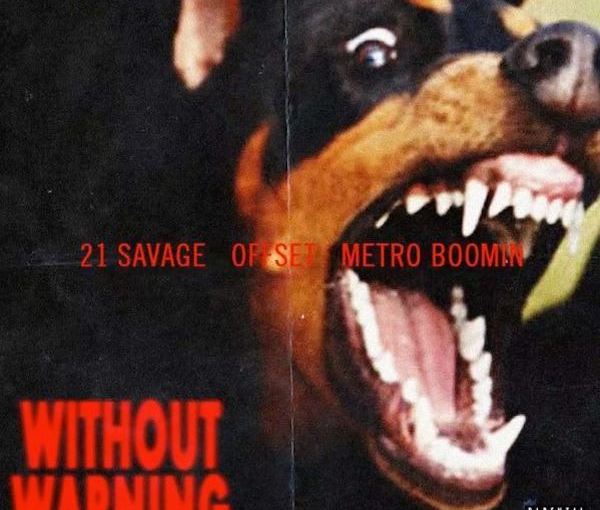
2017 Year in Review: Albums (i.e., Rap Albums)

I didn’t really put a lot of effort into keeping up with new releases outside of rap, but I tried to at least sample everything that I heard positive reports about.  I don’t think I encountered any masterpieces this year.  Among rap albums, I would go out of my way to say that for me Kendrick Lamar’s DAMN was the worst major release of the year, mostly because of the slow jams.  I was extremely disappointed, because I really liked one or two of the singles, but what a bummer of an album.  On the other hand, Kendrick’s guest spots on other people’s stuff were uniformly excellent.

My favorite rap albums and mixtapes were

  1. Without Warning- 21 Savage, Offset and Metro Boomin.  Perfect trap album.
  2. You Only Live 2wice- Freddie Gibbs.  A leap forward for a great lyricist.
  3. Big Fish Theory- Vince Staples.  Maybe not his best rapping, but the EDM!
  4. Project Baby 2-  Kodak Black.  Kodak gets reflective.
  5. Flower Boy- Tyler the Creator.  Tyler (the ultimate homophobe) comes out of the closet.  Not my favorite musically but this thing is profound.
  6. My Favorite Mixtape- Boosie Badazz.  Cancer just made Boosie harder.  But also more reflective.  Feels like retro 3rd coast shit, with lots of twang.  A little uneven but my affection for it is high.
  7. Pretty Girls Like Trap Music- 2 Chainz.  The best 2 Chainz album.  Nothing groundbreaking,  just a solidly executed trap album.
  8. 4:44- Jay Z.  I got tired of it fast but this is undeniably good.  Hova as provocateur/late capitalist robber baron/motivational speaker/apologetic husband who the whole world wants to smack for this Becky shit
  9. Culture- Migos.  Overplayed but extremely solid.  Well-executed trap.
  10. Gangsta Bitch Music Vol. 2- Cardi B.  Cardi is breakthrough MVP of the year.

Honorable mention to Gucci Mane.

There was one jazz new release I got into: Fluku from Large Unit.  I heard the track Happy Slappy on the radio and was captivated. https://pnlrecords.bandcamp.com/track/happy-slappy-2

There was also one electronica release that grabbed my attention: Black Origami from Jlin

The pop releases I liked best were

Utopia – Björk

Plunge- Fever Ray

Take Me Apart- Kelela

I enjoyed Hiss Spun from Chelsea Wolfe but I thought it was weaker than her previous album.  I liked the Lorde album but I’m not proud of that.  I thought the St. Vincent album was her best yet but I got tired of it very quickly.  Please feel free to send recommendations for stuff I missed, especially jazz, metal, electronica and classical.  I just haven’t had the energy to rigorously keep up with new stuff outside of rap.


A Guide to Jacques Rivette

Celine and julie.jpg
still from Céline and Julie Go Boating

Edit (2022): this was my first major blog post, and I had no idea at the time that copy-pasting images was a bad idea. Hence all the broken image links. Also, info about how to find these movies is badly out of date. There has been a lot of Rivette action the last five years.

There is wide chasm between the importance of Jacques Rivette’s work and the amount of attention it receives in the USA. My aim here is to promote Rivette awareness and provide information and guidance for those who are looking to get into his stuff but unsure of how to proceed.

Intro
1. Why Care About Rivette?
2. Chronological Survey
The Sixties
The Seventies
The Eighties
The Nineties
The Aughts
Miscellaneous
3. The Viewing Guide
Where to Start
Recommended Viewing Itineraries, organized by degree of hardcore-ness

Continue reading A Guide to Jacques Rivette

A Guide to Jacques Rivette

Note: this was my first serious piece of film writing (intended for the philosophy of art community) and at the time I had no idea that copy-pasting the images was a bad idea. Hence, many of them are broken now. The tips about how to see these films are also badly out of date.

There is wide chasm between the importance of Jacques Rivette’s work and the amount of attention it receives in the USA. My aim here is to promote Rivette awareness and provide information and guidance for those who are looking to get into his stuff but unsure of how to proceed.

Intro
1. Why Care About Rivette?
2. Chronological Survey
The Sixties
The Seventies
The Eighties
The Nineties
The Aughts
Miscellaneous
3. The Viewing Guide
Where to Start
Recommended Viewing Itineraries, organized by degree of hardcore-ness
Continue reading A Guide to Jacques Rivette

Film diary, vol. 2

The conclusion of Twin Peaks: The Return left a major aesthetic vacuum in my life.  I felt invigorated and ready to do some ambitious movie-watching.   I started the massive project of watching through the complete filmography of Jacques Rivette.  I’m about done with that and will post a piece about Rivette sometime soon.  I’m not including the Rivette movies in this diary.  I watched a ton of other stuff during the last couple months as well.  I mildly injured myself mountain biking twice this year and decided to lay off a little, and so during my free time I just took a run for exercise and then watched lots of movies.  There was also all the oppressive wildfire smoke that kept me inside for most of September.  I kept a fairly complete diary, though I’m sure I forgot to record a few things.  I watched many of these movies on Filmstruck and Amazon (which has been on point lately, both in the channels like Fandor it offers and in its prime streaming and rental opportunities, thanks to its affiliation with some awesome distribution companies like Arrow).  I also watched quite a few on Mubi, which is a great service.

Charulata (S. Ray)

I picked it because it seemed like it would provide a sharp contrast with Pather Panchali while staying in the first half of his career. This was an accurate assessment. It’s really great, and pretty much the polar opposite of Pather while still being recognizable as the work of the same artist. The Renoir influence is very clear, along with a healthy dose of Douglas Sirk. It seems like it may have been a stylistic influence for a lot of Bergman’s later work.

Vengeance is Mine (Imamura)

Portrait of a serial killer, light on the psychologizing, heavy on the dark humor.  Great performance from Ken Ogata.  Seems like Sono picked up some influence here for Cold Fish.  Not my favorite Imamura, but very worthwhile.

Rendez-vous (Téchiné)

This is the 1985 film, not to be confused with the unrelated 2015 film with the same title.  I know for certain that I have seen this before but I had no recollection of it at all.  This is definitely not the place to start with Téchiné.  That would be Wild Reeds and Thieves.  I would only recommend watching this if you dig his stuff.  It’s like Jules et Jim meets Last Tango in Paris.  This was Juliette Binoche’s breakthrough performance.  She’s very young, and the role asks a lot of her.  Wadek Stanczak’s character comes across in 2017 like one of the original Nice Guys of Okcupid.

The Crime of Monsieur Lange (Renoir)

30’s Renoir.  Heavy handed socialist themes.  The first half drags, the second half is very lively. Jules Berry’s performance as the capitalist villain is awesome.

Surreal Estate (de Gregorio)

De Gregorio collaborated with Rivette on some of his best movies.  The movies he directed himself are fairly obscure, but mubi played the two most important ones (and they are also available on the amazon mubi channel).  Starts out masquerading as a gothic mystery in the vein of Wilkie Collins (who is later explicitly mentioned), where a British writer is shopping for a French country home and is lured into a potentially haunted estate by three mysterious women.  The story proceeds through typical genre tropes, twists and red herrings, but instead of the state of affairs becoming clearer as the narrative progresses, it becomes increasingly obscure and surreal.

Short Memory (de Gregorio)

I didn’t like this very much.  It’s okay.  It starts out not unlike a typical Rivette movie, with a young woman setting out to investigate a conspiracy, but unlike in Rivette, she finds the answers she’s looking for (and they’re not terribly interesting).

Three Outlaw Samurai (Gosha)

Fuck. Yes.  Absolute top tier classic samurai shit.

The Insect Woman (Imamura)

My least favorite of the three bundled together by Criterion as the “Pigs, pimps, and prostitutes” set.   Typical Imamura themes: the resilience of women, degradation brought on by hardship.  Hasebe cowrote and his involvement is apparent.  The film touches on Violent Pink themes without getting too explicit.

Endless Desire (Imamura)

An early antecedent of Woody Allen’s Small Time Crooks, this was a studio assignment for Imamura, but he directs it with verve and gusto.  It’s a very solid black comedy.

John Carpenter’s The Thing

I’ve seen this a zillion times and it never gets old.  Some of the best horror effects of all time.

My Winnipeg (Maddin)

I absolutely loved this when it came out but it diminished for me when I revisited it.  The stuff about Winnipeg is great but I wasn’t as keen on the navel gazing and nonstop psychoanalysis jokes.

Blood of a Poet (Cocteau)

Saw this available to stream and couldn’t resist.

Three Lives and Only One Death (Ruiz)

Excellent surrealist anthology film from the prolific Chilean filmmaker featuring Mastroianni’s penultimate performance (or is it several performances?).

Love Torn in a Dream (Ruiz)

Like an explosion at the Ruiz factory.  Nine interwoven stories featuring many of the director’s favorite themes and tropes.  Pirates, cannibalism, mysterious parentage, a magic mirror, a magic painting, theological debates, divination, etc. etc. etc.

They Live By Night (N. Ray)

Nicholas Ray’s first movie and an important entry in the “lovers on the run” genre.  Good Farley Granger performance.

Berbarian Sound Studio (Strickland)

Innovative postmodern horror movie.  Very interesting in its emphasis on the physicality of film and the nuts and bolts of sound effects production.  Full of very fun giallo references.

Female Prisoner Scorpion Series (four films)

I watched a lot of Japanese exploitation movies as palette cleansers between Rivette movies, because Japanese exploitation movies are the exact opposite of Jacques Rivette. These are fantastic but a very strong sexual violence content warning applies.  Definitely know what you are getting yourself into first with the Violent Pink genre.   This stuff is way more extreme than the 70’s “women in prison” exploitation movies from the US.  There is a lot of violence against women, to put it mildly (it gets avenged, though).  I wanted to see these because I absolutely love Meiko Kaji as Lady Snowblood and these movies revolve around her.  She is fucking great.  The third movie is my favorite, followed by one, then two, and the fourth movie is a distant last place.  Hasebe—a director I normally like—directed the fourth one and it just feels like a pale imitation of the first three (directed by Ito) with little to add.  Also, the fourth one focuses way too much on a male character being tortured by the police.  The first three are strongly centered on Kaji.

Three (To)

Three is a very strange hybrid of a medical thriller and a Triad movie.  The entire movie takes place inside a hospital, where a young female surgeon seeks to save a wounded gangster who is trying to bide his time until his crew can bust him out while a cop stands guard and seeks to interrogate him.  The finale is the awesomest thing ever.  It would be impossible to overstate how awesome it is.  Be warned that the movie is also very much a medical thriller, and there’s a ton of graphic surgery

Exiled (To)

Wanted to revisit some Johnnie To favorites after watching Three.  I had to resort to internet shenanigans to get an HD version of this.  Do not watch the shitty dubbed version on amazon!  This is probably my favorite To film.  Glorious action ballet, thematically centered on friendship and loyalty.

Sparrow (To)

Delightful Johnnie To passion project that he filmed sporadically in between other projects.  It’s a love letter to French cinema, with an emphasis on Bresson, Demy, and Melville.  Hong Kong pickpocket ballet, less violent than most of his stuff.  This is essential Johnnie To.

Mad Detective (To)

Excellent Johnnie To madness.   A mentally ill former detective can see peoples’ inner personalities and is brought in to help with an old case.  Love the Lady from Shanghai references.

Wonder Woman (Jenkins)

I hated it.  Hurray women, boo war, but hurray women warriors, because their war is against war!  Limp action scenes displaying zero flare or creativity.  I like seeing Gal Gadot do her thing, but she’s too good for this movie.

Vengeance: A Love Story (Martin)

Nicolas Cage barely acts.  He gives like one speech at the end but mostly his characterization just consists in the fact that he’s Nicolas Cage.  I do not recommend this movie, although I didn’t totally hate it.  It’s an exceptionally ugly rape-revenge story that really focuses long and hard on the protagonist’s PTSD.  The high point is probably Don Johnson as an uber-sleazy lawyer (the court scenes are among the most ridiculous I’ve ever seen

Stray Cat Rock: Delinquent Girl Boss (Hasebe)

Pretty tame next to the Female Prisoner Scorpion movies, and not enough Meiko Kaji in this installment.  I intend to watch the rest of the series (with the expectation that there’s a lot more Meiko Kaji in the other films).  I’m especially interested in the ones directed by Fujita.

Weekend (Godard)

Probably my favorite Godard film, I hadn’t seen it in a long time and was excited to see it show up on Filmstruck.  Definitely watch it.

Mother! (Aronofsky)

Meh.  It’s got both flaws and merits.  Definitely something to see.

Gerald’s Game (Flanagan)

Strange movie, I enjoyed it.  There is some world class body horror.

Intentions of Murder (Imamura)

This and Pigs and Battleships are my favorite Imamura so far (still need to watch quite a few things).  Like The Insect Woman, this was co-written by Hasebe.  It is considerably more disturbing than that film.  It combines the Violent Pink themes that characterize Hasebe’s work with Imamura’s technical mastery and expressive potency.

The Trial of Joan of Arc (Bresson)

Revisited this to prep for Rivette’s Jeanne la Pucelle.  Rivette thinks it’s equal to Dreyer’s film (which I know well enough that I didn’t feel a need to revisit it).  I’m not sure about that, but it is a fascinating, austere film that takes Bresson’s style to extremes.  I struggle to believe that Joan as she’s portrayed here was ever a warrior.  That’s the only issue I have with it.

Pumpinhead (Winston)

It’s a transcendent example of 80’s schlock horror, with some absolutely astonishing sequences.  The creature effects are out of this world.  Great Lance Henriksen performance.

Black Rain (Imamura)

Bleak and miserable look at the consequences of the US’s A-bomb attack on Hiroshima.  Not my favorite Imamura.

L’enfance Nue (Pialat)

Pialat’s first film, a raw and emotionally difficult look at a young boy stuck in the foster care system who acts out in disturbing ways.

Massacre Gun (Hasebe)

High quality 1967 Nikkatsu yakuza shit, directed by Hasebe.  The great Jô Shishido runs afoul of his crime family and leads a mutiny.

You Only Live Once (Lang)

Fritz Lang’s second American film (made in 1937), Henry Fonda wants to go straight but can’t catch a break.  Extremely solid.

Survival of the Dead (Romero)

Romero’s last Dead film.  Better than I gave it credit for when it was released.  It’s all about tribalism.

The Mummy (Kurtzman)

Middle aged Tom Cruise is so depressing.  I’m looking forward to elderly Tom Cruise (Tom Cruise as Dumbledore?).  The movie is terrible.  I watched most of it and then turned it off with a half hour left because I wanted to cut my losses.

Blade Runner 2049 (Villeneuve)

All about the atmosphere and production design, which are well done.  I thought it was very solid and it satisfied me as a fan of the original film.  JJ Abrams could take a lesson on how to redeploy Harrison Ford.

The Earrings of Madame De… (Ophüls)

I hadn’t seen this in a long time.  Wonderful from start to finish.  Not unlike Anthony Mann’s Winchester ’73, which is centered on a rifle as it changes hands several times, this film follows a pair of earrings through an improbable series of events.

Demons 1+2 (Lamberto Bava)

Very fun splatter horror from the son of the great Mario Bava that gets into some interesting meta-fictional territory.

Black Society Trilogy (Miike)

Early trilogy from Miike deals with one of his central themes: cultural displacement.  The first film, Shinjuku Triad Society, is about Chinese gangs in Tokyo, the second film, Rainy Dog,  is about a Japanese gangster stuck in Taipei, and the third film, Ley Lines, is about three Chinese immigrants who move to the big city from rural japan, befriend a prostitute from Shanghai, and get involved in the drug trade.  The first film is fucking bonkers and definitely my favorite.  Lots of really jarring sexuality (and sexual violence), mostly between men, and anyone prone to be upset by such things should beware.  The second film is more subdued.  It’s pretty good but doesn’t stand out among Miike’s vast body of work.  The third film is the most technically accomplished and more subdued than the first film, but less subdued than the second.

Dead or Alive (Miike)

Batshit Miike yakuza movie, I hadn’t seen it in quite a while.  The beginning and end are off the charts.

Pierrot le Fou (Godard)

Very good, but doesn’t stand up well next to Weekend (which it resembles).  It drags a bit and is unfocused in a way that doesn’t entirely work.  It’s very worthwhile, though.

Tag (Sono)

Looney Sono mindbender.

The Driller Killer (Ferrara)

Experimental highbrow exploitation horror from Abel Ferrara.  Definitely one to see for all horror fans.

Retaliation (Hasebe)

Middling yakuza shit.  Raw, verite style was an inspiration for the Yakuza Papers series.

Pitfall (Teshigahara)

The first film from the director of Woman in the Dunes. I didn’t really care for it.  The social commentary is heavy handed and the supernatural element is under-realized.

La Marseillaise (Renoir)

Very entertaining historical drama from Renoir about the beginning of the French revolution, splitting  its focus between a large variety of subjects, ranging from Marie Antoinette to rural peasants.

Testament of Dr. Mabuse (Lang)

Rivette homework.  Lang was one of Rivette’s biggest influences, and this film is a keystone.  It’s a bit bloated but its high points are exquisite.  It seems like this must have been an inspiration for BOB in Twin Peaks.  

Hour of the Wolf (Bergman)

One of the only Bergman films after his early period that I hadn’t seen.  I saw the other two parts of the trilogy, Shame and The Passion of Anna, a very long time ago, but I decided to save this one and it got away from me for many years.  It’s great, combining elements of Persona with horror themes.

*******************

Rossellini binge

Sometimes you’ve just gotta take a day or two off from life and settle in for a Rossellini marathon.   I woke up one morning feeling burned out and knowing that the only thing I wanted to do that day was watch Rossellini movies.  It ended up carrying into the next day.

Rome Open City

White hot fire, filmed in the smoking rubble of post-war Rome.

Paisan

The least immediate of the war trilogy.   Six vignettes set all around Italy focusing on interactions between Americans and anti-fascist Italians.  The exploration of communication barriers is interesting but the movie is uneven and doesn’t stand up well to comparison with the other two.

Germany Year Zero

One of the most miserable movies ever made.  After the pointedly negative portrayals of Germans in the first two installments of the war trilogy, he turns a more compassionate gaze on suffering poor people living in the rubble of Berlin after the war (including a Nazi solider who fought till the end), focusing on a 13 year old boy.  It’s powerful, painful, vital cinema.

The Flowers of St. Francis

Co-written with Fellini, who brings his sense of humor to the table.  A series of vignettes about St. Francis, alternating rapidly between slapstick comedy and solemn exploration of self-sacrifice and spiritual commitment.  Real monks as actors.  Delightful.

Europe ‘51

Combines elements of Germany Year Zero and The Flowers of St. Francis. Ingrid Bergman plays a wealthy woman who becomes a saint-like figure in response to a personal tragedy.  Very strange, surprising movie.

Stromboli

Probably my favorite Rossellini.  Ingrid Bergman plays a fancy Lithuanian woman who is caught up in internment during the war and marries an Italian peasant boy to escape her circumstances, only to be brought to live on a barren volcanic island where she is abjectly miserable.  Remarkably, the volcano erupted during filming, and Rossellini captured some astonishing footage, both of the volcano and of local fishing practices.  The ending is transcendent.

Journey to Italy

Proto-Antonioni.  A British couple visits Italy to sell an inherited villa and their marriage starts to fall apart.  Classic and essential.

The Taking of Power by Louis XIV

Probably my second favorite Rossellini.  Jean-Marie Patte’s performance as the Sun King is truly bizarre.  He’s easy to underestimate, which enables him to set unexpecting conspirators up for a crushing Michael Corleone-esque play to consolidate power.   Perhaps the greatest movie ever about fashion and one of the best renditions of the costume drama.

*****************

Sansho the Bailiff (Mizoguchi)

Classic, essential Mizoguchi.  Exceedingly miserable, rapturously gorgeous.

Touki Bouki (Mambéty)

Senegalese Godardian romp.  It’s great, but content warning: several animals get their heads cut off onscreen.  Especially interesting on gender and sexuality.

Personal Shopper (Assayas)

Not my favorite Assayas, but very worthwhile.  I found it compelling as a portrait of the detachment that characterizes modern life (the protagonist doesn’t directly interact with the most significant people in her life), but flawed in several respects.  Way too much iPhone screen and typing sounds.  Mute those typing sounds and throw a score over it or something, I couldn’t handle it.  I do think it’s interesting to look at the suspense and preoccupation involved with communicating through text message, but I didn’t find the actual content of the text messages very interesting and the movie overplays its hand re: texting.  I also thought some revelations/resolutions are too abrupt and neat and it would have played better to retain more ambiguity.

The Golden Coach (Renoir)

The best movie about the relationship between art and life.

Pépé le Moko (Duvivier)

Cool as fuck 1937 French noir.  Pépé running around the Casbah eluding the law and seducing wealthy tourists.

Nocturama (Bonello)

2016 film, starts out in Rivette territory, there’s a brief Godard interlude, then we get George Romero does The Bling Ring.  I found the allegory to be heavy handed but there are some great moments and I appreciate that it stays fairly abstract.

The Whip and the Body (Bava)

Wonderful Bava technicolor S&M ghost story with a creaky mansion, hidden doors, a haunted dagger, and all kinds of other cool stuff.

Boudu Saved from Drowning (Renoir)

Excellent slapstick social satire.  The great Michel Simon plays a barbaric tramp who is rescued from drowning and invited to live with his bourgeois benefactors.


Streaming Recommendations, Vol. 2

Recommendations from Josh are labeled with his initials, ‘JS’.

Netflix

Raw

Best horror movie of 2017 so far.  Julia Ducournau’s debut follows in the footsteps of Claire Denis’ magnificent Trouble Every Day, with its seething, sensual, feverish depiction of gnawing hunger and psychological dissolution.  This is some highbrow French cannibal shit.

Three

Probably not the best place to start with Johnnie To, but not the worst.  To marries the Hong Kong action aesthetic with the French New Wave and maybe a little Coen Brothers and Wes Anderson (and something else that is distinctly his own).   I would suggest Election, Election 2 (also known as Triad Election), Exiled and Sparrow as the best places to begin with To, though most of these are hard (but not impossible) to see in the US at this point.  Do not watch the shitty dubbed version of Exiled on Amazon!  Do not watch any of these movies dubbed!  Three is a very strange hybrid of a medical thriller and a Triad movie.  The entire movie takes place inside a hospital, where a young female surgeon seeks to save a wounded gangster who is trying to bide his time until his crew can bust him out while a cop stands guard and seeks to interrogate him.  The finale is the awesomest thing ever.  It would be impossible to overstate how awesome it is.  Be warned that the movie is also very much a medical thriller, and there’s a ton of graphic surgery.

TAG

Not for everyone!  If you like Sono then go for it. Mind-bending narrative.  Expect to see a lot of schoolgirls getting cut in half. Berserk movie.

Together

This is the light, nostalgic side of Lukas Moodysson.  Stellar drama about a 70’s hippie commune.

Deep Blue Sea

A beloved cult favorite (in my house, at least).  Intelligent sharks.  These sharks can bring down a helicopter.  LL Cool J subverts the usual “disposable token black guy” genre convention.

Che

I waited years to see this.  I got way more into Soderbergh after Side Effects (a De Palma-esque thriller that I totally loved) and finally gave it a shot.  You know what?  It’s really fucking good and not at all what I expected.  Not romanticized.

The Assassin

My sense is that a lot of people saw this, but if you didn’t, consider checking it out.  It’s a wuxia from Taiwanese director Hou Hsiao-hsien.  Very elusive, extraordinarily gorgeous.  There’s a reasonably clear narrative for the first half but by the end who the fuck knows what’s happening.  If you like wuxia and aren’t afraid of experimental narratives, then go for it.

The Salvation

Trigger warning!   Harrowing Danish revenge western starring Mads Mikkelson.  Lean and mean.  Arguably the best western of the last few years.

The Treasure

Oddly riveting deadpan comedy from Romanian New Wave director Corneliu Porumboiu.  Endearing and mesmerizing, with a doozy of an ending.   (JS)

Mother

There are several movies with this title, and this one (by Bong Joon-ho) is probably the best, followed by the Albert Brooks film.  This is Bong in a similar police procedural mode to his masterpiece Memories of Murder, but with the mother character filling the central detective role.  (JS)

Amazon

Dead or Alive

Excellent Miike yakuza shit.  This is a good entry point into Miike.  It helps if you already have some familiarity with the yakuza genre. Possibly the wildest first ten minutes of any movie ever.

Gozu

Not for everyone!  If you like Miike, then by all means go for it.  If you’re not familiar with Miike, ask yourself if you’d like to see an absurdist comedic yakuza horror film with an episodic structure loosely modeled after a classical epic.  If there’s any doubt at all, this is not the movie for you.  Copious breastmilk.

Duelle

I’m in the middle of a complete Jacques Rivette watch-through (which is a large undertaking that I will write about when I finish), and I’ve been dismayed by how few of his movies are readily available in the US.  It was a delightful surprise to find the beautiful new HD transfers of Duelle, Noroît, and Merry-Go-Round from the Arrow blu-ray set on Amazon Prime.  He originally intended a tetralogy of genre-bending films centered around a fantastical feminist cosmic mythology, but had a nervous breakdown during the third film (a musical) and abandoned the project, ultimately making Merry-Go-Round in lieu of the final two films he had planned.  Rivette is most definitely not for everyone, but Duelle is one of the more accessible, entertaining films from the first half of his career.  It starts out as an elusive mostly-female noir where two women (played by two of the finest actresses of the era, Bulle Ogier and Juliet Berto) are engaged in some sort of mysterious conflict.  I don’t want to give anything else away, but the movie is totally mind-blowing.   If you absolutely love it, proceed to the other two, which are less accessible.  His concept for the series was “to invent a new approach to film acting, where speech, pared down to essential phrases, precise formulas, would play the role of poetic punctuation.”  If that turns you off, avoid Noroît, which enacts this concept pretty aggressively.   It’s a mostly female pirate revenge movie full of dance-like choreography.

The Lost City of Z

James Gray tackles epic adventure filmmaking while retaining his distinctive voice.  The movie is a class act through and through, dealing sensitively with issues of colonialism while delivering a gorgeously filmed adventure story.  (JS)

The Witch

If you slept on the best horror movie of 2016, now is as good a time as any.  Legit terrifying.

The Assignment

Hear me out on this one.  It’s a blessing that Walter Hill is still making movies.  This got shat on before it was even filmed because it uses a gender transition as a sensationalist plot point.  It does indeed do this.  Michelle Rodriguez plays a male hitman who is involuntarily given a sex change operation as revenge.  The first act where she plays a man is definitely super weird and awkward, but then her performance becomes sort of brilliant.  She ends up as a male character trapped in a female body, and it ends up working as a vivid inverted depiction of gender dysphoria.  I found it to be actually quite intelligent and progressive in its B movie way.  Typical Walter Hill badassery along the way.

An American Werewolf in London (also on hulu)

A classic, you’ve probably seen it.  But if you haven’t: I recommend!

Spider Baby

Rob Zombie frequently references this 1967 Jack Hill classic.  It’s really strange and awesome.  Starring Lon Chaney Jr.!

The Texas Chainsaw Massacre 2 (also on hulu)

This is the only Texas Chainsaw movie after the original that Tobe Hooper made himself.  It’s absolutely wonderful.  Very silly and campy, with a hilarious Dennis Hopper performance.  It sustains its Tobe Hooper fever pitch finale longer than any of his other movies, to grand effect.

Inferno                   

Second part of Argento’s Mother of Tears trilogy (along with Suspiria and Mother of Tears).  Not the place to start with Argento, but if you like any of his other movies, it’s worth a spin.  Great score and atmosphere.  (JS)  [note: the Argento movies we recommend most strongly after Suspiria are Opera and Phenomena, both of which are available to stream, but not included in Prime.]

Pumpkinhead (also Hulu)

It’s a transcendent example of 80’s schlock horror, with some absolutely astonishing sequences.  The creature effects are out of this world.  Great Lance Henriksen performance.  (JS)

Knock Knock

Overlooked nasty little gem from Eli Roth.  The great Keanu Reeves plays against type in a gender inverted home invasion thriller.  It reaches a hell of a frenzy by the end.  (JS)


Hulu

Mad Detective

Awesome Johnnie To movie (see Three above).  A mentally ill detective who can see people’s inner personalities is enlisted to help solve a cold case.  Probably not the best place to start with To, but also not the worst (especially if you have some familiarity with Hong Kong action movies and are fond of them).  Extremely inventive and weird.  Very entertaining.

Fright Night

Fun 80’s vampire movie, not scary.   Would be fun for a pre-Halloween movie night with friends.

Kiss of the Damned

Sexy as hell retro vampire movie in the tradition of 70’s gothic vampire erotica like Daughters of Darkness (with Delphine Seyrig) and Jesus Franco’s Female Vampire.

Berbarian Sound Studio

Innovative horror movie about a British sound effects guy who travels to Italy to work on a horror movie.  Lots of really fun giallo referencesVery interesting focus on the physicality of film and the nuts and bolts of sound effects production.

Splinter

Excellent independent horror movie.  Trapped in a gas station, monstrous parasites.  Stands apart from most recent horror movies due to its spectacular practical effects.

Hatchet

Delightful retro slasher fare.  The sequels are great as well.

The Loved Ones

Australian first time filmmaker Sean Byrne successfully mixes John Hughes with torture porn.  It’s legit horror, surprising and twisted.  (JS)

Survival of the Dead

Underrated final installment of the Dead series anticipated today’s political tribalism.  Buckets of badass zombie gore, though unfortunately it has more CG effects than the previous installments. (JS)

Cecil B. Demented

John Waters’ “fuck you” to Hollywood and love letter to transgressive, renegade filmmaking.   (JS)

Byzantium

Excellent Neil Jordan vampire movie.  Saoirse Ronan is memorable.


Filmstruck diary, vol. 1

I am loving Filmstruck (the streaming collaboration from Turner Classic Movies and the Criterion Collection).  It’s not complete by any means (Hulu had a larger selection of Criterion titles) but I don’t mind that.  A little bit of narrowing down and curation steers me to titles I otherwise might not watch and thereby expands my horizons, whereas if they had everything under the sun available I would ironically be more likely to stick with my narrower preconceived agenda.  Filmstruck has definitely helped me spend my film-viewing time more productively: more world classics, fewer forgettable new releases.   I decided to keep a little diary of the titles I watch.   It’s hard to go wrong with such excellent curation so most everything has been great.

L’Argent 

I had actually never seen this before.  I try to save one or two films by great directors so I have something to look forward to.  I was saving this and finally decided to pull the trigger.  I quickly realized that this is where the Dardenne brothers bit their whole style from.  I was thoroughly awestruck by the film.  The money-begets-evil premise, borrowed from the first half of a Tolstoy novella, might have been unbearably trite in the hands of a lesser filmmaker.  Bresson takes it to an unexpectedly feverish and dark place.  Of course the execution is immaculate.

Les Dames du Bois de Boulogne (Bresson)

Early Bresson.  The Cocteau dialogue is a great pleasure, and you can see Bresson’s style developing.

Mouchette (Bresson)

Staggering masterpiece.  A companion piece to Au hasard Balthazar.  I realized that the ending of Fat Girl directly quotes a central scene here (trying to be vague to avoid giving plot points away to people who haven’t seen either or both).

Lone Wolf and Cub series (6 films, multiple directors)

The shogun’s executioner–an invincible swordsman– is betrayed and becomes a rogue assassin along with his young son.  I had only seen the dubbed American recut of the first two movies, Shogun Assassin, which is garbage compared to the Japanese versions.  I enjoyed these movies so much!  I wish there were 20 of them.  Tarantino quotes this series extensively (unsurprisingly).   Each of the six movies has a distinct quality, ranging from eerie spirituality to raunchy exploitation, and they are all fantastic.  I love that any time someone questions whether this is an appropriate situation for a child, Ogami’s explanation is simply, “My son and I walk the demon way in hell together.”

Pigs and Battleships (Imamura)

Hadn’t seen this.  Fucking loved it.  Wow, did I love it.   It made it clear to me how much Sion Sono (who I am a big fan of) gets from Imamura.  It’s about the relationship between the occupying American military and the locals (particularly the yakuza) in postwar Japan.  This movie is at a fever pitch from start to finish, but there’s a definite crescendo.  Spinning overhead shots, pigs everywhere.  I was particularly struck by the way the American Navy is portrayed—like cartoonish barbarians in sailor suits.

Death Race 2000 (Bartel)

An utter delight as always.  A high point of the 70’s cult aesthetic.

Sisters (De Palma)

I’m a De Palma superfan so of course I love this.  Lurid, hyper-stylized Hitchcock pastiche.  It’s an immature work, but not in a bad way.  It feels like he’s overflowing with ideas and has no restraint.

Le Samouraï (Melville)

One of my favorite movies ever.  I see it as a keystone of the great tradition of movies about a man (or woman) who lives by a code.  Since the last time I saw it I’ve thought a lot about the ways that Jarmusch paid homage to it in The Limits of Control and Ghost Dog, and it was interesting to revisit it in that light.

Mystery Train (Jarmusch)

Hadn’t seen this in ages.  It’s fun, but a minor work.   It’s a quirky, Elvis-centric anthology film.  Joe Strummer is great.

Andrei Rublev (Tarkovsky)

I’ve seen this four times now.  It’s not a movie to approach lightly.  I made a huge leap this time in my understanding of the film.  I previously thought most of the segments were only loosely connected, but now I realize that they trace a very particular theme: Rublev’s initial inability to represent suffering or dark themes and the development of his ability to do so.  He first awakens to darkness through the events surrounding the Tatar raids (particularly the fall of the holy fool), and then his will to create is rekindled by the bell-making experience.

Pather Panchali (S. Ray)

Beautiful and devastating.  Lyrical portrait of life and death in poverty.  I haven’t gone any deeper than this into S. Ray but I intend to.  Big blind spot for me.

Party Girl (N. Ray)

I dig Nicholas Ray but hadn’t seen this.  His CinemaScope compositions are incredible.

The Umbrellas of Cherbourg (Demy)

Someone somewhere compared La La Land to this and it grossed me out and made me want to sit down with the real deal.   Don’t watch La La Land, watch this.

Beauty and the Beast (Cocteau)

Pure joy revisiting this.  I recommend it to every living person without reservation.

Spirit of the Beehive (Erice)

Hadn’t seen this.   Haunting movie about a young girl in Franco’s Spain who sees Frankenstein and starts to retreat into fantasy.   Guillermo del Toro clearly borrows heavily from this film.

The Friends of Eddie Coyle (Yates)

It kind of pained me to see Robert Mitchum as a rat but this is top shelf 70’s hard boiled crime cinema.  I hadn’t seen it.  Was very surprised to learn that Yates also directed Krull, which I’ve always had a soft spot for.

Certified Copy (Kiarostami)

I love this movie, and I’ve seen it many times.  I think the mistake a lot of people make is focusing too much on the theorizing about authenticity that takes place in the first half of the film.   I take the importance of the theorizing to be not its content per se, but rather the characterization it achieves and also the way it relates to the film’s overall structure.  This is not a didactic movie, though it could easily be mistaken for one.  I was particularly struck this time by how incredibly abrasive a lot of the acting is (purposefully so) and by the persistent visual focus on reflections.

Secrets and Lies (Leigh)

Hadn’t seen this since back when it came out .  It was probably the second Mike Leigh film I saw, after Naked.  It’s about a successful black woman who seeks out her birth mother and (much to both their surprise) finds a working class white woman.  I love Leigh’s work and this is no exception.  Brenda Blethyn is much shriller than I remember, which is hard to take but effective.  It’s a viscerally intense movie.

Viridiana (Bunuel)

Hadn’t seen this in a very long time.  Idealism crushed by depravity and vice.   This is essential Bunuel for sure.  It’s on the less flashy side for him but it’s thematically central.

Diabolique (Clouzot)

Hard to beat France in the 50’s for suspense movies.   This is one of the best.  It crosses into horror territory and was clearly very influential for Hitchcock.

Vampyr (Dreyer)

For me this rather than Nosferatu is the greatest early vampire movie.