I’ve been trying in recent years to cut back on new releases, which I often regret spending time on in lieu of deep dives into older fare. I spent most of 2025, however, working hard on a book while teaching full time, and I often caved to the lazy temptation to pop on a conveniently accessible new release at the end of the day. The result is that I watched about 200 films that were eligible for this list. Eligibility rules, as always, are loose: if it premiered (anywhere in the world) in 2025 or if it premiered in 2023 or 2024 and I didn’t have a way to see it until recently, then I counted it. Some of the foreign titles on my list will be released in the USA in 2026, but I would rather include them now than save them for next year’s list, in the hope that I might influence some of you to go see them. Regarding the Oscars, I’m less grumpy than usual about the crop of nominees. I don’t mind most of the best picture selections—the only ones I actively dislike are Hamnet and Frankenstein.
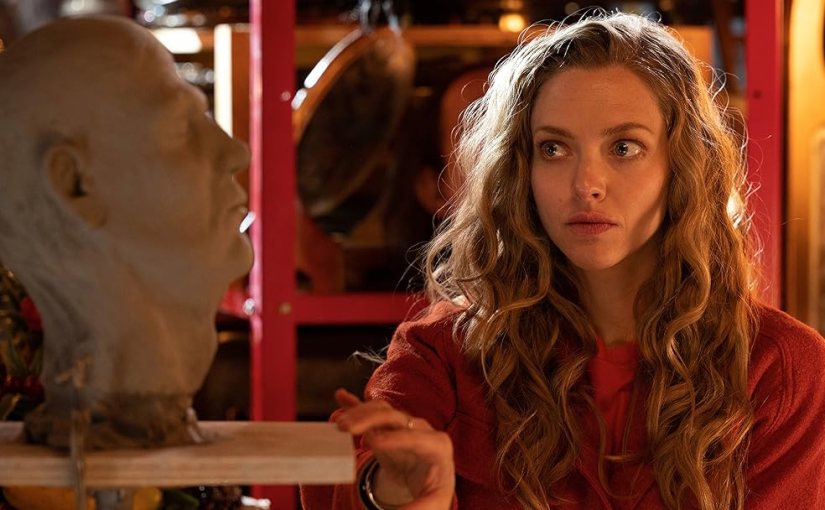
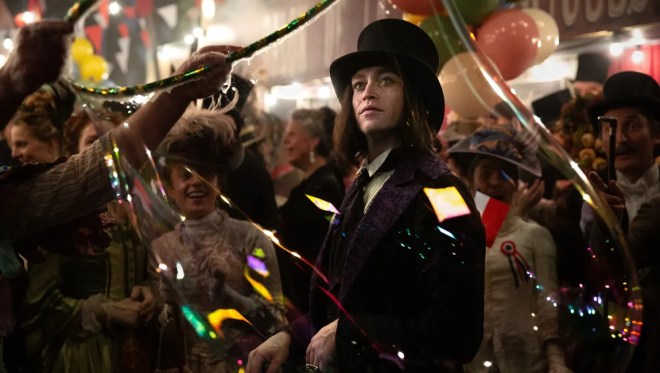
I went with a top 25 this year, with brief comments. For the most part, the ranking exercise felt even more arbitrary than usual, except for #1, which is an instant all-timer for me. I also solicited lists from my Angela, Josh, and Izzy (my wife, brother, and sister-in-law, respectively). Everyone decided for themselves how many selections to include and what to count as eligible. I’m sorry to say that no one but me had time to write comments. The featured image for this post, by the way, is from Seven Veils, which is one of two titles that made everyone’s list.
Without further ado, my list:
25) Dangerous Animals (Sean Byrne)
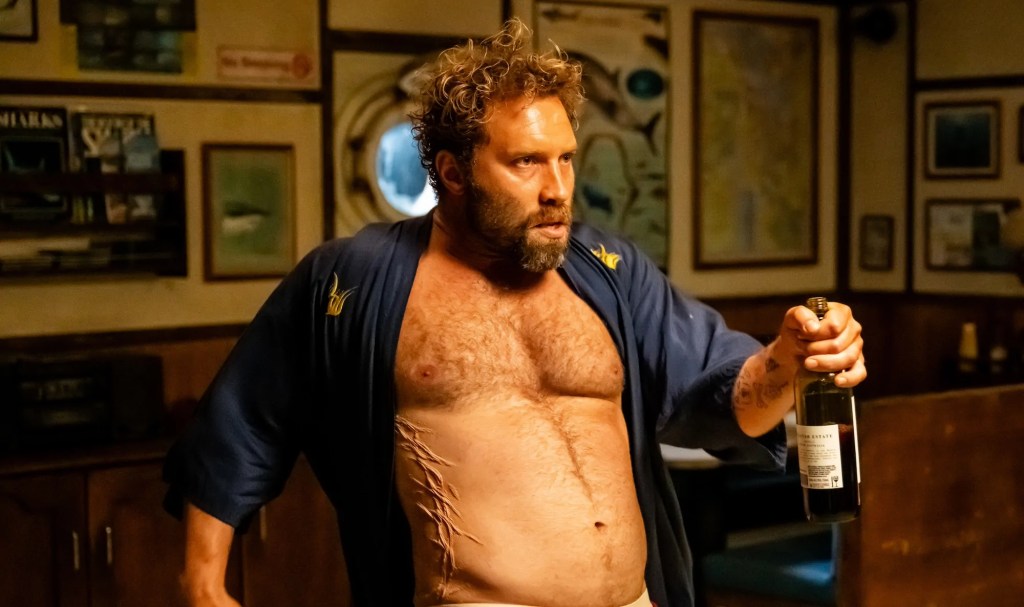
It’s the Peeping Tom of shark movies. I was excited to see something new from Australian director Sean Byrne (The Loved Ones), and I was not disappointed. Jai Courtney is an appealing character actor, but I never imagined he had something like this in him. His character instantly joins the pantheon of great horror villains.
24) The Cats of Gokogu Shrine (Kazuhiro Soda)
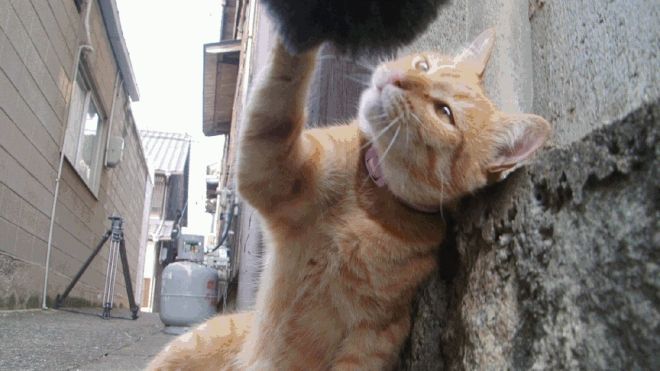
An observational documentary centering on a shrine in Ushimado that’s home to a large number of stray cats. Formally, I wouldn’t call it Wiseman-esque (it’s much looser and the director often interacts with his subjects), but Soda’s interest in the structures through which the community tries to balance their moral duties to the cats with other concerns (like how to deal with all the cat poop) certainly suggests Wiseman’s influence.
23) One Battle After Another (Paul Thomas Anderson)
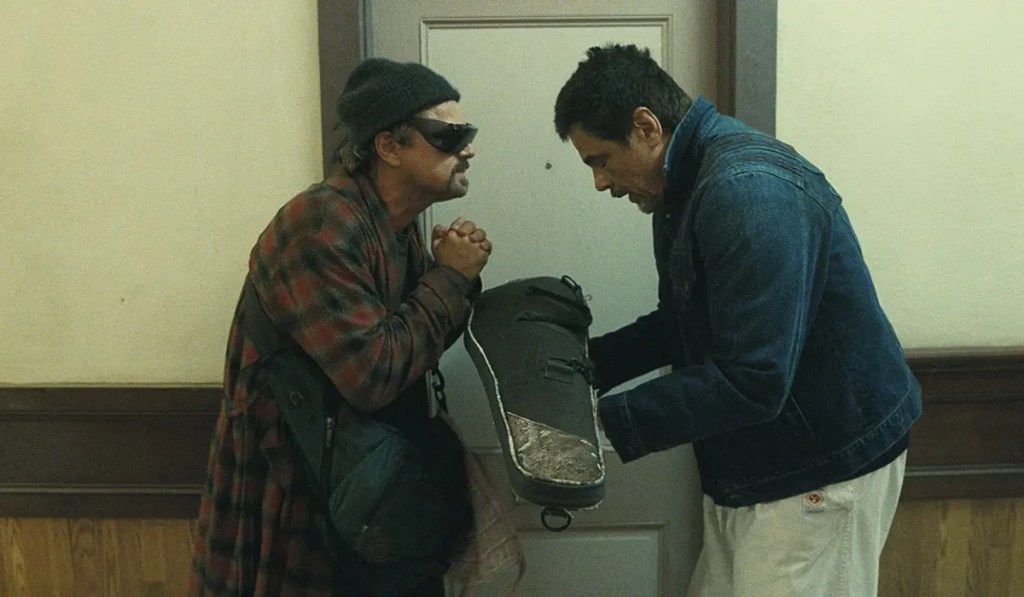
A very funny movie. It improved for me on a second viewing and has continued to grow on me. The aspect of it that interests me the most is its (again, very funny) portrait of aging radicals awkwardly interfacing with the younger generation. “Don’t go dark on me, Bob.”
22) Chainsaw Man – The Movie: Reze Arc (Tatsuya Yoshihara)

This movie reaches (and sustains) an extraordinary level of delirious madness. I adore the way it integrates its genuinely affecting love story with some of the craziest action you’ll ever see.
21) Black Eyed Susan (Scooter McCrae)
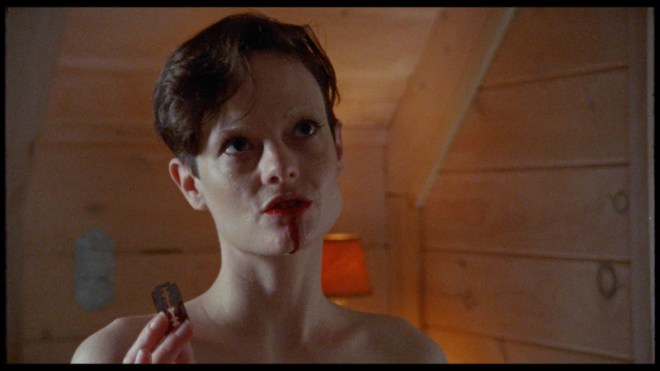
Our culture got from “Alexa, what’s the weather like today?” to “I guess we need robot feminism now” very quickly. This is a vastly more potent AI sex doll movie than Companion. It stretches its budget effectively and relies on Thälker’s icy robot performance to build its sinister energy.
20) Nilavuku En Mel Ennadi Kobam (Dhanush)
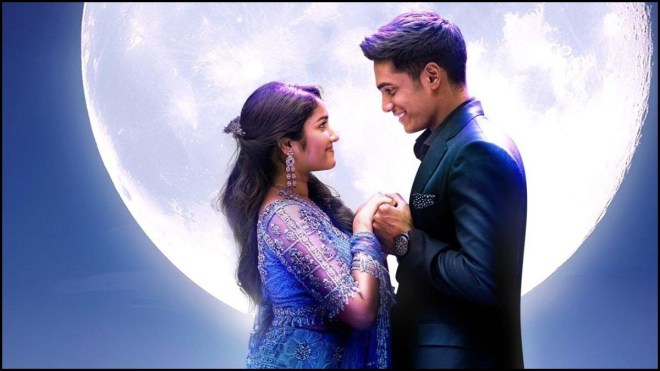
The title translates to “Why is the moon mad at me?” It’s Dhanush’s first directorial effort where he does not act (he did write this though, which is important). He was recently divorced, which makes a lot of sense—it’s a movie of infinite sadboy longing. Prabhu is an obvious young Dhanush stand in, and his level of mopey heartbreak is impressive. Despite the fact that the movie never lets up on its romantic masochism, it ultimately takes the shape of a spritely ronde, and by the end it borders on comic absurdity.
19) Sunlight (Nina Conti)
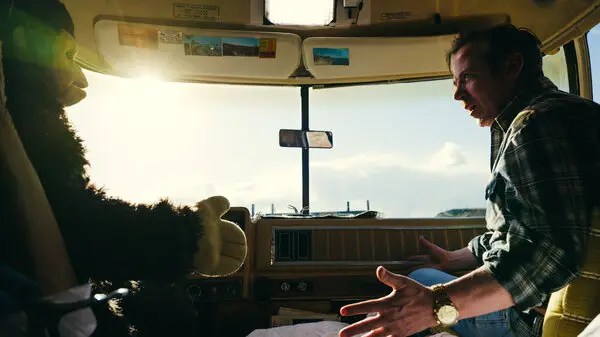
The debut feature from ventriloquist Nina Conti. I’ve been trying and mostly failing to get people to check it out for months. If you’re game, I would advise not reading any descriptions or summaries before watching it. The less you know about it going in, the better. All I’ll say is that it’s an unconventional romantic comedy where the main characters are a suicidal man and a woman in a monkey suit. Watch it!
18) In the Lost Lands (Paul W.S. Anderson)
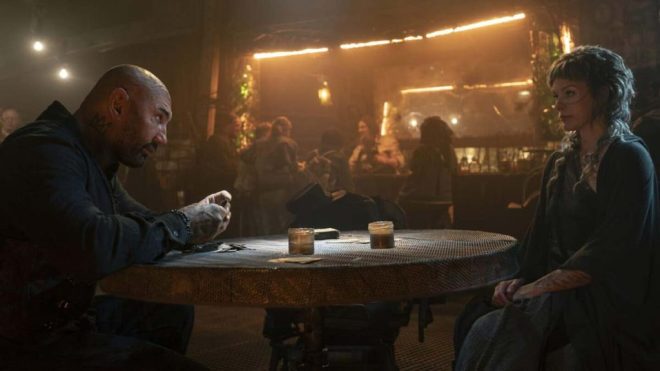
I love movies that are impossible to describe without sounding like a lunatic: it’s a western about this witch, Gray Alys, who can refuse no one. There’s only one city, everything else is the Lost Lands, and she hires Dave Bautista to be her guide because the queen wants to become a werewolf, but they have to contend with the Crusades-era Christian church, led by “The Patriarch.” I will watch this a hundred times.
17) The Phoenician Scheme (Wes Anderson)
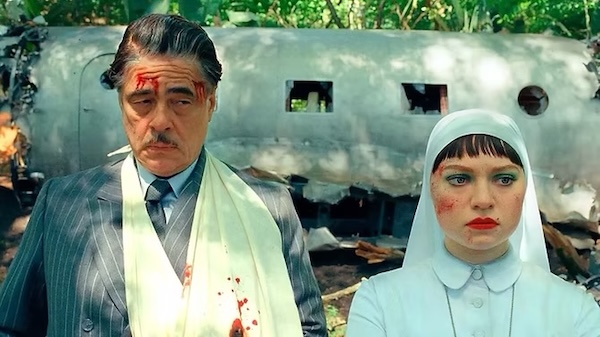
Wes Anderson’s Mr. Arkadin. There’s been a lot of discourse about whether One Battle After Another successfully meets the political moment, but less recognition that Anderson meets it rather forcefully here with his withering portrait of elite corruption and greed.
16) Where to Land (Hal Hartley)
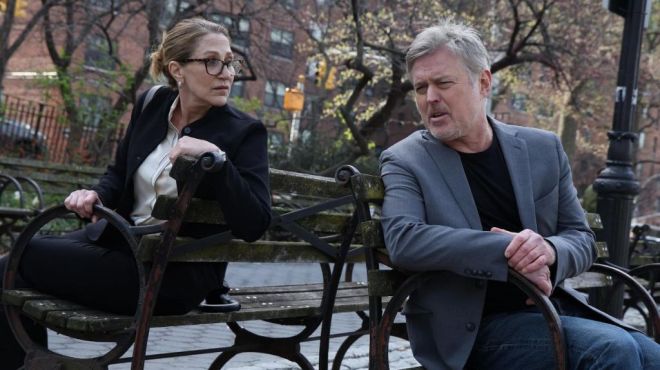
It’s deeply satisfying to slip back into Hartley’s familiar rhythms. This feels like a lovely little sonata, revisiting core themes with a tone of autumnal reflection. It’s not the best place to start with Hartley, but it’s a precious gift for those of us who associate him with the springtime of our cinephilia.
15) Highest 2 Lowest (Spike Lee)
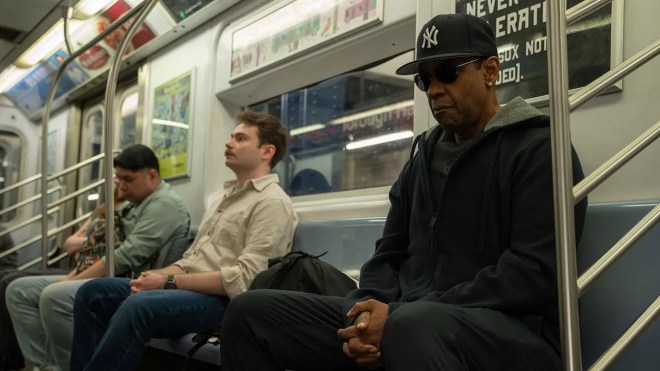
Like Lee’s other remakes, this uses the Kurosawa film as a launching point for other concerns and stands firmly on its own. What’s most interesting to me about it is his reckoning with his own legacy and cultural status as an elder statesman of black American cinema. The climactic set piece is tremendous, but I found the film gripping from start to finish. There are a number of scenes that don’t seem like they should work, but where Denzel Washington’s commitment is so strong that they absolutely do, such as the terrific scene where Washington’s character talks to photographs of some of the most famous black musicians of the 20th century and asks them for guidance.
14) Seven Veils (Atom Egoyan)
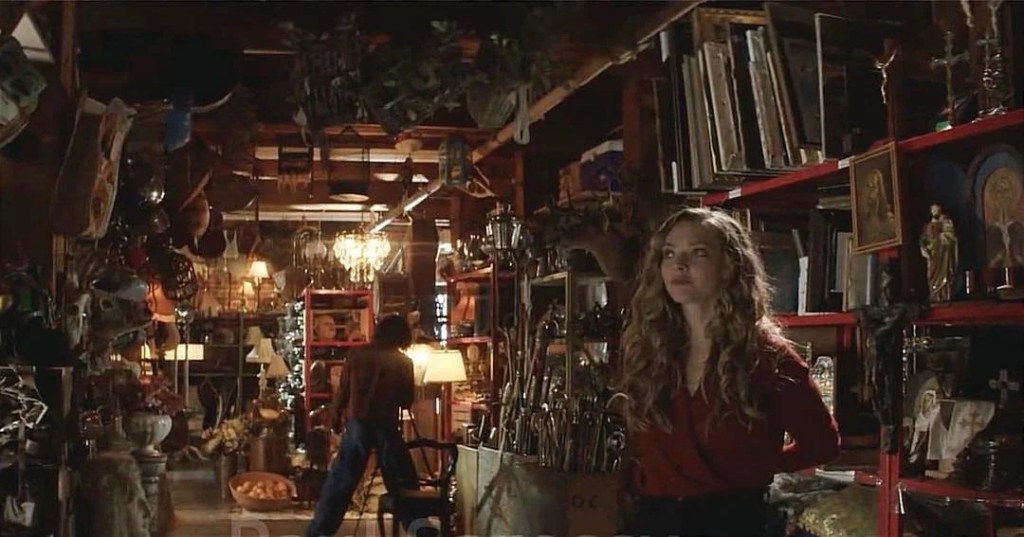
I admire the way Egoyan has stuck with his obsessions through such a long career. This is unmistakable; no one else could have made it. Amanda Seyfried may be the year’s acting MVP, between her performances in The Testament of Ann Lee, The Housemaid, and this (the least talked about of the three but IMO her best performance). This also has a fascinating self-reflexive dimension. It’s about a director (Seyfried) working on a production of Strauss’ Salome that connects her with her traumatic past, but Egoyan made it while he himself was directing a production of Salome, and he used the performers, sets, etc. from his own staging in the film.
13) What Does That Nature Say to You (Hong Sang-soo)
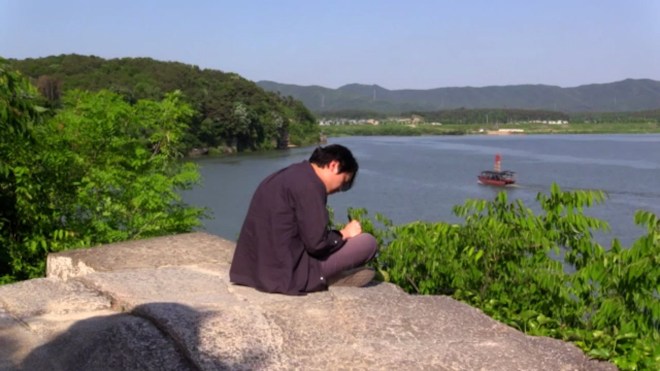
Another year, another little miracle from Hong. The scenario feels familiar (getting too drunk while meeting the polite but judgmental family of a romantic partner), but there are an abundance of sublime moments to set it apart.
12) Broken Rage (Takeshi Kitano)
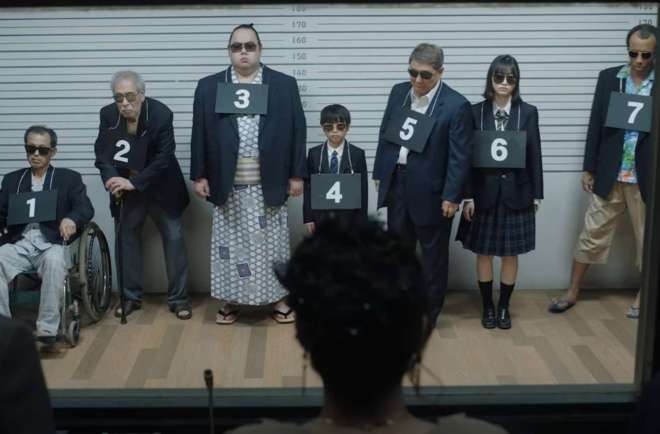
A delight. Kitano returns to one of his favorite themes: his own duality as international art film ambassador and domestic TV goofball. I don’t want to give too much away; this is another one that you should try to read as little about as possible before watching. It helps to have seen some of Kitano’s other films, but it’s not strictly necessary.
11) Eden (Ron Howard)
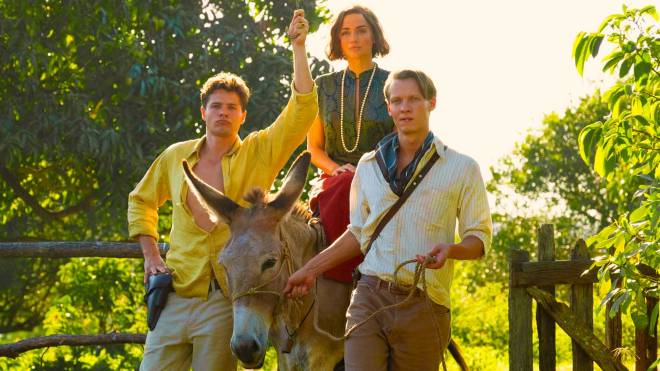
On the foundational violence of civilization. The level of perverse fun here is especially surprising coming from Ron Howard. Jude Law plays a wannabe Nietzsche trying to achieve atavistic authenticity by homesteading on the Galapagos Islands, but media coverage attracts a fleet of interlopers. In a witty bit of casting, Sydney Sweeney plays the frumpy, practical frau while Ana de Armas gets to be the disruptive sexpot. The birthing scene had me slapping my knee in disbelief.
10) Henry Fonda for President (Alexander Horwath)
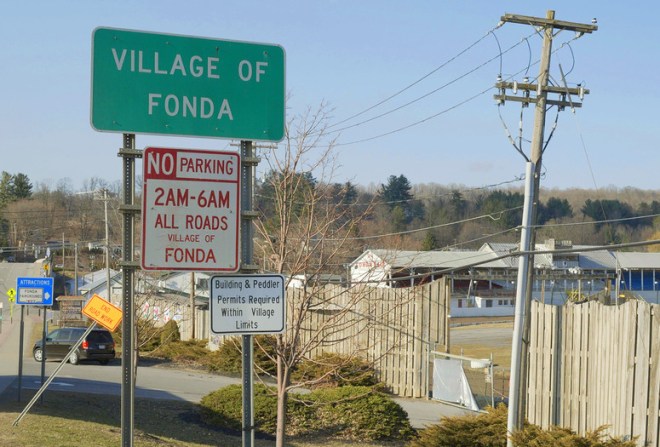
A rich and captivating essay film. Horwath oscillates between viewing America through the lens of Henry Fonda and viewing Henry Fonda through the lens of America, and every insight is worthwhile. I didn’t want it to end.
9) The Chronology of Water (Kristen Stewart)

An extremely intense movie. I watched the whole thing sitting bolt upright. There were moments when I caught myself almost wanting to call it pretentious (the laziest of all criticisms), but I revised my attitude to admiration of Stewart’s artistic courage. How else can you make a movie about this material—where someone processes horrific trauma by becoming a literal beatnik? Once I was able to giving myself over to this on its own terms, I was thoroughly impressed by the way it balances—and indeed unites—its vulgarity and poetry. It is ugly and beautiful in equal measures.
8) Ella McCay (James L. Brooks)
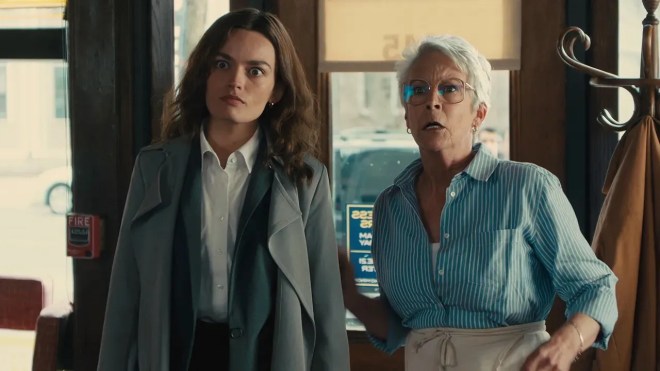
I can see how this wouldn’t appeal to you if you have a heart of cold, black stone. Before I saw it (it was released while we were in Japan, so I ended up having to wait for streaming), I had trouble avoiding all the hyperbolic negative reviews complaining about the dialogue and acting style. This seems like a film literacy issue: the elements that people complain about harken back to classic Hollywood, and they shouldn’t seem out of place if you’re accustomed to older movies and understand what Brooks is going for. It’s a Capra-esque story of idealism meeting reality, with Mackey in a role that might have been played by Jean Arthur. The whole thing is permeated with a distinctly Brooksian abundance of texture. The big scene between Ayo Edebiri and Spike Fearn is the high point of American cinema this year for me.
7) Desert of Namibia (Yoko Yamanaka)
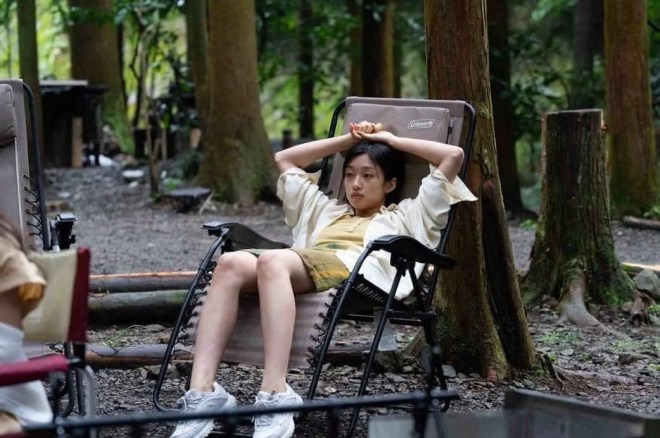
This assembles what looks on paper like an unsympathetic character study, but it is actually just the opposite. I don’t just mean that it’s actually sympathetic (which it is), I mean that it’s less of a “character study” than a study of the world from the protagonist’s point of view that makes her reactions to it legible.
6) Misericordia (Alain Guiraudie)
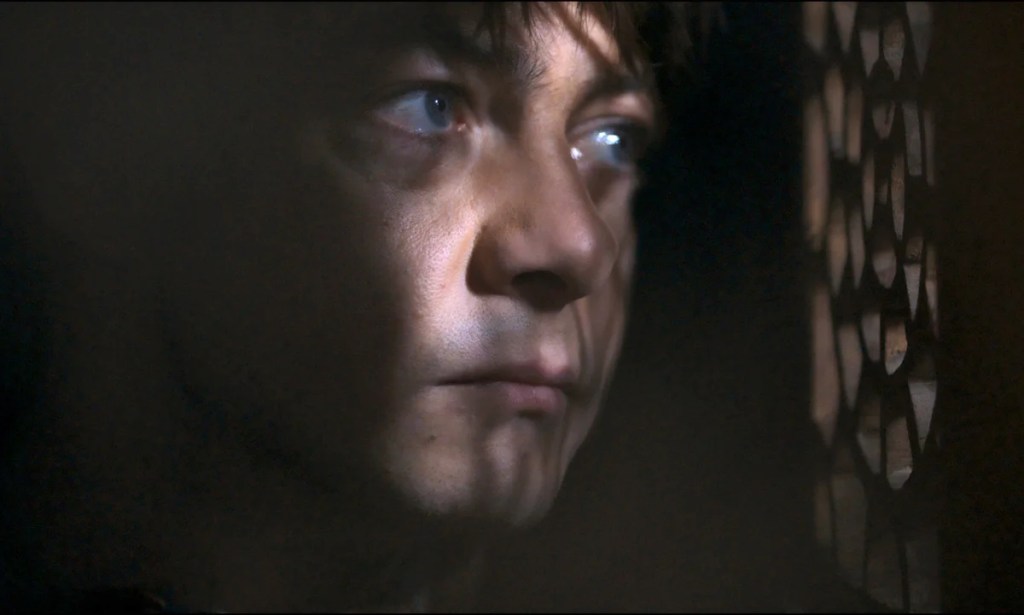
A riotously funny absurdist “thriller” set in a small village in Aveyron where pervasive erotic tensions threaten to boil over at any moment.
5) She Taught Me Serendipity (Akiko Ohku)
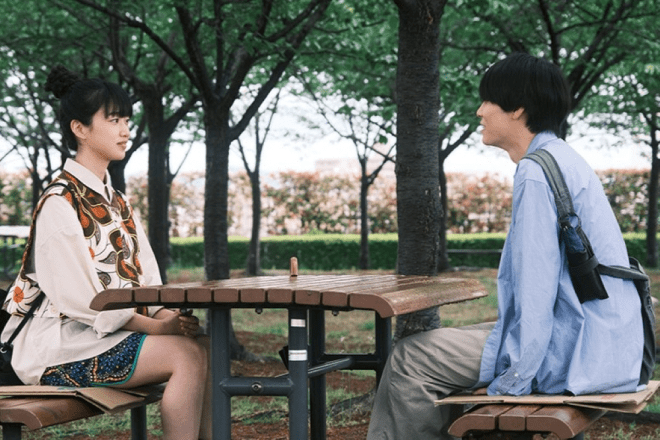
Movie magic from Ohku. Her ability to stage awkward scenarios in a humane, anti-exploitative way is rivaled only by Hong (though his gaze is harsher than hers). This is yet another one I can’t say a lot about without giving too much away, but I recommend it to everyone without qualification.
4) Sirât (Oliver Laxe) and 3) Dry Leaf (Alexandre Koberidze)
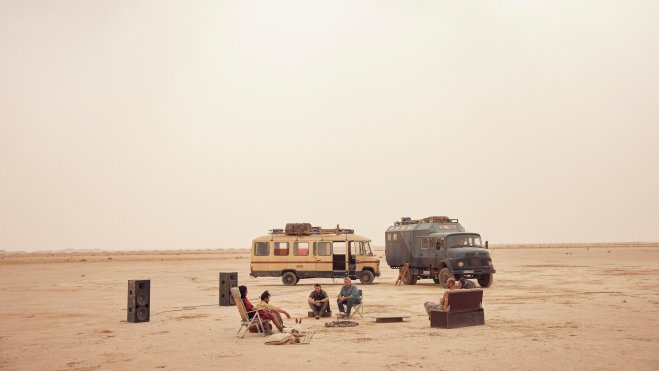
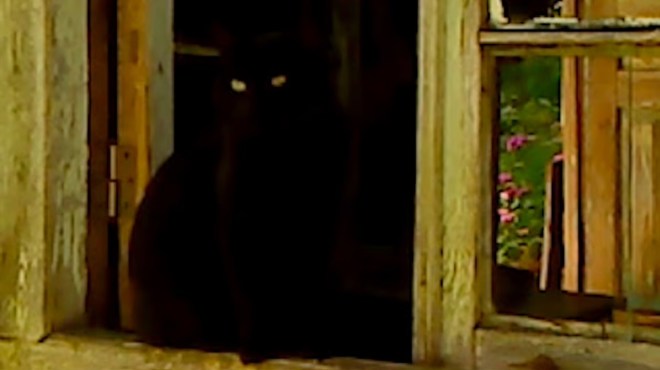
The two most opposite possible riffs on the basic Searchers premise. Sirât is particularly divisive in the taste communities I associate with, and I imagine that many fans of Dry Leaf would object to pairing the two films, but for me they both benefit from the contrast. Both films are about a man searching for a lost daughter, but whereas Sirât is at the far extreme of stark and menacing, Dry Leaf is warm and enchanting.
I take Sirât as a mythic landscape movie, where the desert is figured as a gaping maw of doom and the sinister endpoint of the ego dissolution at the center of rave culture (the film quickly moves on from its opening rave set piece, but the throbbing techno score keeps it in view). I can see why some commentators take issue with the film’s vague politics, but for me it strikes the right balance of suggesting a political backdrop while foregrounding primordial existential desolation.
Honestly, I wasn’t looking forward to Dry Leaf. I had a lukewarm reaction to Koberidze’s previous film and I didn’t imagine that he could sustain Dry Leaf’s ultra lo-fi aesthetic for three hours. He shot it on a cell phone camera from 2008. The image resolution is 144p! I expected that it would give me a headache, but I was so wrong. He uses the coarse pixelation and digital artifacts to create an impressionistic effect where the image incessantly dissolves and reconstitutes itself, and the film just gets more and more beautiful as it proceeds. I would love to see it projected!
2) Alpha (Julia Ducournau)
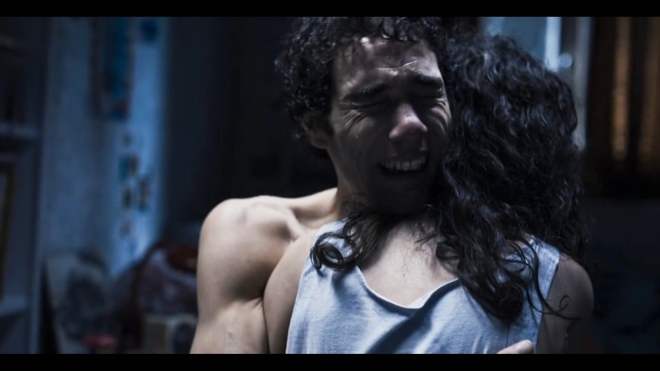
The Cannes press for Alpha characterized it as an AIDS allegory. This is not just wrong, it’s plainly backwards: the setting combines aspects of the 80’s-90’s AIDS crisis with COVID-era imagery as well as elements of surrealism. The AIDS material is literal, even if it’s blended with fantasy. If it’s an allegory for anything, it’s something else.
If I were going to give it a quick synopsis, it wouldn’t be “AIDS allegory,” it would be “A movie about hanging out with your crazy uncle!” As with Ducournau’s first two films, Alpha is concerned with family connections. It is a profoundly sad movie about the need within a decimated immigrant family to hold onto remaining bonds with everything you’ve got, even as they (literally) crumble under your touch. Feelings of filth, contamination, and infection become overwhelming and interact in nauseating ways with the film’s evocation of fear and grief. It made me feel like I needed a shower afterwards, and that’s high praise.
1) The Shrouds (David Cronenberg)
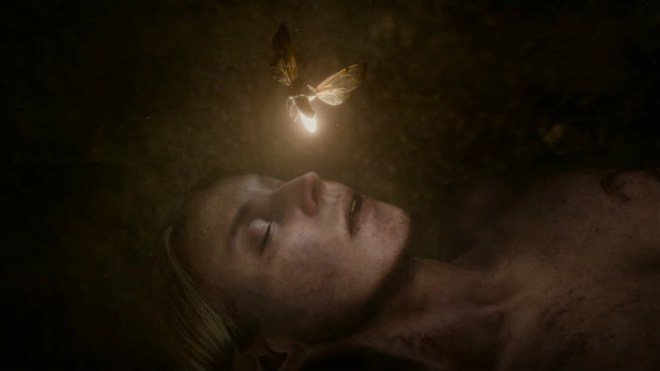
A study of what it means to grieve in the contemporary world. I have much to say about Cronenberg’s latest masterpiece and it’s the main subject of an essay of mine (which I’ve drafted but not finished) that will be published in an upcoming collection on “new philosophical approaches to the horror genre.” I just want to offer one observation here: The Shrouds inverts the relationship between technology and the human body from Cronenberg’s earlier work. Whereas in titles like Videodrome and eXistenZ he gave us fleshy technology, now he gives us digital flesh.
Angela Strohl
1) Dracula: A Love Tale (Luc Besson)
2) Train Dreams (Clint Bentley)
3) Seven Veils (Atom Egoyan)
4) Saiyaara (Mohit Suri)
5) 7 Walks with Mark Brown (Vincent Barré and Pierre Creton)
6) The Testament of Ann Lee (Mona Fastvold)
7) The Shrouds (David Cronenberg)
8) Peter Hujar’s Day (Ira Sachs)
9) Blue Moon (Richard Linklater)
10) The Cats of Gokogu Shrine (Kazuhiro Soda)
Josh Strohl
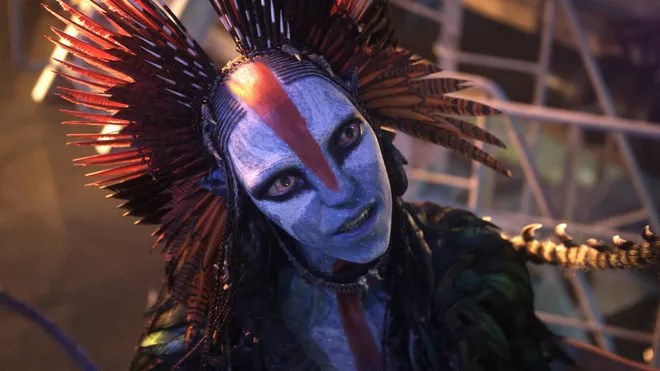
1. Avatar: Fire and Ash (Cameron)
2. The Shrouds (Cronenberg)
3. Seven Veils (Egoyan)
4. The Phoenician Scheme (Anderson)
5. Ella McCay (Brooks)
6. Blue Moon (Linklater)
7. Alpha (Ducournau)
8. Afternoons of Solitude (Serra)
9. The Empire (Dumont)
10. In The Lost Lands (Anderson)
11. Broken Rage (Kitano)
12. Eddington (Aster)
13. If I Had Legs I’d Kick You (Bronstein)
14. The Smashing Machine (Benny Safdie)
15. No Other Choice (Park)
16. Misericordia (Guiraudie)
17. Cloud (Kurosawa)
18. Highest 2 Lowest (Lee)
19. Marty Supreme (Josh Safdie)
20. The Day the Earth Blew Up: A Looney Tunes Movie (Browngardt)
21. Dangerous Animals (Byrne)
22. One Battle After Another (Anderson)
23. Sunlight (Conti)
24. Happy Gilmore 2 (Newacheck)
25. Nouvelle Vague (Linklater)
Izzy Strohl
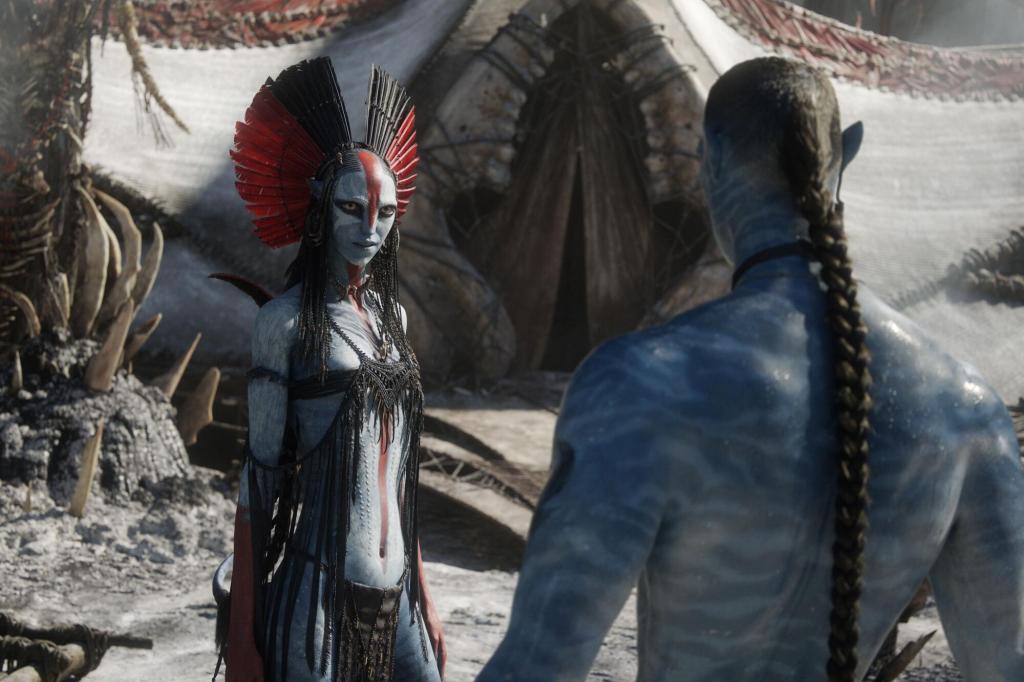
1. Avatar: Fire and Ash (Cameron)
2. The Shrouds (Cronenberg)
3. Ella McCay (Brooks)
4. Seven Veils (Egoyan)
5. Sinners (Coogler)
6. The Phoenician Scheme (Wes Anderson)
7. One Battle After Another (PT Anderson)
8. Is This Thing On? (Cooper)
9. The Woman in the Yard (Collet-Serra)
10. Blue Moon (Linklater)
 STROHLTOPIA