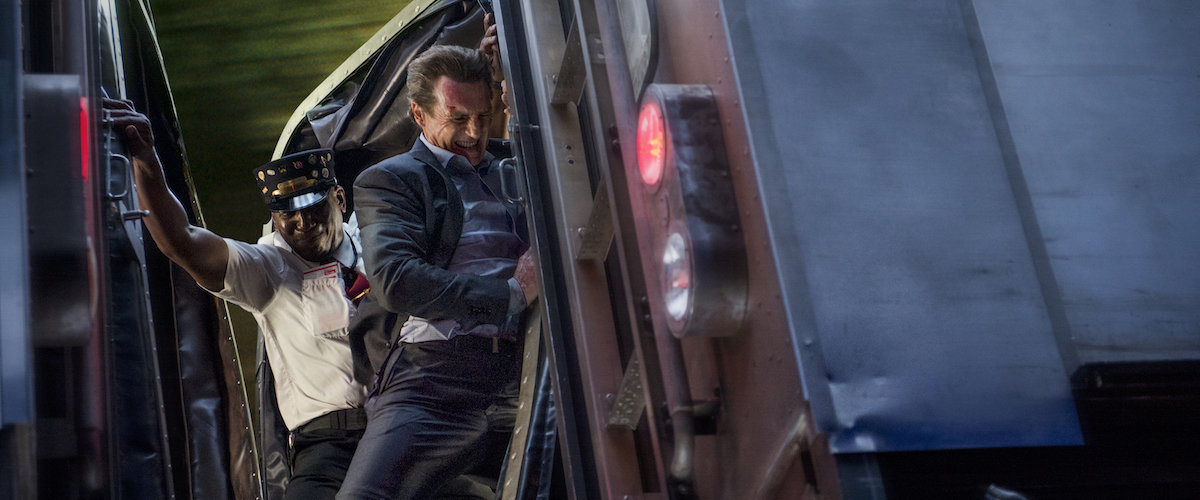
Why I loved 24 Frames and hated Widows

24 Frames

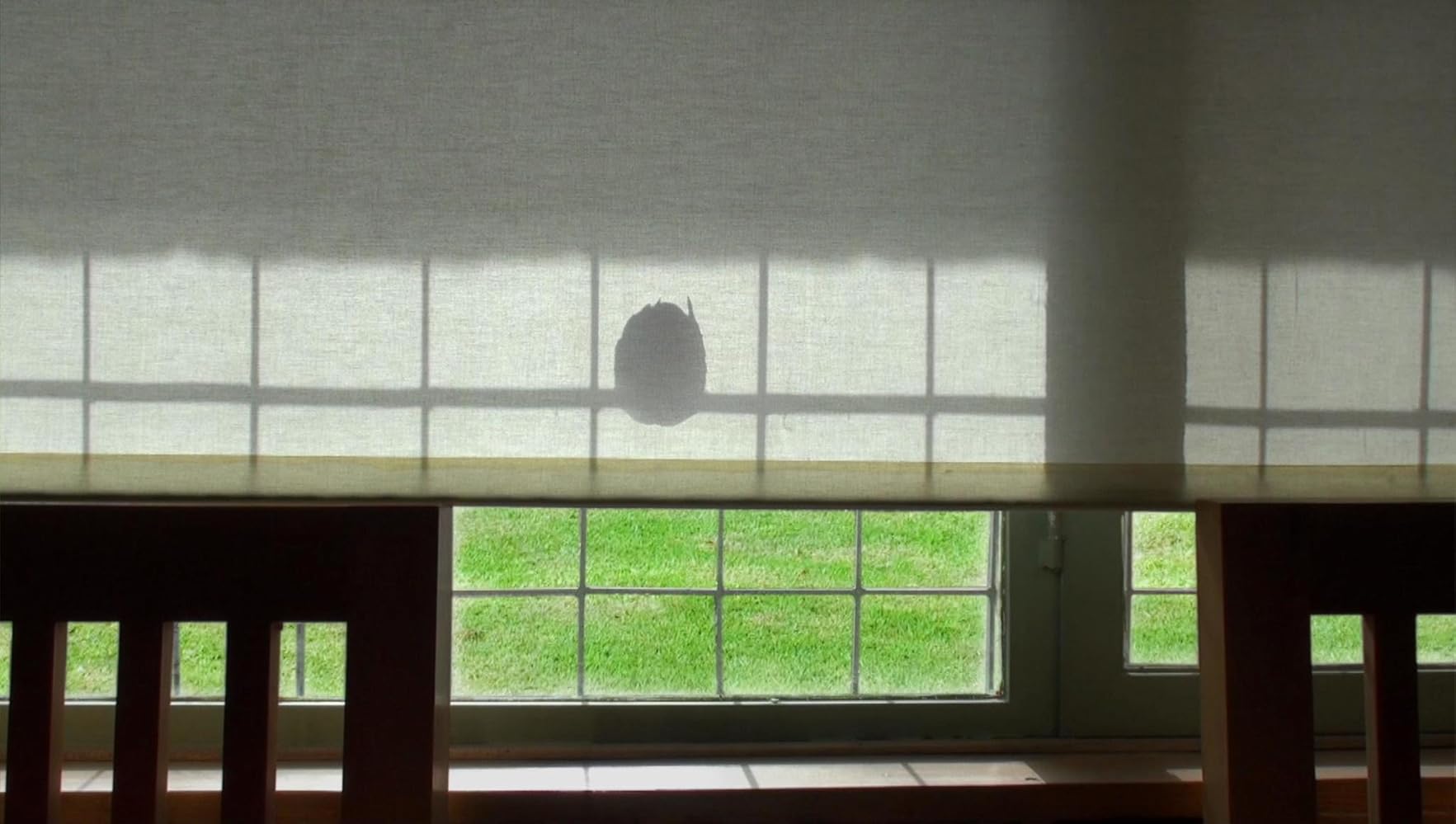
Image result for 24 frames

When Abbas Kiarostami died in 2016, we lost one of the greatest artists of our time, but he did leave behind one last film. He was still working on it on his deathbed and left his son instructions for finishing it. And what a film it is.

24 Frames is not the place to start with Kiarostami (I’d suggest Taste of Cherry), but to paraphrase his son, it’s the perfect place to end. It’s at once confoundingly simple and profoundly challenging, and a film that I look forward to watching over and over again throughout the rest of my life.

Here’s the basic idea: the film is composed of 24 short films, or “frames,” each of which is four and a half minutes long (note that 24 is the number of frames per second for traditional film projection). Each frame is based on a still image, which Kiarostami manipulates in various ways (superimposition, digital animation) to turn into a moving picture. The first frame is based on Pieter Brueghel’s famous painting “The Hunters in the Snow.” He tells us in an opening title card that he wanted to fill in what he imagined might have happened a couple minutes before and after the moment captured in the painting. This was how he first got started on the project, but he soon proceeded to his own photographs, which serve as the static images for the remaining 23 frames.

Typically, the action depicted is sparse. A boat washed up on shore is batted about by the waves. A group of pigeons is repeatedly dispersed by passing traffic. Two lions mate in the rain. There are some recurrent themes, like human activity as an intrusion into nature, but no one theme is touched on in all 24 frames. A recurrent visual motif is looking out into the world from some interior space (a car, a house, etc.), but again, this is not true of every frame.

There are many layers to be unpacked through repeated viewing, but my initial take is that one of the things Kiarostami is doing is meditating on the nature of cinema as an art form by connecting present digital filmmaking techniques with early cinema (as in late 19th and very early 20th century cinema). Early films were thought of as “moving pictures.” Photography and drawing were already established media, and cinema was understood in reference to these media. The magic and wonder of early film was seeing a picture– something that’s normally static– move on its own. Early films were just short snippets: a train passing, a horse running. But these simple moving images were awe-inspiring. We’ve lost this sense of awe as cinema has progressed and we have gained the ability to manipulate images digitally and portray pretty much anything we want to. Giant alien robot emerging from the sea floor and propelling itself into the cosmos? No problem. Kiarostami is rediscovering the bygone joy and wonder of film, and he’s doing it on his damn deathbed. He’s taking still images and making them come alive– returning in the digital age to the original manifestation of cinema as moving pictures. A very accomplished photographer in his own right, he’s also exploring the relationship between the media of painting, photography, and film and elaborating on how this relationship informs his own creative process.

I just find this deeply moving as the swan song of one of my favorite artists. Especially coupled with the knowledge that he bequeathed the unfinished project to his son to bring to movie theaters as his final statement.

24 Frames (2017)

I want to turn now to the single worst film review I’ve ever read, from Indiewire darling David Ehrlich, known for his best-of-the-year video edits. I haven’t always minded Ehrlich: back when I wasn’t paying very close attention, I often noticed he’d include a movie in his yearly round up that I thought was generally underappreciated. But after reading this review and then looking at what else he’s had to say lately, he’s come to embody for me the worst of contemporary film criticism. Here’s the review: https://www.indiewire.com/2017/05/24-frames-abbas-kiarostami-review-cannes-2017-1201833244/

I have a problem with nearly every sentence here, but I want to focus on the most appalling through line, which is his absurd, self-serving, and utterly offensive interpretation of Kiarostami’s quote: “Some films have made me doze off in the theater, but the same films have made me stay up at night, wake up thinking about them in the morning, and keep on thinking about them for for weeks.”

Here’s the full context where he said this: https://www.youtube.com/watch?v=HxukX96bqAU&feature=youtu.be&t=1m33s

He draws a contrast between on the one hand films that take you hostage, take command of your attention, and provoke you but then you forget about them the next day, and on the other hand, films that give you the freedom to drift away, that lull you into a meditative state, that don’t take forceful possession of your attention, but that burrow into your thoughts and stay there long after they are over. You may even doze off watching the latter kind of film, but it will chase you into your dreams.

Here’s where Ehrlich goes with this quote (I’ll quote all the relevant bits at once here):

“So while I passed out (and passed out hard) roughly 15 minutes into “24 Frames,” the fascinating, posthumously completed non-narrative project that will serve as Kiarostami’s final farewell, I suspect that he wouldn’t take my unconsciousness as a criticism or a show of disrespect. On the contrary, I imagine that he would have been delighted to see the dozens of nodding heads that dotted the film’s final Cannes screening, where the narcotic quality of Kiarostami’s cinema was compounded by the sheer exhaustion of simply coming to see it. He would have loved the low rumble of snores that filled the auditorium in surround sound. To some extent, he might have even appreciated the steady stream of walk-outs, or my decision to take a short walk halfway through and then watch the rest of the film while standing at the back of the room.”

“Kiarostami corrupted the tyranny of time and space, he dissolved the wall that separates present and past. He made Schrödinger’s cinema, and — as “24 Frames” so poignantly confirms — he is both dead and alive, as all great artists will always be. But yeah, it’s still one hell of an endurance test. Arguably better suited as a museum installation than as a theatrical experience (the context of the former might help encourage people to engage with the project on Kiarostami’s terms)….”

“And, in the end, patience is a virtue. After walking back into the theater to shift and stir through the final five tableaux, I was rewarded with a beguiling experience that doubles as a perfect — and perfectly self-reflexive — tribute to the defining pursuits of Abbas Kiarostami’s working life…. So what of the unconscious girl, there but not present, who misses out on a great filmmaker’s dying flare of genius? She’s just one last person who Kiarostami had the satisfaction of putting to sleep.”

In the middle of all this, he slips in that he considers Close-Up to be his favorite film. That’s certainly a respectable choice– the film is a masterpiece– but I find it extraordinarily off-putting that a professional film critic who is posturing as a great lover of Kiarostami could at the same time say such incredibly disrespectful shit, giving himself a free pass on the basis of a very extreme interpretation of a single quote taken out of context. An endurance test? Seriously: a fucking endurance test??? Maybe if you’re someone who goes in cold with no familiarity with Kiarostami or experimental film it might be a tough sit. But it boggles my mind that someone who claims Close-Up as their favorite film could see 24 Frames as an endurance test. The frames are four and a half damn minutes a piece. The film is less than two hours long. On a typical visit to a photography exhibit, plenty of people spend at least 4-5 minutes a piece on the photos that interest them. Here the photos move and somehow it becomes an endurance test? And look, when Kiarostami said that some films that have made him doze off have also been the ones that have kept him up at night, he did not mean that these films made him “pass out hard” after a mere 15 minutes and then get up and walk around, restlessly stir, and then stand in the back for the last bit. A Cannes audience was snoring and there were a steady stream of walkouts? Everyone knows that Cannes audiences are revered for their good etiquette.

Sorry, but it’s offensive as hell that you slept through this movie, got up and walked around, made a pronunciation on its merits without actually watching it, and then claimed Kiarostami would have approved. And, sorry, but the museum exhibit line is the worst thing you say in the entire godawful piece. Have you ever seen a video installation in a museum? People talk, use their phones, kids misbehave, everyone walks in and out without any regard for whether they’re at a natural starting or stopping point. A museum video installation has to be designed to withstand this awful setting. This film was not. It was designed to be shown in a theater, and for people to see the entire thing from start to finish, with maybe a brief doze or two. There are 24 frames, you’re supposed to see all 24 of them, not the second half of one frame and first half of another as you make your way through a museum.

Widows

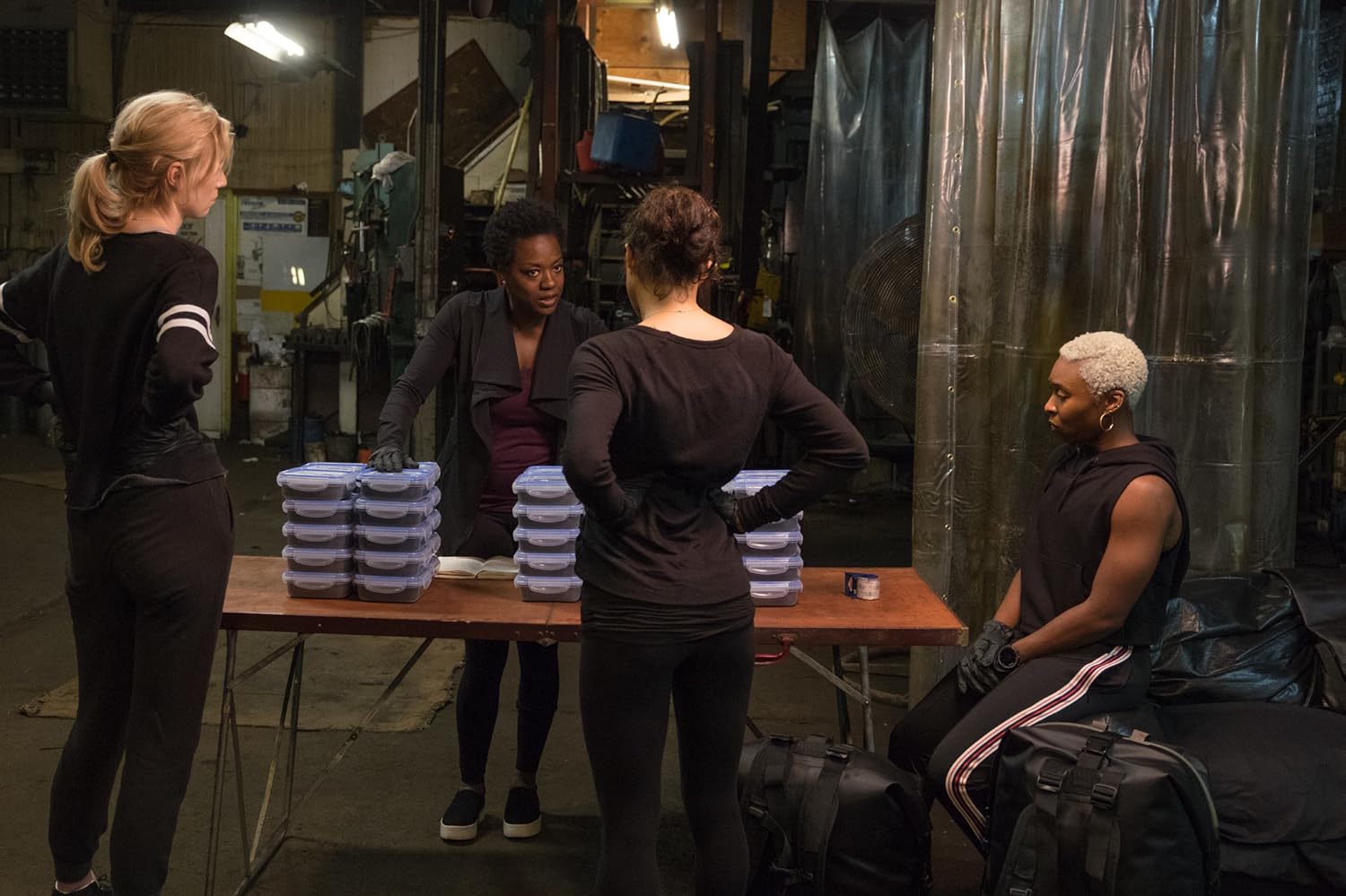
Related image

This one I hated and Ehrlich loved. Plenty of people loved it, so I’m not interested in singling him out here (though he is at the center of the current trend of fawning on films like Widows that substitute progressive signaling for cinematic ideas), but I’ve got some thoughts about the film:

Let’s say you want to make a heist movie with an all-female team of crooks featuring Viola Davis, Cynthia Ervio, Michelle Rodriguez, and Elizabeth Debicki. That sounds super rad. One of the first things you should probably think about is how to make the heist itself cool as hell. Don’t want to go for the cheeky flash of Oceans 11 or the massive scope and harsh brutality of Heat? There’s always the quiet tension of Rififi. Just give me SOMETHING. Make the heist interesting in some way or other.

This question doesn’t seem to have occurred to anyone involved with Widows. The result is perhaps the most boring heist movie ever made. What special obstacles do the women face when planning the heist? What occasion do they have for ingenuity? Money is heavy and they’re women so it’s hard to carry. I’m not making this up: that’s really all this movie has up its sleeve. It takes about an hour and 40 minutes for anything to happen and when it does it could hardly be less interesting. There are a couple additional minor obstacles when the heist is in progress, but they are very conventional and easily dealt with. This is a heist movie where no one even tried to make the heist interesting. It’s so cynical: it tries to get by on the most superficial possible social justice pandering and a few topical references. But can’t they be a diverse crew of women *and* pull off a cool caper?

The wonderful cast is terribly wasted. How can you not give Michelle Rodriguez any scenes to steal?? Cynthia Ervio is an electric screen presence, but she gets jack shit to say or do. She’s supposed to be The Driver and she doesn’t even do any noteworthy driving. It’s insulting: ogling her biceps is the prescribed mode of admiring her female strength. Even Viola Davis in the lead is rendered paper thin— she’s reduced to a gesture in the direction of the grieving black mother media fetish object. The police violence topical reference is perhaps the most cynical element of this movie: it’s substituted for more robust character development, as though it tells us most of what we need to know about this woman all by itself. There’s an empowerment arc, and it centers on the agonizing cliche of female strength as a self-conscious imitation of masculinity. This is exactly the bullshit Rivette critiqued in Gang of Four: find a way of portraying female strength that isn’t just acting like men and delivering shitty dialogue about having enough balls.

Everyone praising Widows (including our friend Ehrlich) focuses on how great Elizabeth Debicki is, and they are right about this: she’s by far the best part of the movie, followed by Daniel Kaluuya, Colin Farrell and a couple surprising shots where McQueen imitates Kiarostami (the reverse POV driving shots, especially the one where we can’t see into the car). But doesn’t anyone see the irony here? We’ve got a black woman in the lead, a black woman as the badass driver, and frickin’ Michelle Rodriguez, and the best role goes to the tall, slender blonde woman?

2018 Albums

This was a good year in music for me. For the first time in recent memory, my favorite album was not a rap album. Hands down, no question, my pick is Aïsha Devi’s DNA Feelings. It feels to me like a futuristic pagan ritual, which is exactly my taste. The other big one was of course Both Directions at Once, though it’s not really fair to count that as a 2018 album.

For R&B, I was extremely fond of SiR’s November. My favorite pop album was SOPHIE’s OIL OF EVERY PEARL’S UN-INSIDES, followed by Kali Uchis’s Isolation and Robyn’s Honey.

For most of the year my favorite metal album was Chrch’s Light Will Consume Us All, which is an excellent doom metal release. Just recently I discovered a couple other metal albums I really like: Toronto death metal outfit Tomb Mold’s Manor of Infinite Forms and Head Cage, a grindcore album from Pig Destroyer.

I listened to quite a bit of electronic music this year. After Aïsha Devi, my favorites were Jlin’s Autobiography, Aphex Twin’s Collapse EP, Jon Hopkins’ Singularity, Pauline Anna Strom’s Trans-Millennia Music, The Field’s Infinite Moment, and Skee Mask’s Compro (thanks, Dru).

I don’t listen to much rock music, but someone recommended I check out Zola Jesus (thanks, Catharine) and I loved her release Okovi: Additions, which consists of unreleased tracks and remixes from last year’s Okovi. There’s a Wolves in the Throne Room track! She reminds me of Florence and the Machine, except good.

The one country album I got really into was Colter Wall’s Songs of the Plains (thanks, John). I also saw him perform live and it was excellent, though (predictably) compromised by bad audience behavior.

I listened through some of the other big critical favorites that I’m seeing on end of the year lists. I didn’t find much that really interests me, except Low’s Double Negative, which I need to spend some more time with. I actively dislike the Noname and DJ Koze albums, and I find Mitski irredeemably boring and I have no idea why critics are so into her.

Now, the main event. Top ten rap albums:

1) Earl Sweatshirt- Some Rap Songs

Dense, dark, and innovative.

2) Freddie Gibbs, Curren$y, and The Alchemist – Fetti

The menacing beats and gritty storytelling make for a welcome reboot of the 90’s east coast sound. This stood out against the sea of uptempo trap.

3) SOB X RBE– Gangin and Gangin II

According to Spotify, SOB X RBE was my most-listened to artist of 2018. It’s because they released not one, but two albums that I totally loved. The four-part ensemble west coast sound is raucous, with Yhung T.O. at the center channeling the sort of gangsta-badassery-expressed-through-soulful-melody feel that we associate with Akon and Nate Dogg.

4) Pusha T- Daytona

Way too short but basically perfect within its constraints.

5) Ski Mask the Slump God- Beware the Book of Eli

I love the crazy Ski Mask creative energy. His more recent studio release isn’t as good but this shit is lit. While other rappers are still talking about guns, Ski Mask’s signature threat is to drown you in a river of lost souls.

6) Joey Purp- Quarterthing

He spans basically every style of contemporary rap here and hits them all out of the park. This is a tight album.

7) Cardi B– Invasion of Privacy

I was a little disappointed at first by how overproduced this turned out to be, but it grew on me steadily and I’m still listening to it regularly. I do prefer Cardi’s rawer tracks but she’s pretty much always fantastic.

8) Lil Wayne- The Carter V

!!! I went to see Lil Wayne live a couple years ago purely for the nostalgia and was relieved that it wasn’t terrible. I certainly didn’t think he’d ever release a good album again. This is about twice as long as it should be and there are many mediocre tracks but the high points are extremely high and I love seeing Wayne shut the haters up.

9) BlocBoy JB- Simi

Rude, brash, offensive, and unrelentingly fun. He’s got a strong Memphis sound, in the vein of Young Dolph but more dynamic. He creates a vivid, richly detailed world rather than just rattling off the standard boasts.

10) Kodak Black- Heart Break Kodak

This blew my mind when I first heard it but I wore it out relatively quickly. I want to acknowledge it though as a very unique and timely mixtape (much better than the album he recently released). At a point when everyone is going full autotune, he released one of the most emo, out of key, raw, underproduced, brutally honest tapes in recent memory (alongside Boosie’s In My Feelings…).

Honorable mention: 21 Savage is my favorite rapper right now but I thought his album (just released last week) was a little uneven. I thought the Gucci Mane album, the JID album, the Metro Boomin mixtape and the Jay Rock album were excellent. I like the minimalism of the Quavo solo album. There were a lot of not-very-distinct but enjoyable trap albums this year. My favorites were Playboi Carti, Young Nudy, and Lil Baby with Gunna. It’s a little boring but I appreciate the professional polish of The Carters’ EVERYTHING IS LOVE, and the video for “APESHIT” is all time.

Streaming Recommendations, Vol. 6

Featured image from The Perfume of the Lady in Black

Amazon Prime

Amazon prime is so amazing now. Month after month they just keep adding incredible stuff that’s not easily accessible elsewhere. The one thing to watch out for is that they often run stuff in terrible quality or the wrong aspect ratio, but as long as one is careful to check whether a better version is available there are many treasures to be found. I vetted the quality of any title I’m recommending where I thought there might be a concern.

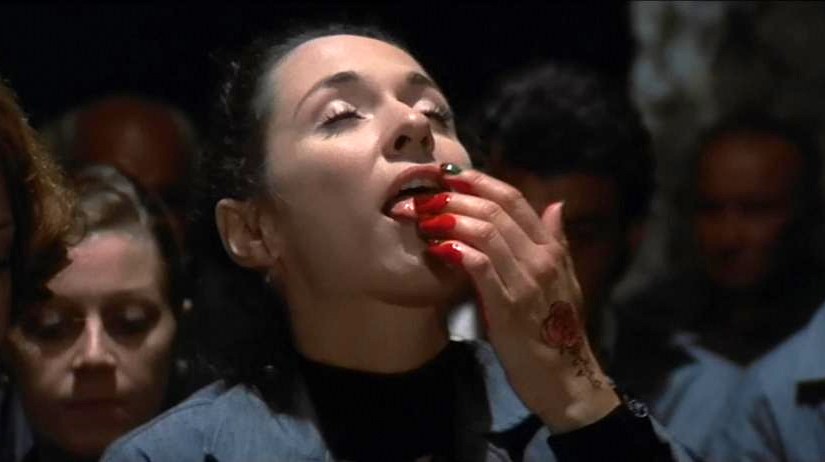
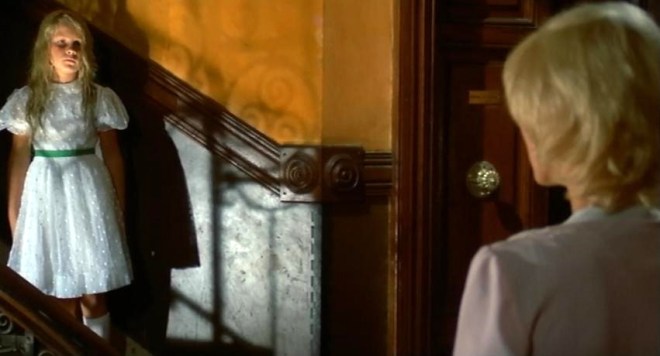
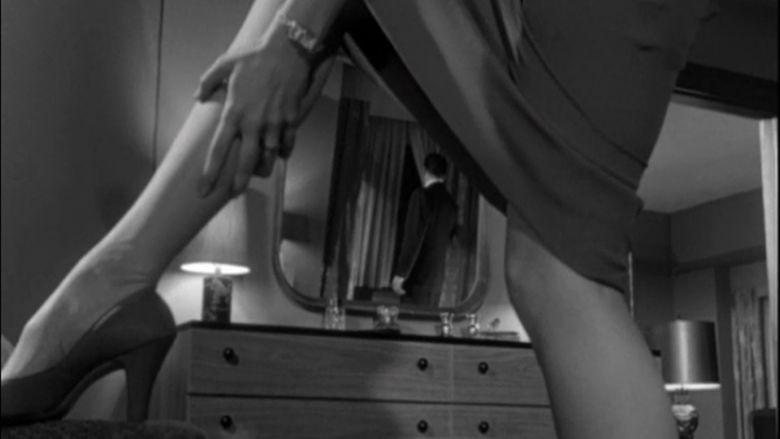
The Perfume of the Lady in Black (Barilli, 1974)

Image result for the perfume of the lady in black

This is a peak giallo. It’s ultra lurid and moody, full of creepy hallucinations and perverse secrets. I would rank it up there with better known gialli from Bava, Argento, Fulci, and Martino.

Basket Case (Henenlotter, 1982)

Image result for basket case henenlotter aspect ratio

American exploitation classic from the great Frank Henenlotter, now part of the permanent collection of the MoMA! Exceptional practical effects, a wicked sense of humor, and more psychoanalytic acuity than one might expect.

Performance (Roeg and Cammell, 1970)

Image result for performance roeg

In honor of Roeg’s recent passing, I recommend this batshit early work starring Mick Jagger. Roeg took it to 11, making heavy use of the jarring crosscuts that were characteristic of his style throughout his career.

The Proposition (Hillcoat, 2005)

Written by Nick Cave, this is an extremely dark and intense Aussie western. I think it’s easily one of the best entries in the western genre in this millennium.

Dog Soldiers (Marshall, 2002)

I was so thrilled to see this show up on streaming! This is one of the best modern werewolf movies. It uses practical effects throughout, no CGI wolf morphing crap.

House of Games (Mamet, 1987)

In honor of Ricky Jay’s recent passing, I recommend this wonderful David Mamet con artist flick. I grew up loving this movie, and I think it holds up well. As one would expect, there are lots of twists and turns and it’s full of amazing Mamet dialogue.

Dolls (Stuart Gordon, 1987)

Image result for dolls stuart gordon

No one can execute an awesome horror premise like Stuart Gordon can. Every Stuart Gordon movie is worthwhile, and this one’s on Prime.

Eaten Alive (Tobe Hooper, 1976)

Image result for eaten alive tobe hooper

Yes! This is where to go next if you like Texas Chainsaw and want to dig deeper into Tobe Hooper’s filmography. Creepy bayou hotel, crocodile, etc. It’s crazy and awesome.

Alexandra’s Project (Rolf de Heer, 2003)

Interesting to see this one pop up. I rented it from Netflix dvd ages ago while watching through Rolf de Heer’s complete works and it’s stuck with me every since. It’s not the most cinematic of his works (far from it), but it’s distinctive in how angry and hardass it is as a feminist invective.

The Gospel According to Saint Matthew (Pasolini, 1964)
Image result for pasolini gospel according to matthew

One of the only Pasolini movies I fully love, and possibly the best movie about the life of Jesus Christ. It plays up Christ’s activities as a lefty political agitator.

Excalibur (Boorman, 1981)

Image result for excalibur boorman

This is pure, distilled awesomeness. All the totally on the nose Wagner is what really puts it over the top.

Point Blank (Boorman, 1967)

This was remade as Payback with Mel Gibson. As much as I love Mel Gibson, Payback is a very shoddy movie compared to Boorman’s masterpiece, and Mel is just no Lee Marvin. If you haven’t seen it, don’t hesitate.

Blind Woman’s Curse (Ishii, 1970)

Image result for blind woman's curse

Meiko Kaji yakuza revenge movie. I don’t think it’s ever been readily available in the US before.

Sukiyaki Western Django (Miike, 2007)

Very fun mashup of the spaghetti western and samurai genres.

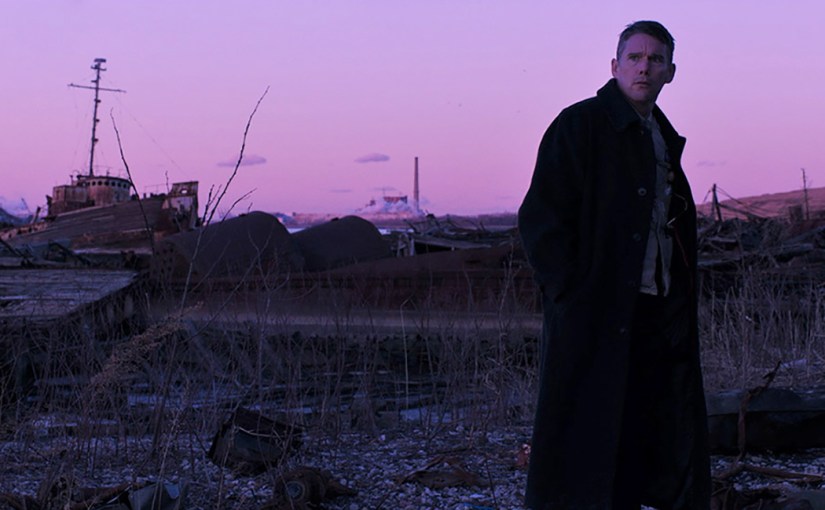
First Reformed (Schrader, 2018)

This has come up several times already on Strohltopia and yeah, I’ll say it again: this is the movie of the year.

Netflix

Netflix has been better lately. It’s still fundamentally awful and curse them to hell for the bait-and-switch they pulled by killing the rental store and then removing nearly all classic cinema from their platform, but some of their recent proprietary movies have been awesome and they finally have a couple decent reality food shows. Prime is still vastly better but I have some solid Netlix recs this time.

The Five Venoms (Chang Cheh, 1978), Return to the 36th Chamber (Lau Kar-leung, 1980)

Related image

The problem with vintage Shaw Brothers on streaming is that it’s usually presented with dubbed English audio. One should never (I repeat, NEVER) watch a Shaw Bros martial arts movie dubbed. These movies are amazing and the English dubbing always completely destroys their tone and essentially makes a mockery of them. Netflix has done us a solid and presented these two titles (and a couple others that are a bit later) with the original audio and subtitles. You’ll need to go into the audio menu to switch it.

Christine (Carpenter, 1983)

John Carpenter’s classic Stephen King adaptation is essential viewing and holds up extremely well.

May the Devil Take You (Tjahjanto, 2018)

Image result for may the devil take you

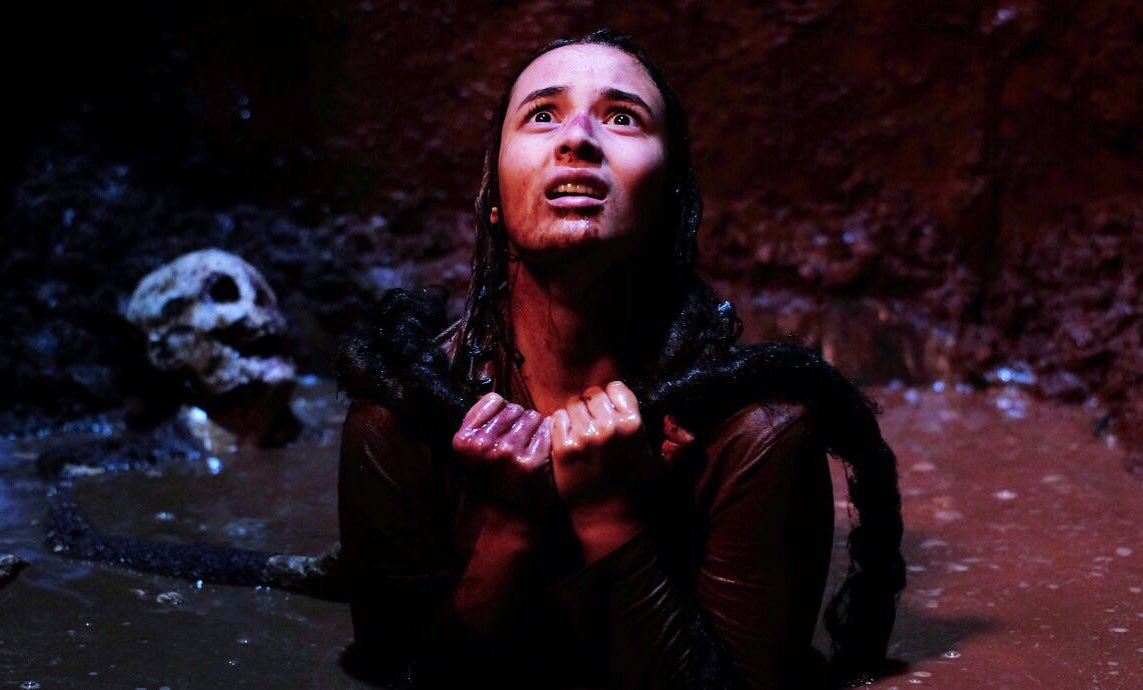
I’m an instant fan of Timo Tjahjanto. I loved the two horror anthology shorts I had seen, and his two new features on netflix (this and The Night Comes for Us) are both excellent. This is sort of like Hereditary but not boring and with more of a Raimi-esque style. Top tier for recent horror.

47 Meters Down (Roberts, 2017)

Extremely effective, unambitious shark horror. It delivers. I screamed an involuntary, high pitched scream at one point.

The Final Table

There are so many bad cooking shows on Netflix. Of course Bake off is amazing, but I can’t stand most of their proprietary content. Ugly, Delicious was good, but I’ve found most episodes of Chef’s Table that I’ve tried watching to be unbearably pretentious and the reality competitions to be shrill and uninteresting. This is the big exception: it’s at least on par with the very best reality cooking competitions. The cooking and most of the judging is at a very high level. There are some judges that are brought in more for humorous banter but every episode has a world class food critic and a world class chef. I enjoyed the way so many different world cuisines are represented, even if the downside is that they are represented rather superficially. But yeah, if you’ve been reading my commentary you’ll know that I’m generally very down on Netflix’s original content, so it was sort of a coup for me to enjoy one of their shows as much as I enjoyed this.

Hulu

Slim pickins on Hulu, though The Duchess of Langeais, which I recommended last time, is still available.

Let the Sunshine In (Denis, 2018)

Image result for let the sunshine inThis is an odd duck of a movie. She made it to kill time while waiting to start a more expensive project, and she clearly wasn’t trying to make the greatest movie ever. It feels like she had a couple ideas and characters in mind and she took the opportunity to explore them in a free-form manner. The acting and direction are just exquisite, and although in one sense this is an unambitious movie, it’s also something very special and unique. I love it, and I think it’s easily one of the best movies of the year.

Lifeforce (Hooper, 1985)

Image result for lifeforce movie

Totally bonkers naked space vampire shit. A crown jewel of Hooper’s filmography. I believe this is also on Prime.

All is Lost (Chandor, 2013)

Very effective, well-crafted Robert Redford nautical thriller.

A Fistful of Dynamite (Leone, 1971)

One Sergio Leone’s less well-known works. James Coburn plays an IRA explosives expert who gets involved with the Mexican Revolution. It’s fantastic and something you should definitely see if you like his other movies.


Notes on the death and rebirth of Filmstruck

It’s never been as painful to receive a $9 refund as it was to see the balance of my yearly Filmstruck subscription show up on my PayPal account earlier this week. I’ve been holding back from commenting in hopes that it would somehow be prevented by the collective efforts of champions of cinema like Martin Scorsese and Steven Spielberg, who have been pressuring the relevant corporate overlords to reconsider.  They have indeed succeeded in eliciting a promise that a Filmstruck reincarnation will be included in a set of channels that Warner/AT&T will seek to launch next year.  Meanwhile, Criterion has announced a stand alone channel as soon as this coming Spring.

I’m still binging: Rossellini histories, some odds and ends from Oshima, Tourneur, and Straub/Huillet, hopefully Mizoguchi’s The 47 Ronin and The Crucified Lovers (AKA A Story from Chikamatsu).  I’ll be fine in the interim: there’s still MUBI, Fandor, the Cohen Media Group channel on Amazon, Shudder, and the vast and bottomless internet.  I rarely have trouble getting my hands on something I want to see. But I still feel an abiding sense of sadness about the state of film culture.

What most saddens me about this affair is what it reveals about the role film has come to play in mainstream American life. When Warner/AT&T announced that it was going to murder Filmstruck, they said they learned the lesson that it’s too “niche.” But what is the content of Filmstruck? What all the movies on Filmstruck have in common is that they are justly considered canon. They are movies that are somehow important or significant for the global tradition of filmmaking. Not all of them are aesthetically worthwhile, but most of them are, and the ones that aren’t are still important for understanding the development of the medium. They range from the universally acknowledged (like dozens of movies by Ingmar Bergman) to titles that are less well known by mainstream film fans, like a series of works by Indian filmmaker Bimal Roy or a selection of obscure low-budget Phil Karlson flicks or a huge cache of Shirley Clarke shorts.

If you love movies, you should be able to just throw a dart at Filmstruck and hit something that you’d like to see. My queue always grows faster than I can tick titles off, and I watch a lot of Filmstruck. The target audience is people who care about film as an art form. This is a niche, apparently. It’s so small of a niche that it can’t justify a piddling ongoing effort by the many-headed hydra of AT&T/Warner.

I have a diagnosis. Film culture has struggled in the US ever since the success of Jaws reoriented the strategies of major studios, but the rise of streaming has taken us to a new low. I’m not going to search for it now, but I remember reading an article in the early days of Netflix streaming about the divergence between what people say their favorite film categories are and what they actually watch. Back then, instead of your foregrounded streaming options being selected by an algorithm, you had the opportunity to tick off boxes indicating your favorite categories: Comedy, Drama, Action, Romance, Independent, Foreign Language, Classic, etc. The article I read said that Netflix had found that while many people checked the boxes for Foreign Language and Classic, few people actually watched this content. Serial television, blockbusters, new release Oscar contenders, sensationalist documentaries, star vehicles: this is the stuff people actually watch.  This revealed an unsurprising divergence between peoples’ aspirations and day to day inclinations. People filled their queues with titles they saw as edifying or in some way worthwhile, but then eternally procrastinated watching them as they rubbernecked from New Thing to New Thing. As more streaming services popped up and licensing became more expensive, Netflix opted for the content people actually watch rather than the content that people merely aspire to watch. Now they have basically no classic films and their foreign language selection is random and filled with bargain basement junk (though, to be fair it usually has a few gems).

Now, instead of every subscriber living with the background hum of their aspirational queue, the service aims to give us more and more of what we already like. The algorithm is antithetical to the evolution of taste. It’s an all you can eat buffet filled with all your favorite junk food. There’s no push to challenge yourself or broaden your horizons. To have the aspirational queue, you have to make a separate purchase of a separate streaming channel—presently, Filmstruck—that offers nothing but the good stuff. I did a little googling to learn more when I found out Filmstruck was being cancelled, and the discussion I saw was extraordinarily dispiriting.  People sagely diagnosed: it’s too expensive, and there’s not enough content. First of all, the notion of caring about the ratio of content to dollar is so ridiculous….  Netflix has vast oceans of garbage. Filmstruck has more movies than I have time to watch and they are all worth watching.  Second of all, I’m filled with contempt at the consumer’s notion that they know best what they should be watching—just give us as many choices as possible and we will live our best lives through our own self-direction. The age of a hyper-excess of options has deadened us to the value of curation. Filmstruck employs experts to create curated features meant to introduce us to content that we may not have had an antecedent desire to engage with. This is a valuable service. I don’t care who you are, you can benefit from letting someone else take the reins for a minute. In concrete terms, I’m saying: if you care about film, consider subscribing to the next incarnations of the Criterion channel and/or Filmstruck and just watching what they throw at you, even if it’s not something you already think of yourself as being interested in. I’ve been doing this, and my aesthetic life has been so much richer than it was during the brief stretch where I was trying to keep up with Netflix’s foregrounded content.

This is the core of my sadness: film is being sucked into a culture of gratification, where endless ways to feed our already entrenched preferences occlude the limitations of our self-knowledge.  We know what we want, and we don’t question whether there are other things that maybe we should want even more. But there’s still an opportunity to resist. The corporate invasion of our taste is not absolute yet. Support the good shit.


Film Diary vol 6: Horror, Borzage, etc.

Featured image from StageFright.

I’ve been pretty busy and gotten way behind on this… this entry represents something like four months of Film Diary.  I watched a ton of horror movies, including all of Fulci except some of the early comedies, a complete Argento rewatch (still underway), and a full survey of one other director who I’ll leave as a surprise. I decided to break those out into separate posts. Here’s most of the other stuff I watched. I’m going to lead with horror because it’s that time of year.

Favorites (relative to the category) highlighted in bold.

Recent Horror

Not a lot of great news here. I thought highly of the first three, but the others range from half-decent to terrible.

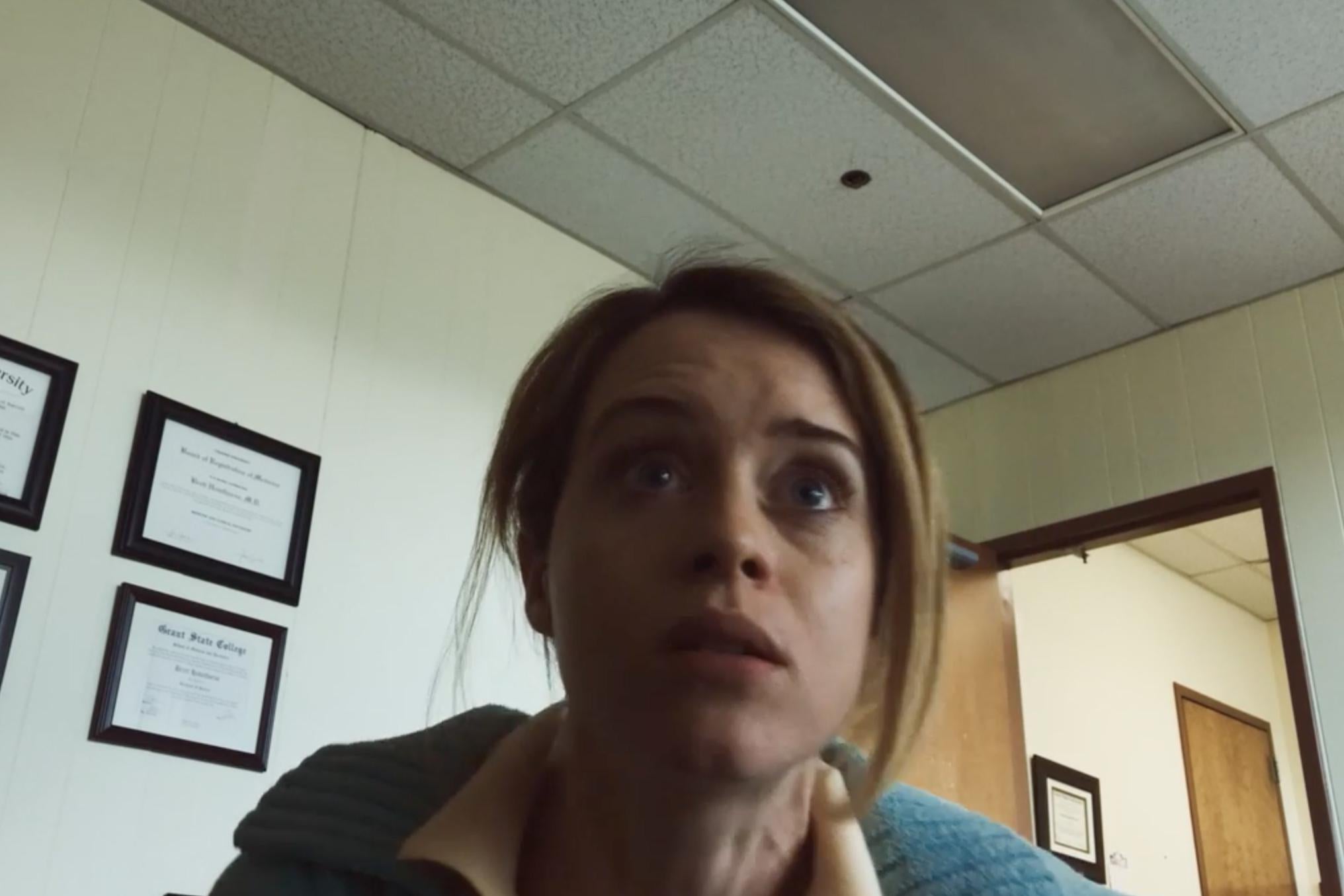
Unsane (Soderbergh, 2018)

On the border between horror and thriller, and extremely effective. One of my favorites of the year so far. It does a great job building a terrifying feeling of confinement and powerlessness.

47 Meters Down (Roberts, 2017)

This Mandy Moore shark movie is very successful relative to its ambitions. It’s not quite as good as The Shallows, but it’s a total hoot. Forget everything you may happen to know about scuba diving and just roll with it. I literally screamed at one point. I mean I screamed an involuntary, high-pitched scream like a shark was actually about to eat me. It’s been a long time since a movie made me really and truly scream.

Hold the Dark (Saulnier, 2018)

Soooooooooo weird! Absolutely not what I was expecting on the basis of Netflix’s description. I like Saulnier’s other work so I gave it a shot, and this is definitely not the wolf-themed survival movie it was advertised as. This is the most Black Metal movie ever. People are taking about how Mandy is so metal. No way: Mandy is prog rock. Hold the Dark is metal. I dug it.

Beyond the Black Rainbow (Cosmatos, 2010), Mandy (Cosmatos, 2018)

I watched these as a double feature and thought they were pretty meh. This director makes glorified music videos. The storytelling is totally inept, which would be fine if these movies achieved something worthwhile in atmosphere and tone, but they really don’t. It’s all predictable and has been done much better before. Cage mostly repeats himself in Mandy, often crossing over into self-parody (though the vodka scene is great). For recent Cage movies, I’ll take Looking Glass or Mom and Dad over Mandy any day of the week.

A Quiet Place (Krasinski, 2018)

I completely hated this. It’s one of the worst horror movies of the decade. The exposition is literally done on a white board. The internal logic is broken: the creatures can hear a jar tip over from outside the house but they can’t hear a scared person breathing if they hide behind a desk? It’s not suspenseful because the rules are so unclear. The screenplay does a poor job extrapolating the horror possibilities of the premise and the climactic plot solution is very dissatisfying. All the acting is terrible, the creatures aren’t cool or scary, and the PG-13 gore is tepid and boring.

Hereditary (Aster, 2018)

This is a C-grade Paranormal Activity riff combined with a Polanski rip off and dressed up as a weighty grief drama. Toni Colette’s fully batshit performance elevates it, but there are a few serious missteps (especially some aspects of the climax) and it takes itself too seriously for how clichéd it is.

Revenge (Fargeat, 2017)

Stylistically slick rape-revenge movie, relatively light on the rape. It’s too slick for its own good, and really nothing new, but the final bloody showdown is impressive.

The Strangers: Prey at Night (Roberts, 2018)

A lot of people celebrate this for its retro 80’s sensibility, but it didn’t work for me. It’s way homage heavy, but mostly goes for really obvious nods (though I do appreciate the Christine love). My main problem with it is that it totally loses what made the first Strangers movie special: the surreal and terrifying breakdown in spatial logic, creative use of sound, relentless sense of confinement, and abstract rendering of the horror menace.  I prefer retro horror that actually embodies a retro form (like House of the Devil) rather than movies like this that just make lots of cheeky references.

Unfriended: Dark Web (Susco, 2018)

A sequel to Unfriended, the gimmick is that the entire movie takes place on a computer desktop. The form is really cool and I’m highly in favor of this sort of high concept horror, but the screenplay is too dumb even for me.

The First Purge (McMurray, 2018)

I liked this just fine. If you like the other Purge movies, then certainly go for it, but otherwise don’t go out of your way.

Other Horror

Mountain of the Cannibal God (Martino, 1978); Cannibal Holocaust (Deodato, 1980); Cannibal Ferox (Lenzi, 1981)

These are three of the most significant entries in the Italian Jungle Exploitation subgenre. Mountain of the Cannibal God is pretty trashy, with a few extremely transgressive moments. Cannibal Holocaust is a masterpiece. It’s a masterpiece that I specifically recommend not watching unless you’ve seen a whole lot of horror movies and are highly desensitized. It will mess you right the hell up. It’s often claimed to be the most extreme horror movie ever made, and I think all things considered that’s probably accurate. It’s also the most brutal indictment of western civilization I’ve ever encountered. Cannibal Ferox is a relatively silly, campy, fun take on similar material. Be warned that all of these movies (and really all the other Italian Jungle movies from this period) contain unsimulated violence against animals. This is part of why there will probably never again be a movie as grotesque as Cannibal Holocaust: you just can’t get away with this kind of thing anymore.

The Exorcist (Friedkin, 1973)

No matter how many times I watch this, it still shocks me when the little girls says “Your mother sucks cocks in hell!”

Brain Damage (Henenlotter, 1988)
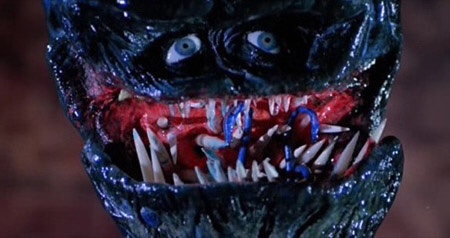
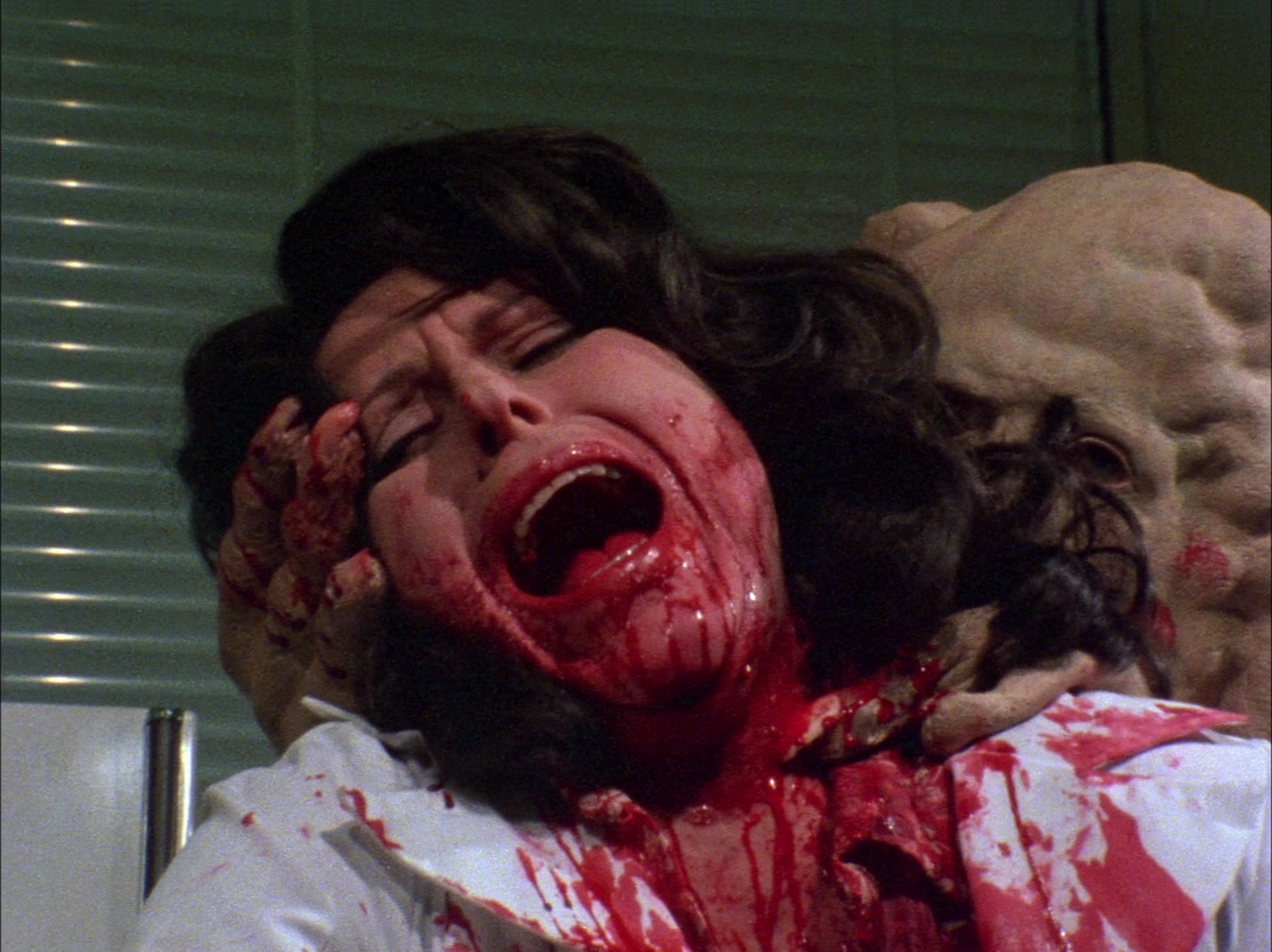
One of a kind, with fantastic practical effects and a dark sense of humor. There’s a monster, and the monster secretes hard drugs.

 A Nightmare on Elm Street (Craven, 1984)

I loved it as a kid (though it utterly terrified me), and I still love it today. I appreciate the surreal nightmare compositions now more than ever.

Halloween (Carpenter, 1978)

I hope I don’t ever let a whole year go by where I don’t watch Halloween. 90 minutes of total perfection.

StageFright (Soavi, 1987)

This is an excellent post-giallo Italian slasher movie with a great premise: the cast of a stage play about a murderer is locked in the theater with the actual murderer that the play is about! Stylistically on point.

Death Walks on High Heels (Ercoli, 1971); Death Walks at Midnight (Ercoli, 1972)
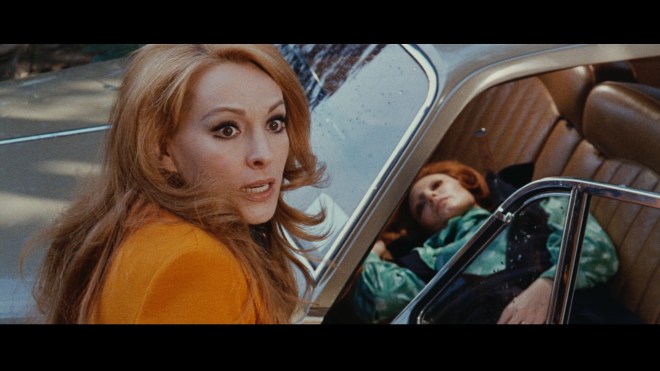
A couple of classic gialli starring Nieves Navarro. They are both very good. In the former, she plays an exotic dancer whose jewel thief father has recently been murdered. She’s stalked by criminals who think she has the latest batch of stolen diamonds. In the latter, she plays a model who witnesses a murder through the window across the street while she’s experimenting with hallucinogenic drugs. The ending is bonkers. Of the two, I prefer Death Walks at Midnight.

Blade (Norrington, 1998), Blade II (del Toro, 2002), Blade: Trinity (Goyer, 2004)

The Blade trilogy holds up well. Guillermo del Toro’s installment is clearly superior to the other two, but they are all great. The third one is underappreciated: it’s got very strong Parker Posey factor, not to mention Triple H.

Society (Yunza, 1989)

Beverly Hills cannibal orgy horror, with superb practical effects. Recommended

Spontaneous Combustion (Hooper, 1990)
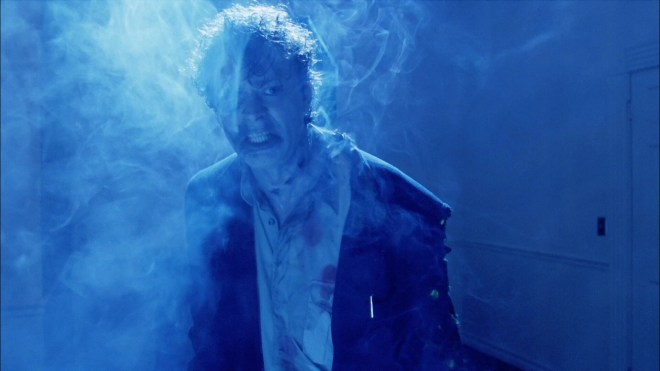
Nuclear family goes nuclear. The Brad Dourif/Tobe Hooper combo is dreamy. The movie’s perhaps a little uneven but its high points are tremendous.

Crocodile (Hooper, 2000)

Not one of Tobe Hooper’s better movies, but I’ve always had a soft spot for it. Certainly, it’s no Eaten Alive, but he clearly had fun with the direct-to-Cinemax creature feature aesthetic. It’s campy and fun.

The Nude Vampire (Rollin, 1970)

This is a good entry point into Jean Rollin’s Eurotrash artsy erotic vampire horror.

Dead & Buried (Sherman, 1981)

This is a largely neglected but very worthwhile example of the socio-political horror that flourished in the 70’s and 80’s. Great ending.

I Saw the Devil (Kim, 2010)

Brutal South Korean revenge horror.  I thought it was derivative, moralistic (not a quality I can easily tolerate in revenge horror), and way too long, but it has some solid brutality.

Ju-on: The Grudge (Shimizu, 2002)

You know, I actually think I like the American remake (by the same director) better. This is not my favorite subgenre of Japanese horror.

New Releases (other than horror)

First Reformed (Schrader, 2017)

I posted about this already, and yeah, I think it’s a masterpiece and easily the best film of the year.

Let the Sunshine In (Denis, 2017)

This one is very hard to talk about. She wasn’t trying to accomplish much here: she made this to kill time while a more expensive project was on hold. The movie feels half baked, but not in a bad way. It’s liberating. She’s not trying to make the greatest movie ever, she’s just running with some ideas. At the zoomed in level, the acting, writing, and direction are extraordinary, and I found myself just getting lost in the details. I love the film.

Upgrade (Whannell, 2018)

One of the best genre movies of the year. Black Mirror but good.

Ready Player One (Spielberg, 2018)

Forget the haters on this one. I’ve watched it three times and I find the thought of watching it again very appealing. This is master class pop movie-making.

Leave No Trace (Granik, 2018)
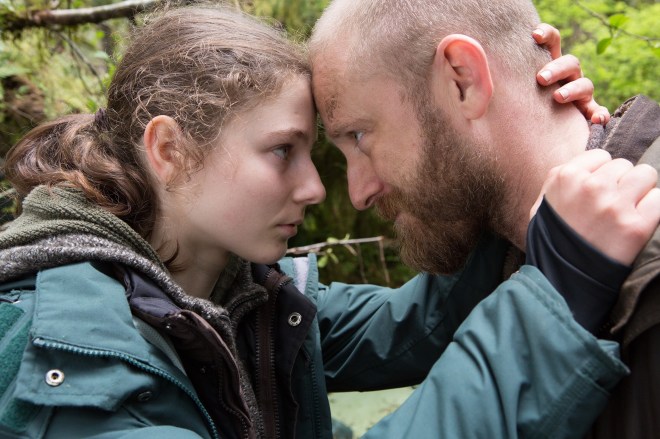
I hated it. I found the drama very underwhelming and all the nature photography reeked of city folk overly enamored with ferns. It felt like a big Instagram post about a New Yorker’s visit to Oregon. It even has an Instagram filter look to it. For me what this movie needed was a real conflict. Maybe a bounty hunter or a killer bear. The father-daughter PTSD shtick wasn’t enough to sustain this.

Skyscraper (Thurber, 2018)

The Rock only has one leg and the title is Skyscraper. It’s exactly what you’d expect. I certainly enjoyed it.

Solo: A Star Wars Story (Howard, 2018)

It wasn’t bad but it also wasn’t good. I really don’t care, but I don’t regret watching it.

Blockers (Cannon, 2018)

Vastly better than I expected it to be. Downright hilarious. It’s a female-centric update of American Pie. What I most appreciate about it is that, like Broad City, it gives the female characters plenty of filthy dialogue.

Isle of Dogs (Anderson, 2018)

Meh. It’s got some good qualities but this might be Wes Anderson’s weakest movie. The Greta Gerwig stuff is completely tone deaf and terrible by any standard.

Ant-Man and the Wasp (Reed, 2018)

Pretty good. Certainly one of the better Marvel movies.

Kuro (Koyama, 2017)

Weird experimental movie where the relationship between narration and image is oblique. We are being told a story of the protagonist and her boyfriend taking care of an elderly man in Japan, but the images (which don’t get contextualized much) depict her taking care of her paraplegic boyfriend in the present. I liked it a lot.

Murder on the Orient Express (Branagh, 2017)

Godawful in every respect, but what I hate most about it is the shameful waste of Willem Dafoe.

Wulu (Coulibaly, 2016)

Scarface riff from Mali. It’s pretty non-descript and forgettable.

Jurassic World: Fallen Kingdom (Bayona, 2018)

It’s too long and Bryce Dallas Howard is bad, but I do like some things about this: fun genre hopping, amazing Republican dinosaur auction scene.

The Death of Stalin (Iannucci, 2017)

I hated it. One would not expect that this material would be apt for a comedy, and it turns out it isn’t. Jeffery Tambor is godawful. Rupert Friend from Homeland as Vasily Stalin is the one shining light.

The Beguiled (Coppola, 2017)

Meh.

The Rider (Zhao, 2017)

Eh…. the acting is really good but otherwise I don’t care.

Hannah Gadsby: Nanette (2018)

I read somewhere that the recent Bill Maher standup special represents comedy’s past while the Hannah Gadsby special represents its future, and I thought this was an intriguing claim so I tried to watch them both. I found the Bill Maher special unwatchable. It sucks. I did watch Nanette all the way through, and if this is the future of comedy then god help us all. I thought it was terrible. It’s more of a social justice TEDx Talk than a comedy routine. I felt like I was being manipulated: she dumps out so much emotional carnage that I’m a bad person if I don’t adopt an admiring attitude and fawn about how devastating it all is. I’m not going to play along with that. I thought it was terrible.

Frank Borzage

I’ve been meaning to dive into Borzage for about a decade, and I finally got around to it.

I ranked these:

14) Liliom (1930)

Sluggish early talkie.

13) Bad Girl (1931)

Eh, very grown up marriage drama with a focus on economic strain (like Man’s Castle in some ways, but not as good).  I didn’t particularly enjoy the leads.

12) Lazybones (1925)

This is an amazing indictment of the protestant work ethic until it turns super creepy (in a bad way).

11) A Farewell to Arms (1932)

Terrible as a Hemmingway adaptation, decent as a stand-alone romantic drama.

10) Street Angel (1928)

I found this the least compelling of the Gaynor-Farrell romances. The use of the Fox sets is fantastic and some of the Murnau-influenced expressionist visuals are striking, but for me the narrative dragged.

9) Man’s Castle (1933)

Angry working class romance with Spencer Tracy. Good stuff.

8) Lucky Star (1929)

Very nice Gaynor-Farrell silent romance.

7) Strange Cargo (1940)

Extremely weird, religious Lifeboat meets Rescue Dawn with Joan Crawford. I dug it.

6) 7th Heaven (1927)
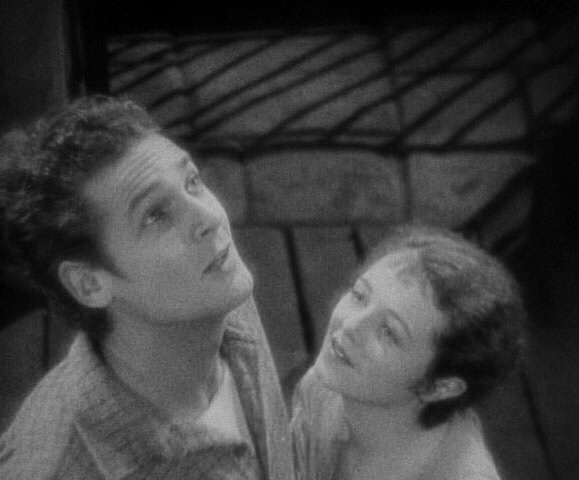
Dreamy silent romance with Gaynor and Farrell. Essential.

5) Desire (1936)

Very funny screwball comedy, in collaboration with Lubitsch. Gary Cooper plays a straight-laced American on vacation and Marlene Dietrich plays a con artist he gets entangled with. Fans of Howard Hawks’ Ball of Fire will enjoy this.

4) Mannequin (1937)

Excellent drama concerned with gender politics. Starring Joan Crawford and Spencer Tracy.

3) The Mortal Storm (1940)

Early anti-Nazi movie with Jimmy Stewart as a German who takes a stand at great peril. Very powerful stuff.

2) History is Made at Night (1937)

Wonderful gonzo romantic comedy. Ridiculous and joyous.

1) Moonrise (1948)
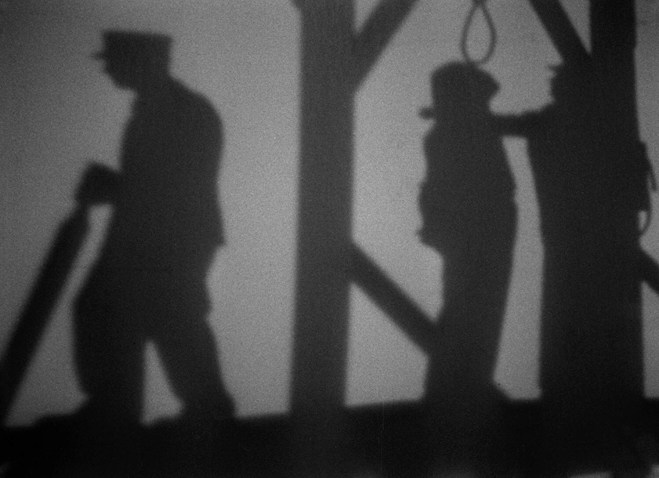
Dark sins-of-the-father swamp noir. I think it’s Borzage’s best film by a large margin.

Gance

J’accuse (1919), La Roue (1923), Napoleon (1927)
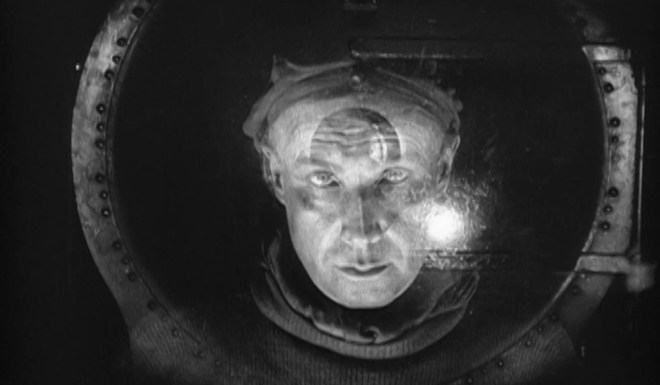
I watched through Gance’s three major silent epics. J’accuse is undeniably impressive but I didn’t find it as compelling overall and it dragged for stretches. It doesn’t have the same level of visionary grandeur as the other two, which are all time masterpieces. La Roue is the missing piece for understanding what Guy Maddin is up to, particularly in Careful. It’s one of the biggest, craziest movies I’ve ever seen, and I loved it. But nothing can top Napoleon, which is one of my favorite movies of the silent era. It’s technically over the top and unrepentantly heroic. He invented so many techniques for this movie that were way ahead of their time, and some were never repeated.

Straub/Huillet

Not Reconciled (1965), The Bridegroom, the Actress, and the Pimp (1968), En rachachant (1982)

I was imagining I was going to power through the rest of the Straub/Huillet filmography in a few months. Not even close. This stuff is remarkably difficult, but also very rewarding. I watched Not Reconciled six times, and I forced everyone at a full weekend aesthetics conference to watch it with me. Half of them hated it, half of the loved it. It’s an aggressively difficult movie that jumps forwards and backwards in time by decades without any signaling and introduces a huge cast of characters with almost zero exposition. It takes place over the course of 50 years but is less than an hour long. I think it’s absolutely stunning, and having taken the time to map it all out I can report that there is an almost entirely coherent interpretation available.

Resnais

Je t’aime, je t’aime (1968), Stavisky… (1974), My American Uncle (1980)
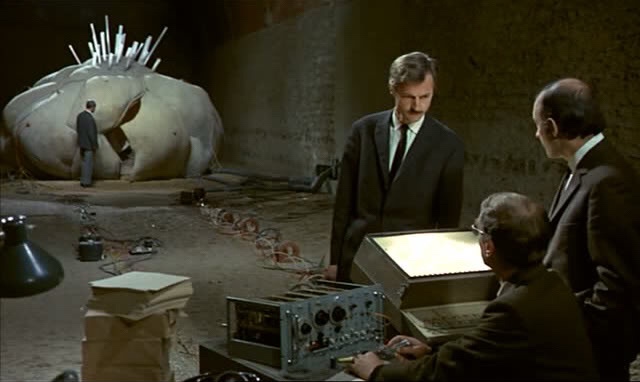
Je t’aime, je t’aime is the most Resnais movie ever. The classic Resnais theme is memory and identity. This movie imagines a sci fi scenario where a man who has just survived a suicide attempt is enlisted to test a time travel machine. He ends up unstuck in time, forced to relive bits and pieces of his memories in a chaotic way. The grim drama of the movie is generated from the fact that he’s suicidal: he was chosen for the experiment because he had already tried to kill himself and so the scientists felt alright about risking his life, but what worse torture could there be than having to relive the events that led up to his suicide attempt with the benefit of hindsight? It’s a great film, and clearly an influence on Eternal Sunshine of the Spotless Mind. Stavisky is a minor work about the Stavisky affair. I didn’t love it. My American Uncle is a very energetic film tracing the lives of multiple individuals within the framework of a scientific study applying a thesis about behavioral determinism to human beings. I really didn’t like the framing, because the scientific theory itself is so dumb, but the individual narratives are well-rendered and I liked the movie overall.

Taiwan

Taipei Story (Yang, 1985)

I’ve made New Taiwanese Cinema a staple of my movie diet the last year or so. Angela loves this stuff. Most of these movies manage to simultaneously succeed as human dramas and engage with the historical transformations that Taiwan underwent in the 20th century. Taipei Story is no exception. It feels like what it is: the first film by a great genius. It’s not as fully developed as his other work but it’s brilliant in its own way and full of quietly devastating acting performances.

The Terrorizers (Yang, 1986)

Now *this* is a damn movie. This is one of the best things I’ve seen in recent months. Multiple narratives are woven together through coincidence, as a way of examining the theme of globalization and its effect on Taiwan.

Dust in the Wind (Hou, 1986)

The third part of Hou Hsiao-hsien’s coming-of-age trilogy. As one would expect, it’s melancholy and lyrical, combining psychological nuance with a backdrop of socio-political transformation. It doesn’t stand out to me as a high point of Hou’s filmography but it’s very good.

Vive L’Amour (Tsai, 1994)

I completely loved this. It’s about three lonely people who intersect because of an empty apartment: two squatters and the real estate agent trying to rent it out. I think out of what I’ve seen this is my favorite Tsai film. It seamlessly moves between lurid psychosexual material and gut-punching emotional poignancy.

The River (Tsai, 1997)

Maximally depressing. Its surface theme is chronic pain, and it’s relentless about it. This movie ruined my day, but it was worth it. I think it’s great.

Pasolini

Accattone (1961), Mama Roma (1962), The Gospel According to Matthew (1964), Teorema (1968), Porcile [aka Pigsty] (1969)

I took a course on Pasolini when I was an undergrad but I never really cared too much for his work, aside from Salo. There was a Pasolini feature on Filmstruck so I decided to reconsider. I really loved The Gospel According to Matthew, which is a retelling of the Christ story that focuses on his activities as an agitator against the political and social order. I disliked Teorema, which doesn’t live up to its lyrical posture and is ultimately pretty trite. Accattone and Mama Roma are gritty works of social realism. As much as I love Anna Magnani, Accattone is easily the better of the two. I admire how abrasive Porcile is, and the Pierre Clémenti stuff is amazing, but I found it overall tedious.

Fred Astaire

Flying Down to Rio (1933), Roberta (1935), Follow the Fleet (1936), Shall We Dance (1937), Carefree (1938), Funny Face (1957)

I’ve been watching and rewatching Fred Astaire movies at a pretty steady clip this year, and it’s just endlessly delightful. The first couple listed are light on the Astaire song and dance and not all that strong (Roberta is much better than Flying Down to Rio), but the other four are pure joy.

Ozon

Sitcom (1998), Criminal Lovers (1999), Water Drops on Burning Rocks (2000), Double Lover (2017)

The only Ozon movies I had seen were Swimming Pool, Under the Sand, and Potiche. I had a very wrong idea of what Ozon is all about on the basis of those titles. I was never crazy about Swimming Pool, but Under the Sand is a potent drama and Potiche is a delightful feminist Demy homage with an excellent Catherine Deneuve performance. I had no idea, though, that Ozon is such an imp. These titles are all pretty damn lurid and boundary pushing. Sitcom really caught my attention: it’s like Teorema, but Terence Stamp is replaced by a pet rat. I liked it much, much better that Teorema. Double Lover is a Cronenberg-De Palma sort of thing, and it gives no fucks about making sense. Criminal Lovers is a Hansel and Gretel riff. Water Drops on Burning Rocks is based on an early Fassbender play.

Buñuel

Death in the Garden (1956). Simon of the Desert (1965), Tristana (1970), The Phantom of Liberty (1974)

I’ve seen the latter three (a long time ago) but not Death in the Garden. They all hold up really well but I particularly loved The Phantom of Liberty. It contains some of Buñuel’s most exhilarating and creative absurdities

Godard

Rise and Fall of a Small Film Company (1986), Oh, Woe is Me (1993)

I slowed down on Godard this installment but these were both extremely high quality. The former was previously thought to be lost and has only recently been recovered. It’s fairly alienating (as one would expect), but contains a brilliant comedic performance from Jean-Pierre Léaud. I think it’s great. The latter is a masterpiece. It’s one of Godard’s most beautiful films, with ethereal cinematography from the brilliant Caroline Champetier. It updates the myth of Alcmene and Amphitryon, wherein Zeus appeared to Alcmene disguised as her husband Amphitryon, resulting in her pregnancy with Heracles. In this version, the Amphitryon stand in is played by Gerard Depardieu.

Star Wars Prequel Trilogy

I revisited this, and my opinions were quite different this time around. I used to be a little bit of a Phantom Menace apologist. I’m done with that; I thought Jake Lloyd was just unbearable as Anakin. I liked the other two MUCH better this time. They are about a slow, insidious transition from democracy to fascism, and they are very effective at revealing how such a transition can be achieved by almost entirely well-meaning agents. Who proposes special executive powers to the senate after the Star Wars equivalent of the Reichstag fire? Jar Jar Binks. Who activates the clone army? Yoda.  I used to be bothered by the acting from Christenson and Portman, but I actually liked it this time. I think it helped to have just watched all those Borzage movies: the acting style here is closer to an early talkie than a typical adventure epic, and I enjoyed the effect. I also appreciated how uncompromisingly dark the third prequel is. There are certainly some problems, such as the wasted opportunity of Mace Windu, but overall I’ll take Lucas’ sometimes misguided attempts to be a visionary over Disney’s fan service. I would say I now like the second and third prequels better than all of the Disney movies except The Last Jedi.

Miyazaki

Nausicaä of the Valley of the Wind (1984), Kiki’s Delivery Service  (1989), Howl’s Moving Castle (2004)

Angela hadn’t seen any of these Miyazaki movies so we’ve been watching them all. I doubt anyone needs me to tell them how good they are. Howl’s Moving Castle especially improved for me on this rewatch. I bought all the new blu-ray releases, and many of them are essential purchases, because the subtitles are terrible on the Disney releases. Instead of actually translating the Japanese dialogue, they just use the transcript of the English dubbed track. If you’ve ever compared the English dubbing to the Japanese dialogue, the English versions are totally different and change the meaning of the movies in a noxious way. The only way to watch these movies is in Japanese with proper subtitles (so avoid the Disney releases!).

Double Feature: Crises of executive authority

Advise & Consent (Preminger, 1962), Seven Days in May (Frankenheimer, 1964)

Advise and Consent turned out to be absolutely perfect viewing for the Kavanaugh affair (I didn’t intend this, but it worked out—the Kavanaugh shit hit the fan like a week after I watched this). Lyndsey Graham does a pretty good Charles Laughton, but Kavanaugh is no Henry Fonda. Seven Days in May is a real potboiler, and I highly recommend it to anyone who likes Frankenheimer or political thrillers.

John Ford Comedies

The Whole Town’s Talking (1933), Steamboat Round the Bend (1935)

These are both very good. The former has Edward G. Robinson playing an escaped murderer and his law-abiding doppelgänger. It’s a hoot. The latter, starring Will Rogers, is very bizarre, featuring a traveling wax museum and the world’s slowest boat race. It deal frankly with issues of class and race while maintaining a comedic tone. Worthwhile for anyone interested in Ford.

Fritz Lang

The Wandering Image (1920), Four Around a Woman (1921), While the City Sleeps (1956)

The first two are very early fragments and not particularly interesting except to Lang completists. The latter is an acrid journalism satire and one of Lang’s better late works. It’s an antecedent to Nightcrawler.

Miscellaneous

Gold Diggers of 1933 (LeRoy, 1933)

Amazing and hilarious pre-code musical. I watched it two or three times as stress relief. It puts a huge smile on my face every time.

Choose Me (Rudolph, 1984)

Still intending to watch through Rudolph’s whole body of work but Angela isn’t into it so it’s hard to find the time. I think Choose Me is one of the best movies of the 80’s. It’s another entry in the “Keith Carradine rolls into town and fucks everyone” genre, and it creates an incredibly vivid world of neon signs and smoky bars, bathed in pink and purple. Barfly borrowed quite a lot from this.

Excalibur (Boorman, 1981)

I love it. I don’t know if I had ever seen it sober before. All the totally on the nose Wagner is what really puts it over the top.

Election 2 [aka Triad Election] (To, 2006)

Revisited this favorite. It’s wonderful.

2001: A Space Odyssey (Kubrick, 1968)

Saw this in Imax sitting in the front row and it melted my face.

His Girl Friday (Hawks, 1940); Monkey Business (Hawks 1952)

Revisited these wonderful Howard Hawks comedies and it made me very happy.

The Fugitive Kind (Lumet, 1960)

I had never seen this before. Marlon Brando and Anna Magnani go absolutely apeshit on some Tennessee Williams.

Big Wednesday  (Milius, 1978)

The most John Milius of all John Milius movies?

My Brother’s Wedding (Burnett, 1983)

It’s rough around the edges but I think this gritty, low-budget family drama is truly great.

Ride in the Whirlwind (Hellman, 1966)

Excellent existential western, though not as good as The Shooting.

The Draughtsman’s Contract (Greenaway, 1982), The Pillow Book (Greenaway, 1996)

I like Peter Greenaway but I don’t love him. I think The Pillow Book is one of his better movies.

Macao (N. Ray and Sternberg, 1952)

Forgettable noir, not really up to the standard one would expect from either director who worked on it.

The Last Unicorn (Bass and Rankin Jr., 1982)

A favorite when I was a kid, it holds up really well! The America soundtrack is pretty amazing.

Asparagus (Pitt, 1979)

Excellent experimental animation full of phalluses.

Blow-Up (Antonioni, 1966)

I revisited this for the sake of its connection with The Terrorizers. I think it’s good, but lower-tier Antonioni.

Casino Royale (Campbell, 2006)

Every time I revisit this I like it less. I now think it is one of the worst Bond movies. Certainly Craig is the worst Bond, and his only good Bond movie is Spectre.

The Magic Sun (Niblock, 1966)

Experimental Sun Ra shit. Enjoyed it.

Kino Eye (Vertov, 1924)

Not as appealing as Man with a Movie Camera.

Ballet Méchanique (Léger and Murphy, 1924)

Fantastic little Dadaist short. Highly recommended.

Night Movies (Penn, 1975)

Top-tier Gene Hackman Florida-LA noir. I didn’t remember it very well and it was a blast to revisit.

The Reluctant Debutante (Minnelli, 1958)

This was one of the only Minnelli movies I hadn’t seen. I skipped it when I was doing my big watch-through because I found the beginning very abrasive with all the shrill British accents. Once the main conflict gets going and the shrill British people become the villains it’s very good. I’m glad I went back and watched it.

Them! (Douglas, 1954)

Eh, it’s not as cool as a movie about giant ants should be.

Barcelona (Stillman, 1994)

There are no comedies this smart anymore, not even by Whit Stillman.

Twilight Saga: Breaking Dawn Part 1&2 (Condon, 2011 and 2012)

I am a Twilight fan. Mostly it’s ironic but I think these last two are genuinely good. The first one is amazing pregnancy horror. The second one is campier but the brutality of the first version of the ending is awesome.

Role Models (Wain, 2008)

One of the best modern comedies. Angela hadn’t seen it so I made her watch it. It holds up beautifully.

The Red Shoes (Powell and Pressburger, 1948)

I’m not a huge P and P fan (I think my favorite movie from the whole constellation is Powell’s Peeping Tom), but this is one of their better movies. There’s too much low key backstage drama for me. I prefer the hothouse melodramas of Vincente Minnelli.

The Decline of Western Civilization (Spheeris, 1981)

Interesting documentary about the LA punk scene. I had no idea how racist a lot of that scene was.

Everyone Says I Love You (Allen, 1996)

The Tim Roth-Drew Barrymore stuff is great. I hadn’t seen this in many years, and overall it holds up well.

All That Heaven Allows (Sirk 1955)

Nick Stang had us watch this at the same aesthetics conference where I made everyone watch Not Reconciled. His pick was a lot more of a crowd-pleaser. I’ve loved this movie for most of my life, but I still prefer Written on the Wind.

Shopping (Paul W.S. Anderson, 1994)

Good, not great. I like Paul W.S. Anderson (certainly a lot better than the other Paul Anderson!), but I prefer his less British stuff.

Liza (Ferreri, 1972)

I like the premise: Marcello Mastroianni lives alone on an island with his dog. Catherine Deneuve rolls in and kills the dog and then tries to replace it by wearing a dog collar and crawling around on all fours and whatnot. But the execution is weak. I don’t know how a movie with this premise manages to be boring.
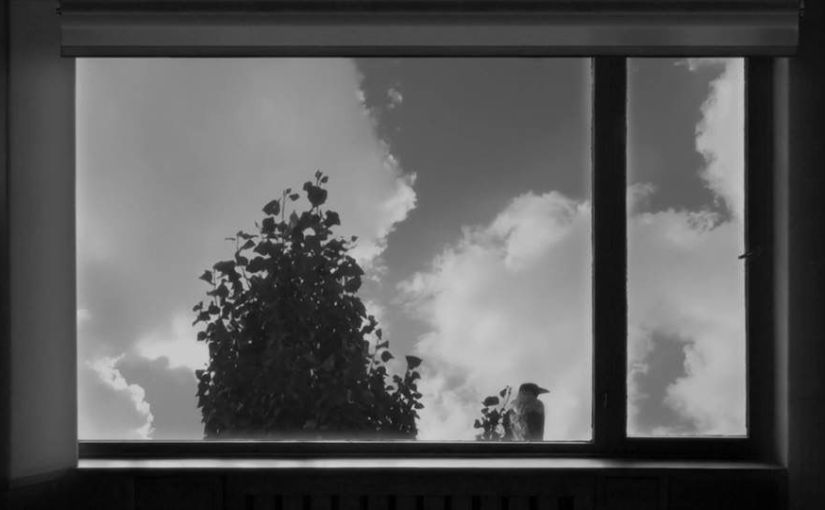
The Godfather of Gore: 34 Lucio Fulci films, ranked

I’ve watched every Lucio Fulci movie except for some of his early comedies over the last couple of months (indeed, I watched many of them twice), and I thoroughly, thoroughly enjoyed it. I can’t get enough eyes getting stabbed, sinister cats, and awesome Fabio Frizzi music.

You can watch most of Fulci in English. Like most Italian films at the time, the audio was dubbed in post-production, and so both the Italian and English tracks are dubbed. The English often syncs better. I’ve noted the few Fulci films that I think should be watched in Italian.

PSA: at least when I wrote this, most of the Fulci on Amazon was in the wrong aspect ratio and in bad quality. Shudder is better.

34) Silver Saddle (1978)

Image result for the silver saddle movie

This and Door to Silence are the only Fulci movies that can be described as “tame.” There are a few moments of inspiration, but not enough to overcome the annoying child factor.

33) The Sweet House of Horrors (1989)

Image result for the sweet house of horrors

This and House of Clocks are two haunted house movies that Fulci made for a TV series that never aired because it was too gory. There are a few fantastic things in this movie but the production quality is abysmal and the kids are super, super annoying.

32) Door to Silence (1991)

Image result for door to silence movie

Great premise: business man gets stuck in traffic by a funeral procession… but is it his own funeral? The New Orleans setting is vivid. But again the production quality is terrible and this is ultimately toothless.

31) Touch of Death (1988)

Touch of Death (aka When Alice Broke the Mirror) (1988, Italy) Review | Attack from Planet B

Late horror-comedy. It’s suitably nasty and the high points are high but it’s very repetitive.

30) Sodoma’s Ghost (1988)

Related image

Haunted house movie where a group of Nazis are killed by a bombing in the middle of an orgy and then haunt a group of teenagers many years later. It’s pretty bad but it’s so perverse and bonkers that I give it a marginal thumbs up.

29) My Sister in Law [aka La Pretora] (1976)

Related image

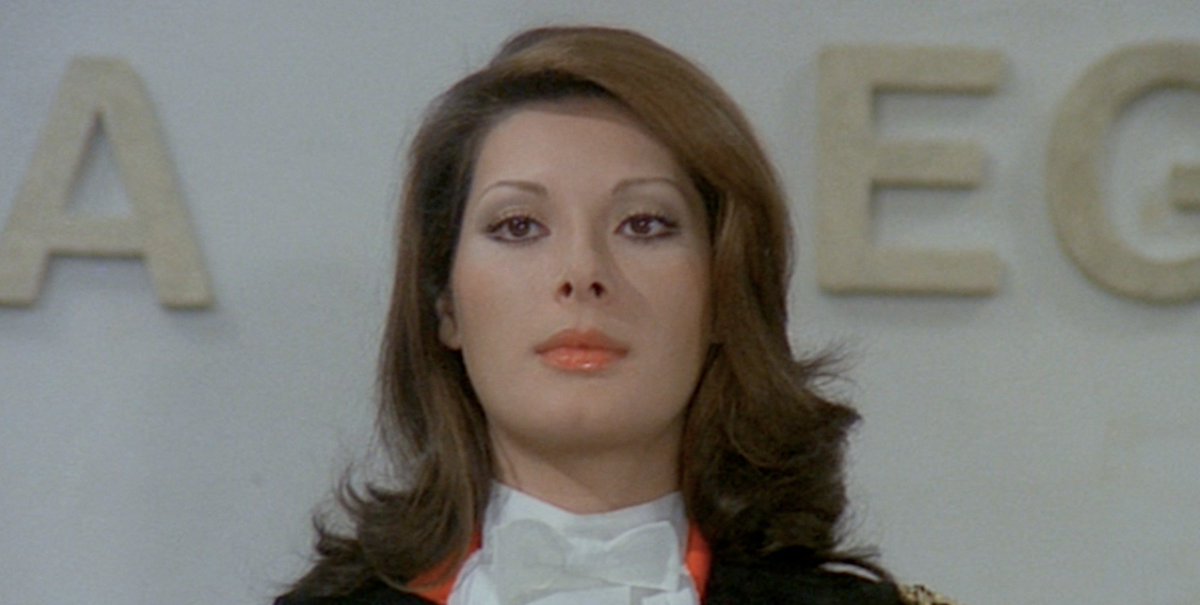
One of the two Fulci comedies I watched. This one is a fairly raunchy sex comedy starring 70’s genre icon Edvige Fenech. The premise is great: she plays an imperious magistrate who is about to send a crooked businessman to jail for selling dog food as goulash. But she has an identical twin sister who works as a prostitute, and the businessman and his conspirators hire the twin sister to engage in all sorts of indecent activities to ruin the judge’s reputation and force her off the bench before she can hand down a sentence. Things do not go as planned. It has tedious stretches but overall I enjoyed it.

28) The House of Clocks (1989)

Image result for the house of clocks fulci

The other made for TV haunted house movie that was too gory to actually air. This one also has pretty lousy production quality but it’s so insane that it’s overall appealing. An old couple live in a house full of clocks. A gang of home invaders murders them. The clocks start running backwards and the home invaders get stuck in a time loop (the rules of which are incomprehensible) where they are terrorized by the couple they killed.

27) The Eroticist [aka The Senator Likes Women] (1972)

The Eroticist (1972) – MUBI

The other comedy I watched. This is about a senator who tries to be chaste but who experiences an uncontrollable compulsion to grab every ass he sees (heads of state, nuns, priests, doctors, etc.). There’s a lot of material digging at the Catholic church where they try to manipulate the senator for their own nefarious purposes. This is about 20 minutes too long and the papal-political machinations grow tiresome, but the high points here are incredible (particularly the dream sequence).

26) New Gladiators [aka Warriors of the Year 2072] (1984)

New Gladiators/Review - The Grindhouse Cinema Database

This was an attempt to capitalize on the success of Escape from New York and Mad Max in the Italian Exploitation milieu. It is completely batshit. The action scenes are incomprehensible and the movie drags for stretches, but there are enough insane Fulci touches to sustain interest. Like, there’s a scene where they meet the designer of a supercomputer. It could have been a pretty mundane scene but instead it’s like “MY MACHINE HAS A SOUL!!!!”

25) Challenge to White Fang (aka The Return of White Fang) (1974)

Image result for return of white fang fulci

Everything from here on up I really like. This sequel doesn’t stand up to the first one but it is a delight in its own right. Fulci turned White Fang into a fusion of a Spaghetti Western and family animal drama. The great Franco Nero plays the Man With No Name/Jack London figure. This one doesn’t have quite as good a story or supporting cast as the first one but there’s a dog vs. eagle battle and lots of other delightful touches.

24) Voices from Beyond (1991)

Image result for voices from beyond fulci

Delightful late effort featuring one of Fulci’s craziest dream sequences. This is about an asshole patriarch who is murdered in a manner that makes his death appear to be due to natural causes. But he is able to telepathically communicate with his daughter from beyond the grave and he leads her to investigate his murder.

23) Zombie 3 (1988)

Related image

This is a total mess, and that’s the whole point. Fulci was unable to finish this and it was completed by genre madmen Bruno Mattei and Claudio Fragasso. A zombie supervirus escapes from a military testing facility after a terrorist attack and infects an entire flock of birds. Mayhem ensues.

22) Demonia (1990)

Image result for demonia movie

Fulci does nunsploitation! An archaeologist has wild visions of an orgy cult of nun witches and is drawn to the ruins of a monastery where a group of nuns was crucified 500 years earlier. One of his better late efforts.

21) Aenigma (1987)

Image result for aenigma

Very campy mean girls 80’s boarding school horror. The popular kids play a cruel practical joke on the outcast daughter of the school’s cleaning lady, which leaves her in a coma. She telepathically murders them one by one. Tons of snails.

20) A Cat in the Brain (1990)

Image result for cat in the brain

Fulci’s 8 1/2. For Fulci fans only, and I recommend watching it only after seeing most of his horror films. He plays himself, driven mad by his own perverse imagination as he works on the films Sodoma’s Ghost and Touch of Death. He visits a therapist, who turns out to be a crazed murderer who frames Fulci for his own crimes. Fulci’s sense of reality breaks down and he’s not sure what’s real and what he’s imagining. The ending is oddly heartwarming if you love the man– it feels like a warm goodbye from the Godfather of Gore. Watch this one in Italian.

19) Murder-Rock: Dancing Death [aka Slashdance, aka Murder Rock] (1984)

Image result for murder-rock dancing death

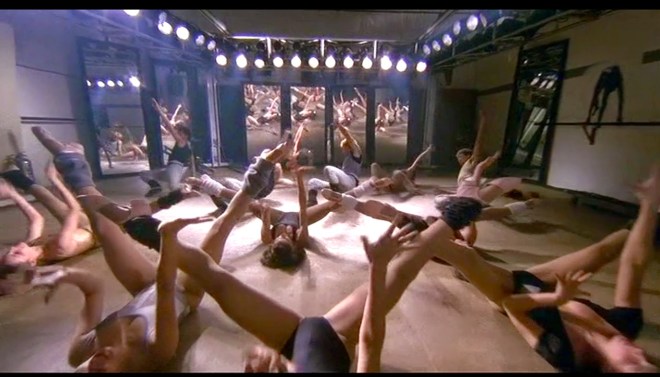
Campy 80’s ballet school giallo where the nicest slasher ever painlessly kills their victims with a hairpin after knocking them out. Fulci was forced to turn this into a musical to capitalize on the success of Flashdance, and the result is delightful.

18) Massacre Time [aka The Brute and the Beast] (1966)

Image result for massacre time fulci

The earliest Fulci film of broad interest. This is an excellent Spaghetti Western starring Franco Nero and George Hilton. The script is by Fernando Di Leo, who wrote the first two parts of Sergio Leone’s Dollars Trilogy, and his voice shines through clearly. This feels like a meaner, nastier, more lurid Fistful of Dollars. Highly recommended both to Fulci fans and Spaghetti Western connoisseurs. I recommend watching this one in Italian with subtitles (as for most Franco Nero movies, though I prefer the English dub for White Fang and its sequel).

17) White Fang (1973)

Related image

This is totally excellent. Franco Nero plays a Jack London figure named Jason Scott who visits Dawson City in the Yukon during the Gold Rush. The sublimely creepy John Steiner plays the town’s resident robber baron, Beauty Smith. He bleeds the miners dry with the cooperation of a debauched priest played by the legendary Fernando Rey. Nero takes the side of an Eskimo family wronged by Beauty Smith and we get a classic Spaghetti Western war between the corrupt local power-brokers and the mysterious stranger. The twist is that he’s aided along the way by White Fang, and the movie is about 30% sentimental animal drama. I love it.

16) One on Top of the Other [aka Perversion Story] (1969)

Image result for one on top of the other

Fulci’s exploitation revision of Vertigo, starring Jean Sorel and genre icon Marisa Mel. In this version, the Kim Novak character (played by Mel) is an exotic dancer and prostitute. This and De Palma’s Obsession are the two great ultra-lurid Vertigo homages.

15) The Black Cat (1981)

Related image

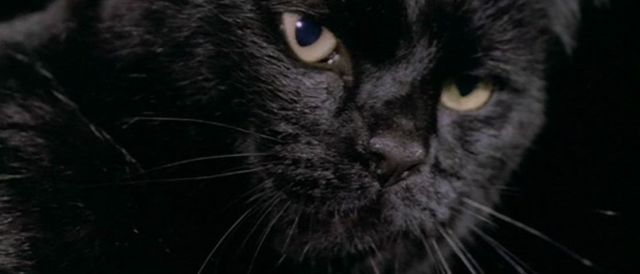
Very fun Poe riff with some giallo trappings. It’s not really a giallo, because we know all along that the killer is the cat, but there is a mystery about what the hell is up with this cat and its creepy psychic owner (played by Patrick Magee, who you’ll remember as the unfortunate writer from A Clockwork Orange).

14) Beatrice Cenci [aka The Conspiracy of Torture] (1969)

Related image

Fulci does… um… historical drama. Beatrice Cenci was a real historical figure, famous for her bizarre murder trial. Fulci of course focuses on all the nastiest bits. The narrative is fractured and non-linear, with brilliant editing, and this film represents a big leap in the development of his style. I watched this in Italian and liked it that way. I’m not sure if an English dub exists.

13) Manhattan Baby [aka Eye of the Evil Dead] (1982)

Related image

This one doesn’t have as much gore and it wasn’t as immediately appealing to me, but once I watched it a second time I realized how insane it is. An archaeologist enrages some spirits by defiling an Egyptian tomb, and his daughter is given an evil magical talisman by a blind woman in the market and brings it back to the USA with her. The vengeance of dark forces ensues.

12) The New York Ripper (1982)

The New York Ripper (1982) [31 Days of Gore] – The Goug' Blog

This is Fulci’s second sleaziest movie, after The Devil’s Honey. It’s a slasher flick set in grimy pre-Giuliani New York City. This is pretty gruesome, but it has a core of angry feminism: every single man in this movie is a disgusting creep, and the film’s horror is drawn from the inescapable terror of being a woman in a world full of men. The killer talks like Donald Duck (!).

11) Contraband [aka The Smuggler] (1980)

Image result for contraband fulci

Fulci’s one poliziotteschi, and it’s a doozy. Four words: sulfur pit knife fight. This is a super mean and nasty movie. I recommend watching it in Italian with subtitles. The overall quality of the English audio track is a little better but the voice acting on the English dub is just terrible, and it takes away from how badass this thing is.

10) The House by the Cemetery (1981)

Image result for the house by the cemetery

My least favorite of the Gates of Hell trilogy, but still amazing. Dr. Norman Boyle takes his family to live in an extremely creepy old mansion in New England. As others have pointed out, what makes this special among haunted house movies is that there’s nothing forcing them to stay there except Norman’s arrogant male confidence that he’s got it all under control. This is full of terrifying omens and crazy Fulci editing.

9) Four of the Apocalypse (1975)

Image result for 4 of the apocalypse fulci

The most bizarre Spaghetti Western I’ve ever seen. Fabio Testi stars. An oddball group of four prisoners in a small town jail are sent packing. They are given peyote by sadistic bandit Chaco (Tomas Milian!), which does not go well. They end up hiding out in a ghost town and things just get nuts.

8) The Devil’s Honey (1986)

Image result for the devil's honey

Softcore exploitation mayhem. You’ve got a saxophone player with an unhealthy dom-sub relationship with sultry Jessica. He dies. She blames his doctor, who she terrorizes, with the result that she finally becomes the dominant one. This is at the far extreme of sleaze in Fulci’s filmography, and it’s a blast. I liked the Italian audio track much better than the English dubbing but the subs I had were just a transcription of the English dub, so they didn’t always sync up with the Italian. When I watch it again I’m going to look for better subs.

7) Don’t Torture a Duckling (1972)

Image result for don't torture a duckling

Excellent giallo about a series of child murders in a small village. Great cast includes Florinda Bolkan as a crazed witch and Barbara Bouchet as a rich girl from Milan lying low after a scandal. Bouchet teams up with a journalist to investigate the killings. This and the next two are Fulci’s three great classic gialli. They’re all high points of the genre.

6) The Psychic [aka Seven Notes in Black] (1977)

Image result for the psychic fulci

The only Fulci movie I would describe as “classy.” This is a very tight giallo with a strong narrative and relatively minimal luridness. A psychic has visions of a murder in a country villa owned by her husband. She finds a corpse in the wall, and her wealthy businessman husband is arrested. She teams up with a paranormal researcher to try to exonerate him. Things get twisty. All of Fabio Frizzi’s Fulci scores are great, but his work here is particularly memorable.

5) A Lizard in a Woman’s Skin (1971)

Image result for lizard in a woman's skin

My favorite Fulci giallo (though I must say it was a difficult choice). Well-behaved rich wife of a philandering lawyer has kinky dreams about her hard-partying neighbor Julia. She dreams about murdering Julia, who is indeed murdered, and she investigates the mystery while fearing that she may in fact be the murderer. Lurid, twisty, and perfect.

4) City of the Living Dead (1980)

City of the Living Dead (1980) Review |BasementRejects

Part of the Gates of Hell trilogy. The suicide of a priest opens up a gate to hell in a small town. A psychic makes contact with the priest during a seance and suddenly dies, but then returns from the dead. She seeks out the small town along with a journalist, and all sorts of mayhem ensues. This is full-on Fulci madness, with batshit editing and production design.

3) Zombie [aka Zombi 2] (1979)

Image result for fulci zombi

The titling is a little confusing: there’s a Zombi 2 and a Zombi 3, but there’s no Zombi by Fulci. Zombie is the American title of Zombi 2. It’s called Zombi 2 because it’s an unofficial sequel to George Romero’s Dawn of the Dead (itself a sequel to Night of the Living Dead), which was released in Italy as Zombi. This gory monstrosity connects the Romero universe with the original zombie masterpiece, Jacques Tourneur’s I Walked with a Zombie. The roots of the zombie apocalypse are traced back to the transgressions of colonialism, which is vastly more interesting than the sort of sci fi explanation we often get in crappy zombie movies nowadays. This movie famously features the most incredible shark vs. zombie confrontation of all time.

2) Conquest (1983)

Image result for conquest fulci

One of my great regrets in life is that I did not discover this as a kid. This sword & sorcery flick was an attempt to capitalize on the success of Conan the Barbarian, but Fulci took it to an unsurpassed level of visionary madness. The entire film is shot through an aggressively foggy lens filter, and then he pumped as much fog as he possibly could into every scene. The result is like peering into another dimension. Handsome young adventurer Illias is given a magic bow by the god Cronos, which it turns out is the only weapon that can kill the evil witch Ocron. Ocron sends her army of werewolves to retrieve the bow, promising that she will take away the sun for all time. Illias teams up with an older misanthropic loner played by Jorge Rivero, and their relationship simmers with delightful homoerotic subtext. Things just get more and more insane from there as Ocron redoubles her efforts and performs all sorts of pagan rituals.

1) The Beyond (1981)

Image result for the beyond fulci

The greatest entry in the Gates of Hell trilogy, this is the apocalypse distilled down to 87 minutes of cinematic doom. The finale of The Beyond is arguably the most insane, abstract stretch of film in the entire horror genre. Roger Ebert wrote a famously vitriolic negative review of this, where he reveals exactly who The Beyond is not meant for: fuddy-duddies who think that narrative continuity matters and horror dialogue should aim to imitate generic prestige pictures. No, sir, you will not find much narrative continuity or MFA dialogue in The Beyond. What you will find is buckets of gore, virtuoso editing, and one of the greatest horror scores of all time.

Streaming Recommendations, Vol. 5

Featured image from City of the Living Dead

Amazon Prime is still the clear winner, though it drives me nuts how many titles they have in unwatchably poor quality. Everything I’m recommending has been vetted for quality and correct aspect ratio. Hulu has a few gems, and Netflix has some worthwhile stuff, but their app seems to be getting more obnoxious by the day.

Amazon Prime

The Terrorizers (Edward Yang)

Image result for the terrorizers yang

Edward Yang is best known in the west for his seminal masterpiece Yi Yi, but his entire body of work is extremely worthwhile. If you’re foggy about 20th century Taiwanese history, it’s worth brushing up before watching this (Wikipedia will do). The Terrorizers is a multi-narrative city symphony set in Taipei that uses themes of interconnectedness and coincidence to examine globalization. Antonioni’s Blow Up is a key point of reference. It traces the far-reaching consequences of a crank call.

City of the Living Dead (Fulci)

Image result for city of the living dead

I have been on a huge Fulci kick this summer. City of the Living Dead is part of his Gates of Hell trilogy, along with The Beyond (which is on my all-time horror top ten list) and The House by the Cemetery. These movies are among the most abstract in the horror canon, more concerned with creating an overwhelming feeling of impending doom than with narrative. In this one, a psychic and a reporter seek to close a gate to hell opened by the suicide of a priest. A word of warning: there’s tons of Fulci on amazon, but most of it is in the wrong aspect ratio and in terrible quality. Shudder is better, and a lot of Fulci has been restored and released on blu-ray the last few years.

Unsane (Soderbergh)

As I said in my last post, I loved it! It’s one of the best thrillers in recent memory, and I found it extremely stressful to watch.

The River (Tsai Ming-liang)

Extraordinarily depressing. Chronic pain: the movie, more or less. But it’s entirely worth engaging with if you don’t mind ruining your day.

The Ninth Gate (Polanski)

Have people seen this? I don’t really know. It’s long and deliberate, so be in the mood to be patient, but it’s also really great and I consider it essential. Polanski is the master of the slow burn. He has a unique ability to render all sorts of seemingly inconsequential details grim and foreboding. Johnny Depp (before he got terrible) plays a rare book seller looking for a satanic tome. The payoff is tremendous.

The Long Riders (Walter Hill)

Image result for the long riders

Awesome Jesse James western by the great Walter Hill, starring four sets of real-life brothers (Keaches, Carradines, Quaids, and Guests).

Frozen (Green)

Nope, not the Disney frozen. This is the one and only “stuck on a ski lift” horror movie you ever need to see. It’s trash, but I appreciate how thoroughly it mines its premise (even while being exceptionally dumb). Yes, there are wolves.

The Manchurian Candidate (Demme)

The Strohl brothers are longtime fans of this film. I think it’s one of the best remakes ever. It complements the Frankenheimer masterpiece beautifully. It’s aged well, and is more relevant now than ever. Great Denzel performance, and Meryl Streep lives up to Angela Lansbury. If you haven’t seen it, or if you shrugged at it when it came out, I recommend checking it out.

La Moustache (Carrère)

Image result for la moustache

I’ve long been a fan of this odd little absurdist gem. Vincent London stars as a man who’s worn a mustache his entire adult life. One day he shaves it, but no one notices, and indeed they all insist that he never had a mustache. Things go haywire from there. I haven’t rewatched this in a long time but I wonder if it would take on new resonances now that gaslighting is a mainstream concept?

The Forest for the Trees (Ade)

Maren Ade’s wonderful films Tony Erdmann and Everyone Else got quite a bit of traction in the US, but her first film is more of a rarity. I saw it back when it came out and really liked it, and I was pleased to see it show up on Prime. It’s about an awkward schoolteacher starting a new job and dealing with social alienation. It’s been a while, but I remember it being very squirmy-cringey and psychologically incisive.


Hulu

The Duchess of Langeais (aka Don’t Touch the Axe) (Rivette)

Image result for duchess of langeais

Yes! Anyone who’s been reading my film writing knows how deeply I love Jacques Rivette. This is one of his most accessible films, and a perfectly fine place to start. It’s a Balzac adaptation, thematically concerned with unrequited love.

Johnny Guitar (N. Ray)

Image result for johnny guitar

Yep, Johnny Guitar is on hulu. One of the greatest westerns, and one of the most gender-subversive films of its time thanks to Joan Crawford’s iconic performance. If you haven’t seen it, you must.

Bastards (Denis)

Claire Denis’ bleak and nasty noir about a dark family secret. The major point of reference is Jacques Rivette’s masterpiece Secret Defense. I thought this was one of the two or three best movies of 2013.

Mad Detective (To)

Image result for mad detective

In the running for Johnnie To’s weirdest movie. It’s about a detective who can see a person’s inner personalities. He had to retire due to mental illness but is brought back to help with a cold case.


Netflix

Alexander: The Ultimate Cut (Stone)

Image result for alexander oliver stone

If you gave up on Alexander after the theatrical cut, you’ve missed out on a lot. This is the *fourth* cut of the film, and it’s Stone’s preferred version. I love it. If you have three and a half hours to spare, here’s a good way to spend it.

Man of Tai Chi (Reeves)

Image result for man of tai chi

Keanu Reeves’ directorial debut is frickin’ awesome. Excellent martial arts picture.

Lifeline (Johnnie To)

Image result for lifeline johnnie to

Good place to start with Johnnie To. I think I recommended this once already, but it wasn’t on Netflix. This is a firefighter thriller (think “Backdraft but good”). There’s a little bit of story, but it’s mostly action. There are far greater works in To’s filmography (of course he’s best known for his crime cinema) but I wouldn’t skip this one.

Beyond Skyline (O’Donnell)

Image result for beyond skyline

Extremely weird and trashy sci fi B-movie. If you have an appetite for this sort of thing, it’s delightful. I watched it twice.

Enemy (Villeneuve)

Image result for enemy villeneuve

I love this movie! I’ve gotten the sense that not many others like it as much as I do, but I’m undeterred in recommending it. Jake Gyllenhaal plays a history professor who discovers that he has a doppelgänger. He starts stalking his double and things get weird from there.


The first three films of 2018 that I’ve loved

Featured image from First Reformed 

First Reformed

First Reformed is easily the movie of the year so far for me. I’m pretty into latter day Paul Schrader, and I’m glad that he’s been able to get final cut for his last two movies (this and Dog Eat Dog). This one is extremely referential, and it’s helpful to be familiar with his influences. The biggest points of reference that I picked up on are Bresson’s Diary of a Country Priest and The Devil, Probably, Dreyer’s Ordet, Ingmar Bergman’s Winter Light, Tarkovsky’s The Sacrifice, and John Huston’s Wise Blood. It’s also an important bit of background to know that Schrader was raised Calvinist.

First Reformed is very much of the age of Trump. In that respect it is *bleak*, but not unremittingly so. I want to be careful to avoid saying much about the ending, but it does have a degree of spiritual hopefulness. The basic set up here is that Ethan Hawke plays an alcoholic pastor with a traumatic past at a historic church in Upstate NY that hardly anyone attends. At the request of the man’s pregnant wife, he meets and counsels a suicidal environmental activist overwhelmed by despair at impending global catastrophe. Things spiral into insanity from there.

I admit that I cringed when the environmentalist theme first surfaced. There are few things that I find less interesting in art than didactic environmentalism. But whoa was I wrong to be concerned about where this was going! It turns out to be less Cowspiracy and more The Devil, Probably. Schrader is interested in a broad idea of jihadism as encompassing Trumpist Christianity and militant environmentalism (clashing amidst fire and brimstone over the fate of the world!), and he is interested in it from a psychological rather than a moralistic point of view. How does one live with the belief that the apocalypse is upon us? It’s seemed to me for a while that a lot people who are really hardcore about zero waste, maximum sustainability, etc. are partly motivated by existential dread. The ongoing ritual of making small, futile efforts to do a little bit less to hasten the apocalypse must do something to ameliorate despair. The focus on amelioration is what I find uninteresting about a lot of artworks on the subject. Schrader’s film, on the other hand, burrows into the underlying existential dread and looks it right in the eye. And it is fucking harrowing.

Unsane

Image result for unsane

Unsane was incredibly stressful for me to watch. I have a phobia of involuntary confinement, and so I’m particularly vulnerable to thrillers about people getting locked up unjustifiably and falling under the power of malign forces. There are a lot of suspense moves out there concerned with involuntary confinement, and this is one of the best. The major point of reference here is Fuller’s Shock Corridor. Soderbergh shot this on an iPhone, which I was afraid would come across as gimmicky. Nope. It seemed to me like he did this because it was the best tool for the job. The virtue of the iPhone here is its mobility and compactness. Unsane is full of shots that couldn’t have been filmed with a more cumbersome camera. The mise-en-scène is on point throughout. I also thought Claire Foy was great in the lead role. This is the best thriller I’ve seen in a while.

Double Lover

Image result for double lover

I’ve watched several of Ozon’s early works recently, and I’ve been looking forward to this. His early stuff has what my brother aptly describes as “an impish, De Palma-meets-John Waters quality.” His middle and later stuff is kind of all over the place. This new one gets back to his roots. If you’re into De Palma/Cronenberg-style luridness, then this is the movie for you. This and Verhoeven’s Elle are the only recent movies I can think of that really scratch that itch.

Double Lover gives no fucks about making sense. Expect lots of weird hallucinations, psychosexual twin fixations, cats, transgressive imagery, and explicit sex. Stay away if easily disturbed by this sort of subject matter.

***

In summary, I would say that First Reformed is the true masterpiece of the three, Unsane is a great display of genre craftsmanship, and Double Lover is just wildly enjoyable (at least for me).

Film Diary vol 5: Minnelli, Gosha, etc.

Featured image from The Pirate

Alongside the May ’68 viewing project I posted about last week, I mostly went for very different sorts of movies that would function as palette cleansers amidst all the political radicalism. I watched a ton of Vincente Minnelli (classic Hollywood) and Hideo Gosha (Japanese genre fare) along with an assortment of other random stuff.

Favorites are highlighted in bold. 

Vincente Minnelli

During the last year, I watched Minnelli’s classic musicals Meet Me in St. Louis (1944) and The Band Wagon (1953) and was completely blown away by them. I consider both to be among the very best American musicals. I had only seen a handful of Minnelli movies before and I resolved to do a deep dive into his filmography sometime in the near future. When I heard that Time Warner was putting the Warner Bros archive on Filmstruck, my first thought was “oooooooh I bet there’s gonna be a boatload of Minnelli.” Sure enough, just a few weeks later I logged in to find a 25 film Minnelli feature (I try to avoid reading what’s coming soon on Filmstruck so that I can enjoy the surprise when I log in). I had lots of plans for other things I wanted to watch, but I suspended most of them and dove in. Aside from Meet Me in St. Louis and The Band Wagon, I watched every movie in the feature except one. That one was The Reluctant Debutante, which I tried twice and could not get into (too many squealing British ladies). I’ll go back and watch it if I get to the point where I’ve seen every single other Minnelli movie (I think I have maybe 4-5 others left depending on whether you count titles that he only directed part of). I’m going to give at least a brief comment on every title:

Cabin in the Sky (1943)

Image result for cabin  in the sky louis armstrong

Musical about a murdered sinner who gets a chance to return to Earth and reform himself, with an all-black cast and Busby Berkeley choreography. There’s a delightful appearance from Louis Armstrong and a big number with Duke Ellington and his Orchestra. It’s very good but not great.

The Clock (1945)

Much better than I thought it would be. It’s a sort of WWII Before Sunrise, where Robert Walker has 48 hours before shipping off and randomly meets Judy Garland in Penn Station. They have a whirlwind romance but accidentally get separated and need to figure out how to find each other. The energetic, stylized direction elevates the material, and Garland’s performance (her first without song and dance) is excellent.

Yolanda and the Thief (1945)

This one wasn’t on Filmstruck. Lucille Bremer plays a naïve heiress, fresh from the convent, while Fred Astaire plays a charming con man who poses as her guardian angel as a ruse to relieve her of her fortune (but eventually falls for her). I was shocked to learn that this was a huge flop, but now that I’ve thought about it more, I’m not so surprised. There’s a 16 minute surrealistic dance number where some of the dancing is in a different meter than the music. This movie was just too far outside the box at a time when audiences had fairly rigid expectations for musicals. Highly recommended.

The Pirate (1948)

Image result for The pirate gene kelly

I love it, I love it, I love it. Judy Garland plays a sheltered young woman living in the Caribbean who fantasizes about being swept away by the legendary pirate Mack “the Black” Macoco. Against her will, her parents arrange her marriage to the repellent town mayor. Meanwhile, a traveling circus comes to town featuring Gene Kelly as a womanizing circus leader/hypnotist. He discovers Garland’s fantasy and launches a ploy to pose as the pirate of her dreams. Hijinks ensue. I haven’t investigated this suspicion but I have the sense that Renoir’s 50’s work was highly influenced by Minnelli. I see the influence of Meet Me in St. Louis in The River and the influence of The Pirate in The Golden Coach. 

Madame Bovary (1949)

Not the most faithful Bovary adaptation, but entertaining as a Hollywood melodrama with Emma Bovary as a sort of femme fatale. The film ran up against the Hays Code, which Minnelli addressed head on with an obscenity trial framing device. This might have been intolerable, but Flaubert is played by James Mason, and I could enjoy listening to James Mason read instruction manuals.

Father of the Bride (1950), Father’s Little Dividend (1951)

Eh, I’ve seen these more than once before and they have a great cast (Spencer Tracy, Joan Bennett, Elizabeth Taylor) but they’re pretty forgettable in the context of Minnelli’s filmography, which is full of much finer treasures.

An American in Paris (1951)

Image result for an american in paris gene kelly

An old favorite, with Gene Kelly as an American GI turned bohemian painter living in Paris and introducing ballerina Leslie Caron as the leading lady. Kelly’s dance choreography and Gershwin’s music are immensely pleasant, but the parts are greater than the whole and I would rank this solidly behind The Band Wagon.

The Bad and the Beautiful (1952)

Peak Lana Turner! Along with Two Weeks in Another Town, part of a pair of fantastic films Minnelli made with Kirk Douglas about making movies. Here Douglas plays a gifted movie producer (often taken to be a hybrid of David O. Selznick and Val Lewton) who gets closely involved with the creative aspects of his films but alienates everyone he’s close to and ruins his career. The movie looks back over his life when he asks a director, an actress, and a writer from his past to collaborate on a comeback project. Each of them tells the story of their relationship with Douglas’ character. They all claim he ruined their lives, but their stories reveal that they actually owe their current success to him. Lana Turner losing it in the car is all time.

The Story of Three Loves (1953)

Image result for a story of three loves

For an anthology film, this is frickin’ awesome. There’s a ridiculous ocean liner framing device and then three romance stories. The first is just incredible. James Mason plays an imperious ballet director and ballerina Moira Shearer (in one of her few film performances) plays a would-be professional dancer with a heart condition. You can probably imagine what happens (Rite of Spring-esque); it’s beautiful and heartbreaking and Mason and Shearer are so, so good. The second segment is the weakest of the three. It’s a really creepy antecedent to Big, with Ethel Barrymore stealing the show as a witch who turns a young Ricky Nelson into Farley Granger, who then proceeds to romance his governess (Leslie Caron). The third story stars Kirk Douglas in perhaps the most harrowing existential trapeze thriller of all time. Death drive, Holocaust trauma, no net. It’s really tremendous.

The Long, Long Trailer (1954)

I wasn’t sure I wanted to watch this Lucille Ball and Desi Arnaz vehicle, but my concerns were entirely misplaced. It’s hilarious from start to finish. Basically, wife persuades her husband to buy an obscenely oversized mobile home and hijinks ensue.

Brigadoon (1954)

Image result for brigadoon

Lovely Gene Kelly-Cyd Charisse musical (co-starring an excellent Van Johnson) about a mystical town in the Scottish highlands that appears only one day every hundred years. The premise strains suspension of disbelief but it works as a metaphor for the longing to stay in a magical movie world after the credits have rolled.

The Cobweb (1955)

Image result for the cobweb movie

Mental hospital melodrama where the McGuffin is drapes. Many of the characters become embroiled in a conflict over who gets to pick the new drapes. It’s remarkable how much mileage is squeezed out of this conflict. The excellent ensemble cast includes Lauren Bacall, Charles Boyer, Lillian Gish, Richard Widmark and Gloria Grahame. This movie has a cult following, though I personally didn’t like it as much as some of Minnelli’s other melodramas.

Lust for Life (1956)

Image result for lust for life movie

Goofy, ridiculous, entertaining van Gogh biopic starring a very over-the-top Kirk Douglas. Anthony Quinn plays Gauguin!

Tea and Sympathy (1956)

Image result for tea and sympathy

This is one of Minnelli’s finest films and possibly the best movie ever made about the way men are socialized. Deborah Kerr and John Kerr (no relation) star. The former brilliantly plays Laura, the wife of the headmaster of a boys’ school, while the latter plays Tom, a sensitive student. Tom is teased mercilessly by his peers and prodded to conform to gender expectations by the headmaster. Laura bonds with him and tries to protect and nurture him, and sexual chemistry develops between them. There is an unreconciled and extremely interesting tension between the subtextual implication that Tom’s character is gay and the forbidden heterosexual romance narrative.

Designing Woman (1957)

The worst Minnelli movie I’ve seen. Gregory Peck comes across as a poor man’s Cary Grant while Lauren Bacall does a halfway decent Katharine Hepburn. There is no chemistry whatsoever between them. The mean-spirited “punch drunk” jokes at the expense of a disabled character have not aged well.

Gigi (1958)

Gigi has not aged well either. Maurice Chevalier’s “Thank Heaven for Little Girls” musical number is unspeakably creepy. There are some redeeming moments but this is bottom-tier Minnelli for me.

Some Came Running (1958)

Excellent postwar melodrama (based on the James Jones novel), starring Frank Sinatra, Dean Martin, and Shirley MacLaine. I recommend it heartily.

Home from the Hill (1960)

Another Cinemascope melodrama, starring Eleanor Parker, George Hamilton, and a phenomenal Robert Mitchum. Mitchum plays a wealthy, philandering, brutish Texas patriarch who tries to make a man of his mollycoddled son. It’s sort of a cross between Tea and Sympathy and Written on the Wind.

Bells are Ringing (1960)
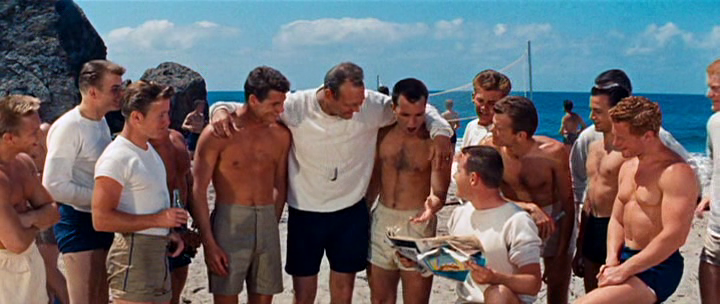
Musical comedy starring Dean Martin and Judy Holliday. She works for an answering service; he’s a client and a struggling playwright; there’s a romance. I didn’t like it.

Four Horsemen of the Apocalypse (1962)

This production was a disaster. Minnelli didn’t want to make the movie, and when he did agree to make it he wanted Alain Delon to star. He ended up instead with a terribly miscast Glenn Ford. Ingrid Thulin (who you may remember from many Ingmar Bergman movies) is quite good. It’s the story of a large, wealthy Argentinian family who are divided by WWII, as one son (with a German father) becomes a high-ranking Nazi official while the another (with a French father) reluctantly becomes a participant in the French Resistance. It’s overlong and a total mess, but it has redeeming qualities. Delon instead of Ford would have made a huge difference.

Two Weeks in Another Town (1962)

Image result for two weeks in another town

This is absolutely fantastic. I would have trouble picking my favorite Minnelli movie but it might be this. It’s also possibly the best movie about the death of old Hollywood (as seen from the inside). Kirk Douglas plays a washed up alcoholic movie star recovering in a mental hospital after losing his wife (Cyd Charisse), getting into a near-fatal accident, and having a breakdown. Edward G. Robinson (!) plays a philandering director past his prime who is reduced to making low budget dubbed Italian movies. Robinson and Douglas had a falling out when Robinson had an affair with Charisse, but Douglas is so desperate for a comeback that he jumps at an invitation to fly to Rome and appear in Robinson’s new movie. I don’t want to say any more about the story, but it is intense. One should definitely see The Bad and the Beautiful first. Also, NB, Godard’s Contempt was a response to this.

The Courtship of Eddie’s Father (1963)

Part light comedy, part heavy melodrama about a widower with a young son. Glenn Ford is extremely good in this one, but child star Ron Howard is mostly intolerable (he has a couple good scenes), and I didn’t like Shirley Jones as the neighbor. Ultimately, I felt like the movie’s insistence on being a comedy ruined it. It would have been much better as a drama.

Hideo Gosha

Sword of the Beast (1965), Samurai Wolf (1966), Tenchu! (1969), Goyokin (1969), The Wolves (1971), Violent Streets (1974), Bandits vs. Samurai Squadron (1978), Hunter in the Dark (1979), Onimasa: A Japanese Godfather (1982), Death Shadows (1986), Heat Wave (1991)

Image result for goyokin

Image from Goyokin

Gosha was a Japanese genre maverick who has long been underappreciated in the west but has grown in esteem since his death. I watched his first film, Three Outlaw Samurai, a few months ago and I’ve owned a DVD of Sword of the Beast for ages, but I hadn’t seen any of his other work. It’s still pretty hard to access some of these titles, but a good number of them are on Filmstruck. All of these are either samurai or yakuza movies. Gosha’s samurai movies are very dark, and will seem particularly so to people who only know the genre through Kurosawa. They feature unsavory lead characters (outlaw samurai!) and slow buildups to quick, brutal bursts of violence. Gosha is a consummate stylist who bears comparison in some respects to Sergio Leone (and pulpier spaghetti western directors like Corbucci) and Brian De Palma. He’s less meta than De Palma but he has a similar ability to never waste a shot and to present lurid material with maximum impact.

Image result for death shadows movie gosha

Image from Death Shadows

Tenchu! and Goyokin are his two most acclaimed movies. Goyokin is my favorite. It’s about a plot by a regional lord to steal a shipment of gold from the shogun, murder an entire fishing village, and frame them for the theft. A ronin (Tatsuya Nakadai) with a guilty conscience tries to prevent this injustice. It’s gorgeous, operatic and brutal– one of the best samurai movies. Tenchu! is also extremely good. It’s about a ronin (Shintaro Katsu, who often played Zatoichi) who is enlisted by a group of imperial loyalists as an assassin and warrior. He proves nearly invincible in combat and the group rises in power on his back. He is fiercely loyal to the group’s leader (Tatsuya Nakadai), despite warnings that he’ll be betrayed when it becomes convenient. My other favorite Gosha film is the Yakuza saga The Wolves. Set in the 30’s, a yakuza (Tatsuya Nakadai yet again) who had assassinated a rival boss is released from prison early. His crime family has reached an uneasy truce with the rival family whose boss he killed, putting him in a difficult position. Chaos eventually breaks out, and the narrative is full of exciting twists and turns. The last honorable men, a score to settle, an encroaching railroad: it shapes up like a yakuza Once Upon a Time in the West meets Carlito’s Way. It’s one of the best yakuza movies.

Image result for death shadows movie gosha

Image from Onimasa

Among the other Gosha samurai titles, Sword of the Beast is a must see, while Bandits vs. Samurai Squadron offers many pleasures but also has an impossibly convoluted narrative. I enjoyed it more when I just gave up on the narrative and let it wash over me. It has a great cast (Jo Shishido!) and it’s full of Feuillade-esque touches like trap doors and secret compartments. Matt Lynch called it a samurai Ocean’s 11, which is apt. Hunter in the Dark is similar but with a far clearer narrative. Death Shadows is very good. It’s about criminals who are forced to become assassins to avoid execution. The daughter of one ends up becoming an assassin as well, and it becomes a rare female-centric samurai movie. There are crazy non-diegetic dance sequences and an amazing fight scene that integrates rhythmic gymnastics. Among the other Yakuza titles, Heat Wave is also female centric. It’s not great but it has a doozy of a finale. Violent Streets and Onimasa have some very disturbing content but both are worthwhile, especially the latter. It’s a saga taking place over 30 years, starring Tatsuya Nakadai yet again as the leader of a minor yakuza organization who maintains the delusion that he lives by the old code of chivalry. The film focuses a great deal on his two daughters (one adopted) and the struggles they endure living amidst the brutally sexist yakuza culture.

John Frankenheimer

The Young Savages (1961), All Fall Down (1962), The Train (1964)

Image result for the train frankenheimer

Image from The Train

I hadn’t seen any of these. They’re all worthwhile and feature virtuoso direction. The Train is tremendous. I loved it with my whole heart. Burt Lancaster plays a railroad worker and fighter in the French Resistance who tries to stymie a massive Nazi art theft during the final days of WWII. It’s incredibly thrilling throughout and delves intelligently into the question of whether the preservation of art can justify the loss of human life. All Fall Down is a total hoot. Warren Beatty plays a very bad seed named Berry-Berry. Karl Malden and an absolutely terrific Angela Lansbury play his fawning parents (combine this with Lansbury’s work in The Manchurian Candidate and you have the all time most cynical portrait of motherhood). No matter how bad he is, all they want to do is love him and sing his praises. And he is very, very bad. He begins a love affair with tender-hearted Eva Marie Saint, with tragic results. They say the name “Berry-Berry” like a thousand times.

Jean Renoir cont.

Whirlpool of Fate (1925), La vie est à nous (1936)

Image from Whirlpool of Fate

I didn’t make much Renoir progress. I watched so many May ’68 movies that I didn’t feel like watching too many additional French movies on top of that project. Whirlpool of Fate is like a D.W. Griffith highlight reel with Hessling in place of Gish. It’s an immature work, but exhilarating and fun. La vie est à nous is a Popular Front propaganda film. Several directors (including Becker) contributed material while Renoir supervised. It has some great moments amidst the more banal material and is interesting to compare with the May ’68 stuff.

Takashi Miike

Ichi the Killer (2001), For Love’s Sake (2012), As the Gods Will (2014)

Image result for as the gods will miike

Image from As the Gods Will

Ichi on blu-ray! I hadn’t seen it for a very long time. It’s still one of the most fucked up things I’ve ever seen. I thoroughly enjoyed it. It’s extremely juvenile but not in a bad way. It’s definitely not for everyone (if you have an upper limit on graphic violence, stay away). For Love’s Sake is a high school musical. It’s much too long but it has some inspired moments. I loved As the Gods Will. Basically, there’s a sudden divine event where high school kids are forced to undertake a life-or-death real world video game where they pass through a series of puzzle levels and the survivors of each level move on. For instance, in one level they face a giant cat (pictured above) who wants to eat them. Miike nails the high school politics and the violence is inventive throughout. It’s one of the most successful attempts to make a movie with a video game structure.

André Téchiné

I Don’t Kiss (1991), My Favorite Season (1993)

I know there was a point maybe 15 years ago when I watched a ton of Téchiné movies, but I can only remember like three or four of them. I’m not sure whether I had seen these or not. They’re both okay, but I didn’t love either of them. I Don’t Kiss is a clichéd story about a young man from the provinces who sets off for the big city and ends up becoming a prostitute. My Favorite Season (the better of the two) is a family drama starring Catherine Deneuve and Daniel Auteuil. It’s nuanced and of course the acting is very good.

Phil Karlson

The Iroquois Trail (1950), Kansas City Confidential (1952), 99 River Street (1953), The Phenix City Story (1955)

Image result for 99 river street movie

Image from 99 River Street

Phil Karlson is a B-movie god! It’s awesome that so much of this stuff is showing up on streaming services (I watched these on Filmstruck; they’re gone now but some of them are on prime). Scorsese is a huge Karlson devotee and borrowed heavily from him, particularly in the way he films action. Kansas City Confidential and 99 River Street are my favorites. The former is a caper movie full of twists and turns while the latter is a boxing noir.

Bill Morrison

The Film of Her (1996), Decasia (2002), The Mesmerist (2003), Light is Calling (2004)

Image result for decasia

Image from Decasia

Bill Morrison makes found footage movies from decaying nitrate films. I didn’t care for The Film of Her, but the others are awesome. Decasia is his magnum opus. It’s feature length and may be hard to take for some, but I really loved the music (original composition by Michael Gordon) and so it worked for me. If you struggle with abrasive music, you may want to start with Light is Calling and other shorts.

Safari Classics

Mogambo (Ford, 1953), Hatari! (Hawks, 1962)

Image result for hatari

Image from Hatari!

I had never seen these. They’re both good, but I preferred Hatari! John Wayne leads a group that captures animals for zoos. A female wildlife photographer (Italian actress Elsa Martinelli) comes to camp and tries to change everyone’s ways. She encourages everyone to show greater compassion for the animals and ends up adopting a trio of baby elephants (which leads to some Hawksian screwball comedy). Hatari! is long and plodding, but that’s more of a feature than a bug. It’s not narrative driven: it’s more of an aimless sojourn at a safari camp, interspersed with thrilling, technically astonishing animal chases. Mogambo is a safari remake of Red Dust and focuses on a love triangle between Clark Gable, Ava Gardner, and Grace Kelly. Can’t go wrong with that cast.

Late Chaplin

A King in New York (1957), A Countess from Hong Kong (1967)

Image result for countess from hong kong

I had seen Limelight but neither of Chaplin’s final two films. A King in New York is a very funny fish out of water comedy about an ousted monarch (played by Chaplin) who moves to New York and is sucked into the advertising business. Eventually it becomes a scathing indictment of McCarthyism (which Chaplin himself was a victim of). I enjoyed the jarring tonal shift. A Countess from Hong Kong was much maligned by critics at the time but Chaplin himself considered it his best film. From what I’ve read, it’s long had ardent defenders (notably Truffaut and Andrew Sarris) and has received favorable critical reappraisal during recent years. I think it’s a very fine film. Marlon Brando plays a wealthy diplomat while Sophia Loren plays a Russian countess living in exile in Hong Kong as a gangster’s mistress. She wants to flee to the west but has no travel documents, and so she stows away in Brando’s state room when he ships off. The effort to conceal her presence becomes comic (there is a lot of opening and closing doors) and a romance eventually develops. Taken as Chaplin’s swan song, it’s a very beautiful and moving film.

Star Wars: Despecialized Original Trilogy

I absolutely hate George Lucas’ special editions of the original trilogy. I won’t watch them, and so I hadn’t seen the films in a long time, because the philistine has refused to make the real versions available. I heard about the “Despecialized editions” a year or two ago: some tech savvy heroes put together the original cuts of the films in the proper aspect ratio along with 5.1 audio. I finally got around to watching them and it was glorious. What a gift. I liked the 1977 original film better than I remembered.

Frank Henenlotter

Basket Case (1982), Frankenhooker (1990)

Image result for basket case movie

Image from Basket Case

Awesome exploitation horror. I remember Basket Case from when I was a kid. I can still see the cover of the VHS on the horror shelf in the video rental store I grew up with. It’s aged like fine wine. I realize now that it’s a psychoanalytic inversion of Psycho. Frankenhooker is very fun as well, especially the supercrack scene, which is all time.

By the way, Basket Case is now part of the permanent collection of the MoMA!

Marvel Studios

Spider-Man: Homecoming (Watts, 2017)

I tried to watch this last year but I hated it so much that I didn’t finish it. A couple people I know who are more into MCU told me this is one of their favorite Marvel titles, so I tried it again. I hated it even more than I thought I would. First of all, the opening is terrible. Several minutes of shaky iphone footage (presented in iphone aspect ratio) reminding us of all the clever ways the MCU set this movie up? This easter egg bullshit and continuity for continuity’s sake is one of the things I dislike most about Marvel Studios. Second, the half-assed John Hughes highschool stuff is terrible. I was cringing at how bad it is. Third, the action scenes are terrible, especially compared to the Sam Raimi movies. It just becomes an animated movie when the action scenes start, and there is no sense of gravity. All of the wonder and most of the suspense is lost (compared with the constant feeling in the Raimi action scenes that Spider-Man is falling and catching himself). Fourth, the ending is terrible. I would have trouble naming an uglier, less appealing stretch of film.

Avengers: Infinity War (Russo bros, 2018)

Hell no. I hated it (not as much as Spider-Man, though).

Black Panther (Coogler, 2018)

I did not like this. Michael B. Jordan is great (as always) but his Killmonger is the only three-dimensional character. My favorite part is the scene where he bests Black Panther in single combat. I had heard a lot about the cool peripheral characters but I found them disappointing. Awesome, the genius engineer character is a black woman… but she doesn’t get anything interesting to say or do. My biggest issue with the film is that the action scenes are generally illegible. I also found the production design to be overstuffed, as though they tried to cram a drum or an impala skin in every corner of every frame.

Given the progressive embrace of the film, I was surprised by how conservative it is. Not that there’s anything wrong with that—I can get down with some conservative filmmaking, as in the case of Clint Eastwood—but I am put off by the failure of most popular discourse to engage with the film’s politics beyond the most superficial level. Since I don’t relish the role of being the white guy who disliked Black Panther, I’ll close by linking the most interesting positive review I read, by K. Austin Collins: https://www.theringer.com/movies/2018/2/14/17011910/black-panther-film-review-marvel-ryan-coogler-michael-b-jordan-chadwick-boseman

New releases

The Commuter (Collet-Sara, 2018)

Image result for the commuter movie

Hell yes. Collet-Sara is the anti-Christopher Nolan (credit my brother for that phrase). We never have any idea where anything is in a Christopher Nolan movie. It’s all zoomed in confusion. Think back to the great chariot race in Ben-Hur. What’s the first thing William Wyler does? He takes us along for a slow trial lap around the race course, introduces us to all the players, and foreshadows obstacles the protagonist will face. This sort of clarity in action filmmaking is a dying art, and Collet-Sara is one of its greatest modern practitioners. Liam Neeson is supposed to find a person on a train but doesn’t know what they look like. The stakes are high. The first thing we do is walk all the way through the train not once, but twice. We meet every suspect, we get the whole layout, and we inspect all of the clues. (Compare Collet-Sara’s also great The Shallows and Non-Stop). This is like three “Liam Neeson is a secret badass” movies and an Agatha Christie novel all rolled into one.

Molly’s Game (Sorkin, 2017)

I hated this. Jessica Chastain is so bad! Aaron Sorkin directing his own material is a disaster. I can’t believe that no one stopped him from filming that ice rink scene with Kevin Costner. What a mess. On the plus side, Idris Elba is very good and gets to do an Al Pacino-style courtroom speech.

The 15:17 to Paris (Eastwood, 2018)

Image result for the 15 17 to paris movie

I fucks with The 15:17 to Paris. It’s by far Eastwood’s weirdest movie. He reenacted the recent event when some American soldiers on vacation stopped a terrorist attack aboard a train from Amsterdam to Paris. He reenacted it WITH THE ACTUAL PEOPLE! They can’t act (of course) and the effect is extremely weird but also captivating. Eastwood goes full postmodernism at the age of 88! Thematically, the movie is most concerned with connections between American militarism and religiosity. It’s not as ambivalent and nuanced as American Sniper, but its weirdness is just so damn interesting.

Annihilation (Garland, 2018)

Image result for annihilation

Pretty cool Tarkovsky-riff/psychedelic freakout. Taken as an attempted neo-Tarkovskian masterpiece, it fails, but taken as weird sci-fi horror, it succeeds. I liked Natalie Portman.

ManHunt (Woo, 2017)

Eh…. Certainly not John Woo’s best movie and I hated the unnecessary dubbing but it has some pleasures to offer for heroic bloodshed fans.

Red Sparrow (Lawrence, 2018)

Overlong, trashy spy movie with Jennifer Lawrence doing a bad Russian accent. It has its pleasures, but I wouldn’t go out of my way.

Pacific Rim: Uprising (DeKnight, 2018)

So many nights I’ve uttered aloud the wish “what I want right now is to see Pacific Rim for the first time, again.” I was excited about a sequel but worried about the change in director. It’s ultra-ultra-stupid and not good, but I don’t regret watching it.

Beyond Skyline (O’Donnell, 2017)

Image result for beyond skyline

I watched this twice. It’s sooooooooo weird and more or less entirely successful relative to its low-budget, direct-to-video constraints.

Game Night (Daley and Goldstein, 2018)

Decent comedy rendition of The Game. One of the better recent comedies (a genre that’s really struggling).

Kidnap (Prieto, 2017)

Straightforward kidnapping thriller with a whole lot of Halle Berry screaming in her car.

Jumanji: Welcome to the Jungle (Kasdan, 2017)

The Rock plays a low-confidence nerd stuck in The Rock’s body. Jack Black plays a narcissistic teenage instagrammer stuck in Jack Black’s body. Interesting acting challenges, well met.

Fifty Shades Freed (Foley, 2017)

I like these movies as camp. This one isn’t quite as ridiculous as the second one, but I enjoyed it.

Paddington 2 (King, 2017)

Several orders of magnitude better than the first one, which I hated. Hugh Grant is awesome but Brendan Gleeson steals the show.

American Honey (Arnold, 2016)

The whole thing about this movie is how long it is. It’s nearly three hours long, and there’s barely enough narrative for 90 minutes. For me, the length elevates the material. It presents the story of some hustler kids in middle America as a Great American Epic. I liked this a lot.

The Post (Spielberg, 2017)

Fun pop filmmaking, just don’t expect some great big insight.

It (Muschietti, 2017)

Eh, I liked the Goonies stuff but the CGI kind of ruined the horror for me.

Miscellaneous

Spring, Summer, Fall, Winter… and Spring (Kim, 2003)

Image result for spring summer fall winter and spring

One of the biggest 21st century critical favorites that I hadn’t seen. I hated it! I would have trouble naming a heavier handed religious allegory. A Christian version of this would never fly, but because it’s Buddhism it’s cool? I thought the first vignette had some appeal, but by the time the second spring rolls around (surprise, the narrative cycle begins again) I felt nothing but contempt for this movie. Give me a break with all the pretty pictures of the house on the lake—this is the shallowest, most uninteresting sort of prettiness.

Yeelen (Souleymane Cissé, 1987)

Image result for yeelen

Hell yes. This is the first film I’ve seen from Mali and from director Cissé. It’s about a young sorcerer on a quest to enlist the aid of his uncle in defeating his evil sorcerer father. Eat this, Lord of the Rings: never before has magic in film seemed more real to me. I completely love this.

Zorn’s Lemma (Frampton, 1970)

I’ve never really been interested in experimental film but I’ve been evolving on that front and ticking off experimental classics like this one here and there. The first part of this movie runs through the alphabet rapidly, with pictures of words starting with each letter, and then starts substituting non-linguistic images. Some of the letters are skipped and one finds oneself trying to keep track of the order but drifting into confusion about what happened to a missing letter. I took it as a way of making apparent certain cognitive phenomena related to the way we process films. We are trying to focus on everything, but one thing distracts us and then we miss a couple of other things, and then perhaps miss other things while trying to retrieve what we missed. It makes me think of the brilliant split screen scene in De Palma’s Passion where he shows us the ballet Afternoon of a Faun on one side while showing us the pivotal murder on the other. Crucial information is right in front of us but we don’t see it because we’re watching the damn ballet. The second part of Zorn’s Lemma shows us some figures progressing across a snowscape while 6 female voices alternate reading one word per second of On Light, or the Ingression of Forms by Robert Grosseteste. It’s basically impossible to follow when read this way and one notices occasionally that the figures (who are moving very slowly) have made a leap of progress while one was trying to focus on following the narration.

Perversion Story, aka One on Top of the Other (Fulci, 1969)

Image result for perversion story (una sull'altra) (1969)

Ultra-lurid Fulci riff on Vertigo, it’s a very solid exploitation movie starring cult icon Marisa Mell.

Easter Parade (Walters, 1948)

Fred Astaire-Judy Garland musical. I love both of them so much that I enjoyed this, even though it is a little Easter-forward for me.

Singin’ in the Rain (1952)

I’ve always loved it, though I admit it did lose a little bit of its luster by comparison to the Minnelli musicals (particularly The Band Wagon).

Rouge (Kwan, 1988)

Image result for rogue movie kwan

Ethereal 80’s Hong Kong ghost story about a suicide pact gone awry.

Ocean’s 11 (Milestone, 1960)

I had never seen the original Rat Pack Ocean’s 11. It is shockingly bad. It must have taken deliberate sabotage to overcome the natural charisma of the cast and make a movie this dull and drab.

Tinker Tailor Soldier Spy (Alfredson, 2011)

I saw this when it came out and was interested to revisit it. It’s aged well. Alfredson’s restrained direction suits the material nicely.

Spy Game (Scott, 2001)

This is the last Tony Scott feature I hadn’t seen and I was not disappointed. He’s nearly at the height of his powers here, though he didn’t totally let loose until Man on Fire.

Castle in the Sky (Miyazaki, 1986)

So good. One of Miyazaki’s best.

Dirty Dancing (Ardolino, 1987)

God, my dad made me watch this a million times as a kid, always reminding me that he visited a resort like this in the Catskills when he was growing up. Rewatching it with him 30 years later transported me right back to ‘88. He even reminded me about the resort again. This might be my most nostalgic movie. I remember gleefully dancing around the living room with my siblings but feeling embarrassed and a little tingly about Jennifer Grey in her bra. It’s a better movie than I thought it was, thanks largely to Swayze’s performance and the time warp 60’s-80’s weirdness. I didn’t realize when I was a kid that Swayze’s character and most of the music is clearly from the 80’s, and it’s just thrown into the 60’s setting without explanation.

Welcome to L.A. (Alan Rudolph, 1976)

I am planning to do an Alan Rudolph deep dive ASAP. I’ve seen a number of his films over the years and I’ve liked them all, but I’ve never approached his body of work in a systematic way. This was his first feature (after an apprenticeship as assistant director to Robert Altman). It’s extremely good, and I expect it will benefit from multiple viewings. Basically, Keith Carradine plays the son of a millionaire. He’s an itinerant songwriter who comes back to LA and has sex with everyone. It includes lots of wonderfully weird little performances, including Geraldine Chaplin as a housewife addicted to taxi rides and Sissy Spacek as a topless housekeeper. The excellent Robert Baskin score plays throughout the movie and gives the proceedings a sense of gravity (as a study of loneliness and alienation).

The Magic Flute (Bergman, 1975)

Meh, I love Mozart’s opera but this production and Bergman’s presentation of it didn’t do anything for me.

Angel Face (Preminger, 1952)

Image result for angel face preminger

Freudian noir with Robert Mitchum and Jean Simmons. It’s very unconventional and full of hallucinatory compositions. Godard thought this was one of the best American movies.

Speed Racer (Wachowskis, 2008)

Image result for speed racer movie

It’s hard to believe that Speed Racer was a critical and commercial failure when it came out 10 years ago. I think of it as a modern cult classic (I was on board from day 1) and I don’t think I’ve ever talked to anyone who doesn’t love it. When it showed up on Netflix recently I watched it twice and enjoyed it tremendously. It’s an awful shame that the Wachowski fever dream of how to integrate computer animation and live action hasn’t caught on, as this is exponentially better than most of the multiplex CGI junk we’ve seen since.

Pollock (Harris, 2000)

I watched this with my aesthetics class. I got a kick out of Jeffrey Tambor as Clement Greenberg. Ed Harris’ understanding of alcoholism elevates this, but at the end of the day it’s a fairly ordinary biopic.

The Mad Monk (To, 1993)

Early To from when he worked as a hired hand for the Shaw Bros. This collaboration with Stephen Chow is a total mess and easily the worst To movie I’ve seen. I took a little bit of a break from the To filmography but I’m looking forward to getting back into it.

Dirty Ho (Lau, 1979)

Excellent martial arts comedy from the great Lau Kar-leung. I generally prefer more serious wuxia over the goofier stuff, but this one is undeniable. The action choreography is jaw-dropping, especially towards the end when Gordon Liu and Wong Yue start fighting in unison.

Bangkok Dangerous (Phat and Chung, 2008)

Super fun Nic Cage hitman thriller. High Cage factor, some great action sequences, and a hefty dose of darkness and cynicism.

Television update

Legion

Kind of jumped the shark? I was really excited for this season and I liked the first half, but the second half (up till the finale) lost me. The Don Draper pseudo-philosophical narration worked fine in small doses but they pushed it past the breaking point and at times it became unbearable (the Plato’s cave as a smug anti-smartphone lecture was the point where I admitted to myself that the show was getting bad). The last episode was good, however, and I think there’s still a chance for Legion to redeem itself.

The Americans

I wasn’t as excited for The Americans final season because I thought I knew how it was going to end. Boy, was I wrong. I will avoid spoilers here but I’ll just say that this is one of the best endings ever for a TV show. For me the only thing that clearly beats it is The Sopranos. 

Tokyo Vampire Hotel (Sono, 2017)

Image result for tokyo vampire hotel

Yes, that’s a vampire Last Supper.

Not for everyone, but I devoured this. It is a crazy 7-hour mashup of the last 10 years of Sono’s career with Emir Kusturica, M. Knight Shyamalan, Scarface, and so many other things. The tone is jarringly uneven (by design) and the narrative is a total mess, but if you are into this kind of thing this won’t be a problem for you. Expect a lot of vampire gore up front, this comes out firing.

Billions

This Billions season was awesome! The ortolan eating episode was something I’ve always longed to see (the ortolan is one of my favorite examples to support the idea that a negative moral valence can play a positive aesthetic role). Another high point is John Malkovich as a Russian oil oligarch/gangster (reprising aspects of his performance from Rounders). Also, Clancy Brown is amazing as Attorney General Jock Jeffcoat, who is an even more racist, hyper-masculine vision of Jeff Sessions as a Texan. The ending sets up a Season 4 that I can’t wait to get my hands on.